
Quick answer: Try a regular wake-up schedule, a comfortable sleep environment and a low-stimulation wind-down routine. These habits can support healthy sleep, but they cannot guarantee a perfect night or treat a sleep disorder.
Why sleep routines matter after 40
Many adults notice that busy evenings, family responsibilities, late-night work or changing schedules make sleep habits harder to maintain. Rather than chasing a miracle supplement or forcing an unrealistically early bedtime, focus on the environment and behaviors you can adjust.
The CDC explains that adequate sleep and sleep quality are both important. Adults ages 18–60 generally need at least seven hours per night, while recommendations vary for people over 60. Individual needs can vary and persistent sleep difficulties deserve medical attention.
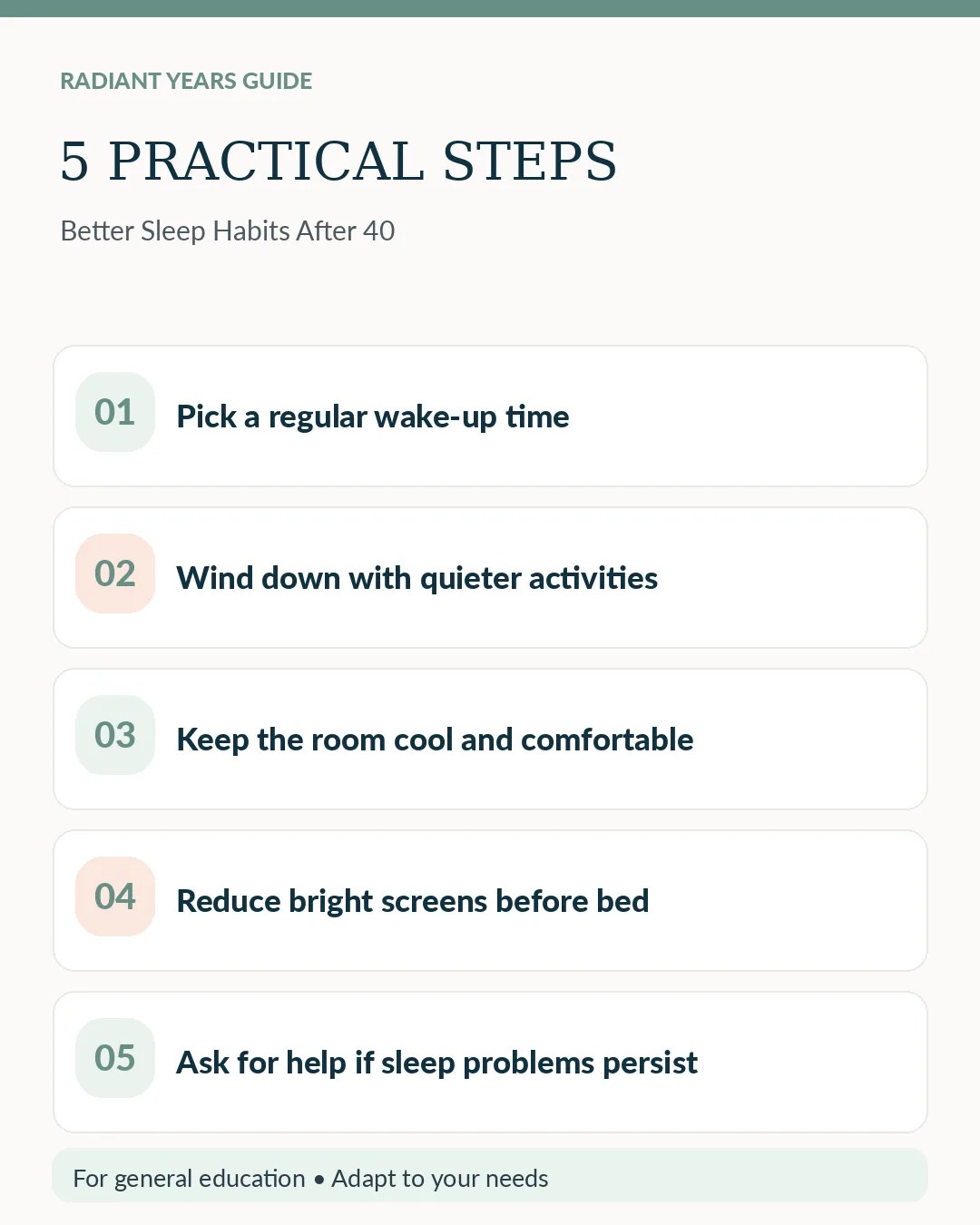
1. Choose one wake-up time you can maintain
A fairly consistent sleep-and-wake schedule is a practical starting point. Think about when your workday starts, when you naturally get sleepy, and whether weekend wake-up times are dramatically different.
You do not have to change everything at once. If a new wake time would leave you short of sleep, first plan enough time in bed instead of simply setting an earlier alarm.
2. Make the last part of the evening quieter
Bright screens, work messages and stimulating tasks may make it harder to settle. Pick a calmer activity before bed: read a few pages, prepare tomorrow’s clothes or listen to relaxing music.
If you must use a device at night, consider reducing brightness and notifications. The goal is a consistent cue that the day is winding down, not a rigid rule that creates more stress.
3. Make your bedroom comfortable
A dark, quiet and comfortable environment can support better rest. Small changes may help: close light-blocking curtains, adjust temperature within your comfort and safety needs, and reduce disruptive noises where possible.
For people with mobility limitations, the pathway to the bathroom should also be safely accessible. Avoid making a room dangerously dark if you need nighttime visibility to prevent falls.
4. Be thoughtful about caffeine, alcohol and late meals
Caffeine consumed late in the day can make sleep more difficult for some people. Alcohol may appear relaxing initially but can disrupt sleep quality. Notice how your timing and habits affect your own nights instead of assuming everyone reacts the same way.
A very heavy late meal or excessive evening fluids may be uncomfortable. If you manage a medical condition or take medicines, follow your clinician’s advice rather than changing treatment based on a general article.
5. Use a seven-day routine experiment
Keep the experiment easy enough to follow for one week. Choose a wake-up window, one calming bedtime activity and one bedroom improvement. Write down what seemed comfortable, rather than scoring each night as success or failure.
If sleep remains difficult, talk with a qualified clinician, especially when you notice loud snoring, breathing pauses, severe daytime sleepiness or persistent insomnia.
A simple evening checklist
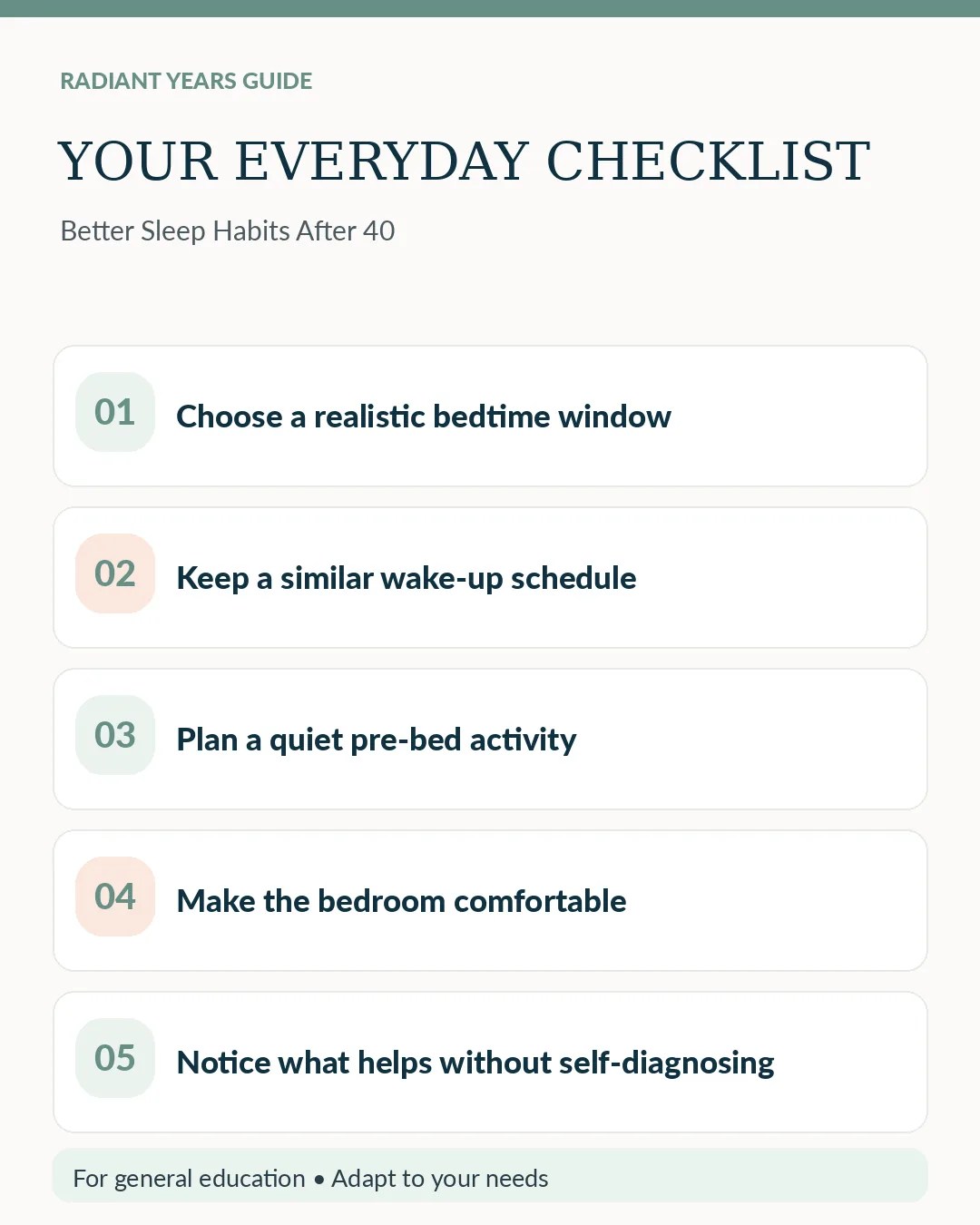
- Choose a realistic wake-up window for tomorrow.
- Silence nonessential notifications before sleep.
- Make the room calm, comfortable and safe.
- Plan one relaxing activity before bedtime.
- Seek advice for persistent problems rather than self-treating.
Questions people often ask
Do adults over 40 need exactly eight hours? There is no single number for everyone. CDC recommendations depend partly on age, and quality matters alongside duration.
Will this routine cure insomnia? No. It is general habit guidance, not a diagnosis or treatment program. Persistent insomnia or suspected sleep apnea should be discussed with a healthcare professional.
Helpful Sources & Further Reading
What to Read Next
- A Beginner-Friendly Walking Routine — Explore manageable daytime movement.
- Strength and Balance Basics After 50 — Review strength and mobility as part of healthy aging.
Editorial note: General health education only. Not a treatment for insomnia, sleep apnea or other medical conditions. Images are explanatory illustrations, not personal testimonials or evidence of tested outcomes. The article is not described as medically reviewed.
