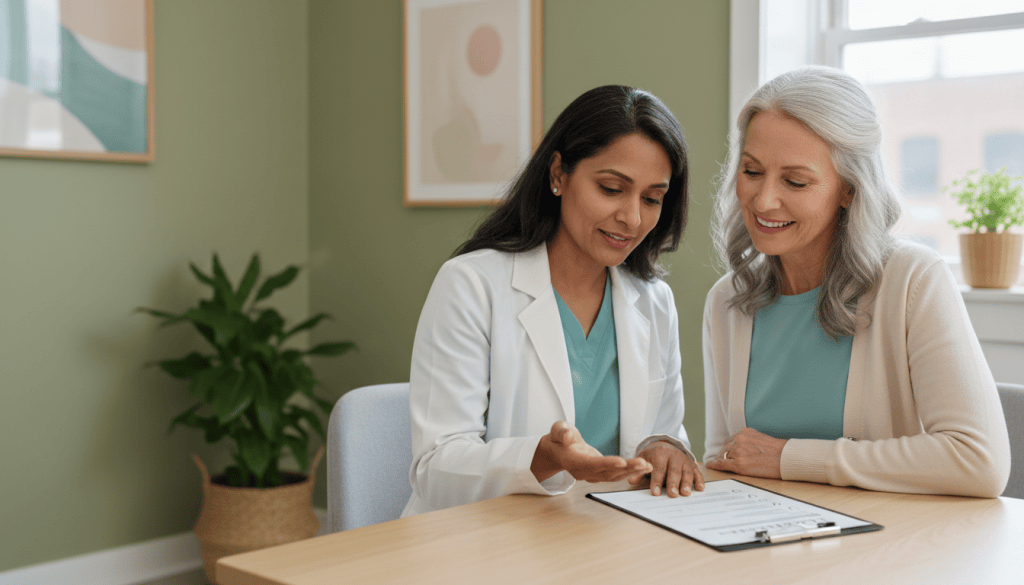
Quick answer: Bone health after 50 involves enough calcium and vitamin D, appropriate weight-bearing and resistance activity, fall prevention, and conversations with a clinician about risk factors and screening. No food, supplement or workout guarantees prevention of osteoporosis or fractures.
It is easy to think about strong muscles because you can feel a difficult staircase or heavy shopping bag. Bones are less visible. Osteoporosis can develop without obvious symptoms until a fracture occurs, which makes prevention conversations and appropriate assessment worth understanding. NIH resources offer practical ways to support bone health without buying an unverified ‘anti-aging’ product or starting an unsafe exercise challenge.
Why bone health is different from a general walking routine
A walking plan is about making movement more achievable. Bone health adds questions about nutrition, medical risk factors, and how different kinds of activity load the skeleton. The National Institute of Arthritis and Musculoskeletal and Skin Diseases (NIAMS) explains that movement, adequate calcium and vitamin D support bones across life.
Age, sex, menopause, past fractures, medicines, family history and medical conditions may influence risk. Only a qualified clinician can evaluate whether testing or individualized treatment is appropriate.
1. Look for calcium sources in food you actually eat
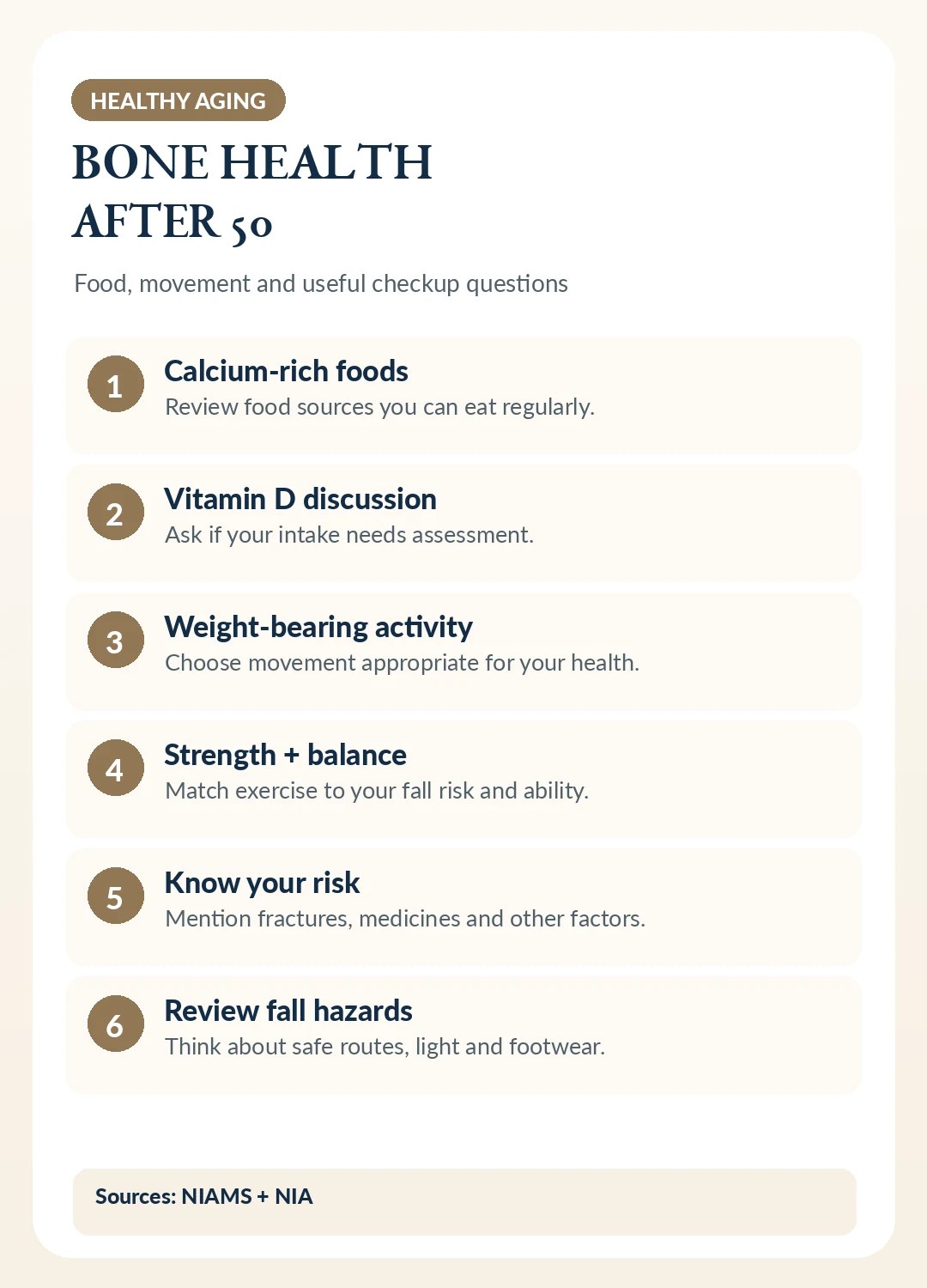
Calcium supports the structure of bones. NIAMS lists dairy foods such as milk, yogurt and cheese, as well as certain leafy greens, calcium-set tofu and fish with edible bones as food sources. Some foods and drinks are fortified with calcium.
Rather than treating a supplement bottle as the first step, review your usual meals. A registered dietitian or clinician can help you identify gaps and options that suit allergies, cultural preferences, kidney conditions and dietary restrictions.
2. Understand vitamin D without chasing a miracle dose
Vitamin D helps the body absorb calcium. NIAMS describes food sources and fortification; the correct intake depends on factors including age and individual circumstances. A blood test or supplement is not automatically needed for every reader.
Excessive vitamin D or calcium supplements can cause harm in some situations, including interactions with medicines. Ask a healthcare professional before beginning supplements, especially if you have kidney disease or take regular medications.
3. Include suitable weight-bearing movement
Bones respond to forces during physical activity. NIAMS gives examples of weight-bearing activities such as walking, dancing or stair climbing. But high-impact exercise is not suitable for everyone, particularly people with osteoporosis, recent fractures or significant balance problems.
Begin from your own capacity. A clinician or physical therapist can suggest safer alternatives based on bone density, joint health and fall risk. Avoid online exercises that invite sudden jumps or heavy loads without assessing suitability.
4. Remember strengthening and balance activities
NIAMS recommends combining weight-bearing exercise with resistance and balance work where appropriate. Resistance may involve carefully chosen bodyweight movement, bands or weights; balance work should be matched to stability and fall risk.
The purpose is supporting muscle and bone function, not reaching a viral exercise target. If you have had falls, fractures or are unsteady, seek professional advice before trying unsupported standing challenges.
5. Discuss personal osteoporosis risk with your clinician
Some people benefit from bone density testing or further assessment depending on age and risk factors. A bone mineral density test and discussion of fracture history may help guide care, but this website cannot recommend a test schedule for an individual.
Useful questions include: ‘Do my age, medicines or fracture history affect my risk?’ ‘Should I have a bone density test?’ and ‘Would my physical activity or nutrition plan need to change?’ The answers may differ among women and men and across clinical guidelines.
6. Reduce everyday risks of falling
Even strong bone habits cannot remove every fall or fracture risk. Keep walking paths clear, use appropriate lighting and footwear, and ask about recurrent dizziness, unsteadiness or medicines associated with falls.
The CDC’s older-adult fall prevention materials and the NIAMS bone-health guidance emphasize practical safety. Have appropriate professionals assess structural home modifications rather than improvising unstable supports.
7. Be skeptical of bone-health product claims
A product advertised as instantly ‘rebuilding bones’ or reversing osteoporosis without clinical care deserves scrutiny. Diet, activity, screening and prescribed treatment are different components of care and cannot be replaced by a single supplement or device.
Look for direct evidence from trustworthy organizations. A product label or testimonial is not a diagnostic tool, and dietary supplements may interact with medication.
A one-week planning example
Monday: Check which calcium-containing foods you already use. Tuesday: Write down questions about vitamin D and medicines. Wednesday: Choose an accessible, appropriately safe activity. Thursday: Review pathways and footwear for fall hazards. Friday: Find your latest relevant clinical results if available. Weekend: Discuss uncertain risks with an appropriate healthcare professional.
This is an organizational example rather than a medical exercise or nutrition prescription. If you have been diagnosed with osteoporosis or had a fracture, your care team should guide activity and treatment decisions.
When professional advice matters most
Unexplained fractures, persistent bone pain, a recent fall, a previous fragility fracture or a known diagnosis of osteoporosis require individual assessment. Sudden severe pain or inability to bear weight after injury needs timely medical attention.
A health article can explain questions to ask but should not delay diagnosis, imaging, treatment or rehabilitation.
Your Bone-Health Conversation Checklist
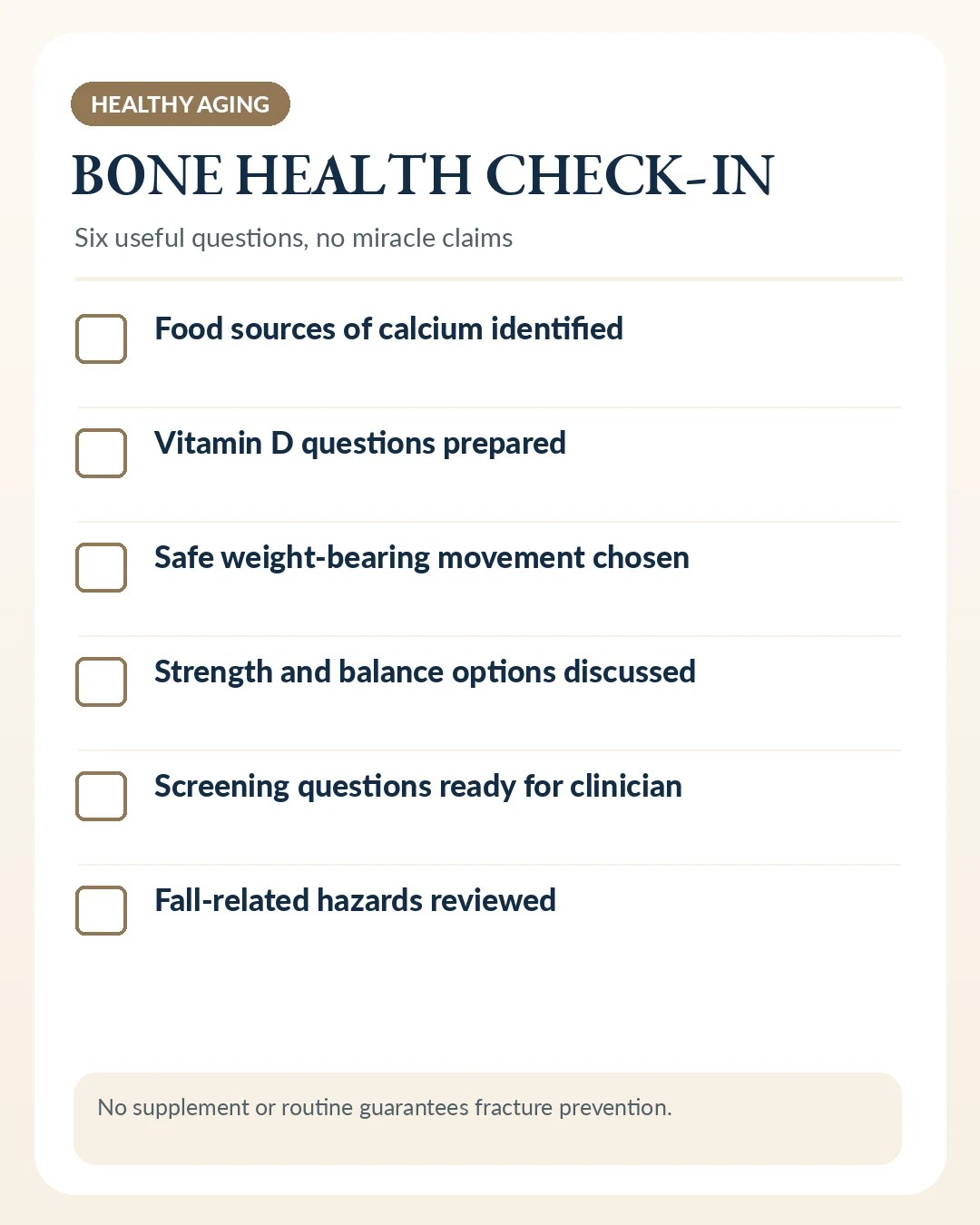
- Identify foods you regularly eat that provide calcium.
- Ask whether your vitamin D intake or status needs review.
- Choose activity appropriate for your bones, muscles and balance.
- Discuss prior falls or fractures with your clinician.
- Ask whether bone-density screening is appropriate for your risk.
- Avoid unverified supplements or miracle-strengthening claims.
Frequently Asked Questions
Does everyone over 50 need calcium supplements?
No. Food intake, health conditions and individual advice matter. Ask a qualified healthcare professional before starting supplements.
Is walking enough to protect bones?
Walking may contribute useful weight-bearing activity, but NIAMS also discusses strengthening, balance, nutrition and individualized medical care.
Can I know my bone density from symptoms?
No. Osteoporosis may not produce obvious symptoms until a fracture. A clinician can assess risk and discuss whether testing is appropriate.
Official Sources
- NIAMS — Exercise for Your Bone Health
- NIAMS — Calcium and Vitamin D: Important for Bone Health
- National Institute on Aging — Osteoporosis
Read Next
- Strength and Balance Basics After 50 — Review safe movement and stability.
- A Simple Healthy Plate After 50 — Explore a flexible food-group approach.
- A Practical Home Safety Checklist for Healthy Aging — Consider fall-related home hazards.
Editorial note: General bone-health education, not a diagnosis, personalized nutrition or exercise prescription, screening recommendation, or osteoporosis treatment. Illustrations are educational and do not depict a verified medical outcome, professional inspection, or product endorsement. No medical expert review is claimed.
