
Quick answer: Short, regular opportunities to stand or move can help you sit less throughout the day. Choose breaks that fit your ability and schedule; even small amounts of physical activity are better than none.
Why the typical desk day makes movement difficult
Meetings, emails, commuting and screens can make hours pass without much movement. You may not have room for a long workout at lunchtime, but that does not mean the rest of the day has to remain completely still.
The CDC encourages adults to move more and sit less, and notes that some activity is better than none. Short movement breaks are an organizing strategy, not a replacement for all recommended aerobic or strength activity.
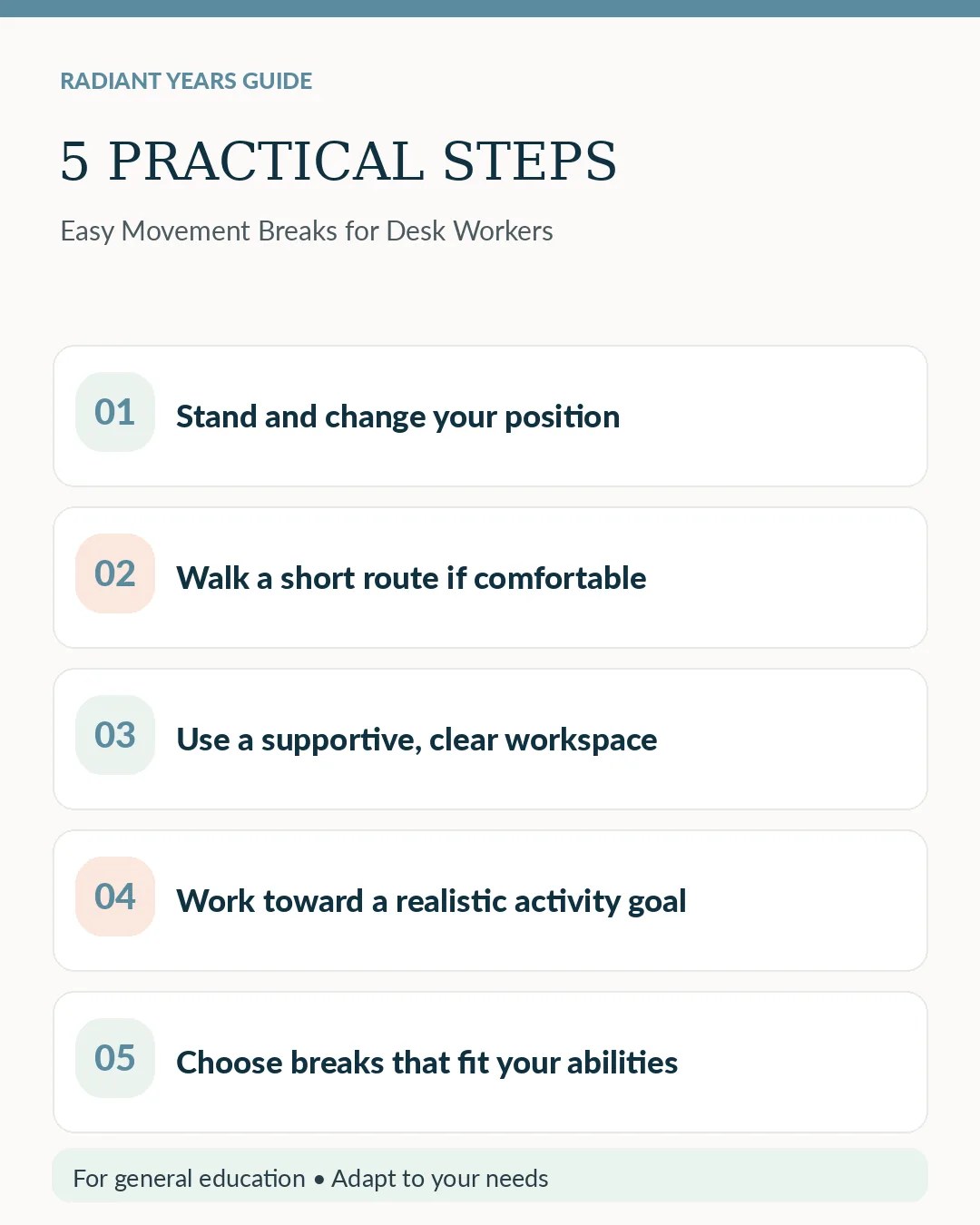
1. Find two or three natural reminder points
Rather than setting an alarm every few minutes, choose a cue that already happens: the end of a meeting, a lunch break or the completion of a long task.
Stand or move only if it is appropriate for you. Anyone who uses mobility aids or works in a constrained environment can adapt the idea to a comfortable movement or posture change.
2. Take a short, safe walk when practical
A quick trip to refill a water bottle or a gentle walk around an accessible office area can be an easy option. Choose routes without clutter, slippery surfaces or traffic hazards.
The goal is to interrupt long stretches of sedentary time, not to turn every break into a race. Start at an easy pace and increase activity as your abilities allow.
3. Give your workspace room to move
A clear pathway, stable footwear and reachable supplies can make brief movement easier. If you cannot comfortably leave the workstation, consider safe position changes that do not cause pain.
Do not stretch forcefully, lock joints or copy a social-media exercise demonstration without considering your own range of motion and health needs.
4. Pair desk breaks with a bigger picture
General U.S. guidance recommends at least 150 minutes of moderate-intensity aerobic activity per week and muscle-strengthening activity on two days for adults. That is a long-term public-health target, not a required starting dose for every worker.
A walking routine and safe strength practice can complement movement breaks. Health status, disabilities and work requirements may affect what is achievable.
5. Make the habit sustainable
Some days are meeting-heavy and others are more flexible. Pick an approach you could continue next month rather than a complex schedule you abandon tomorrow.
Use a paper checklist or an optional digital reminder if it helps. Privacy matters: you do not need to share medical conditions, personal activity logs or performance details with your colleagues.
A flexible sample desk-day plan
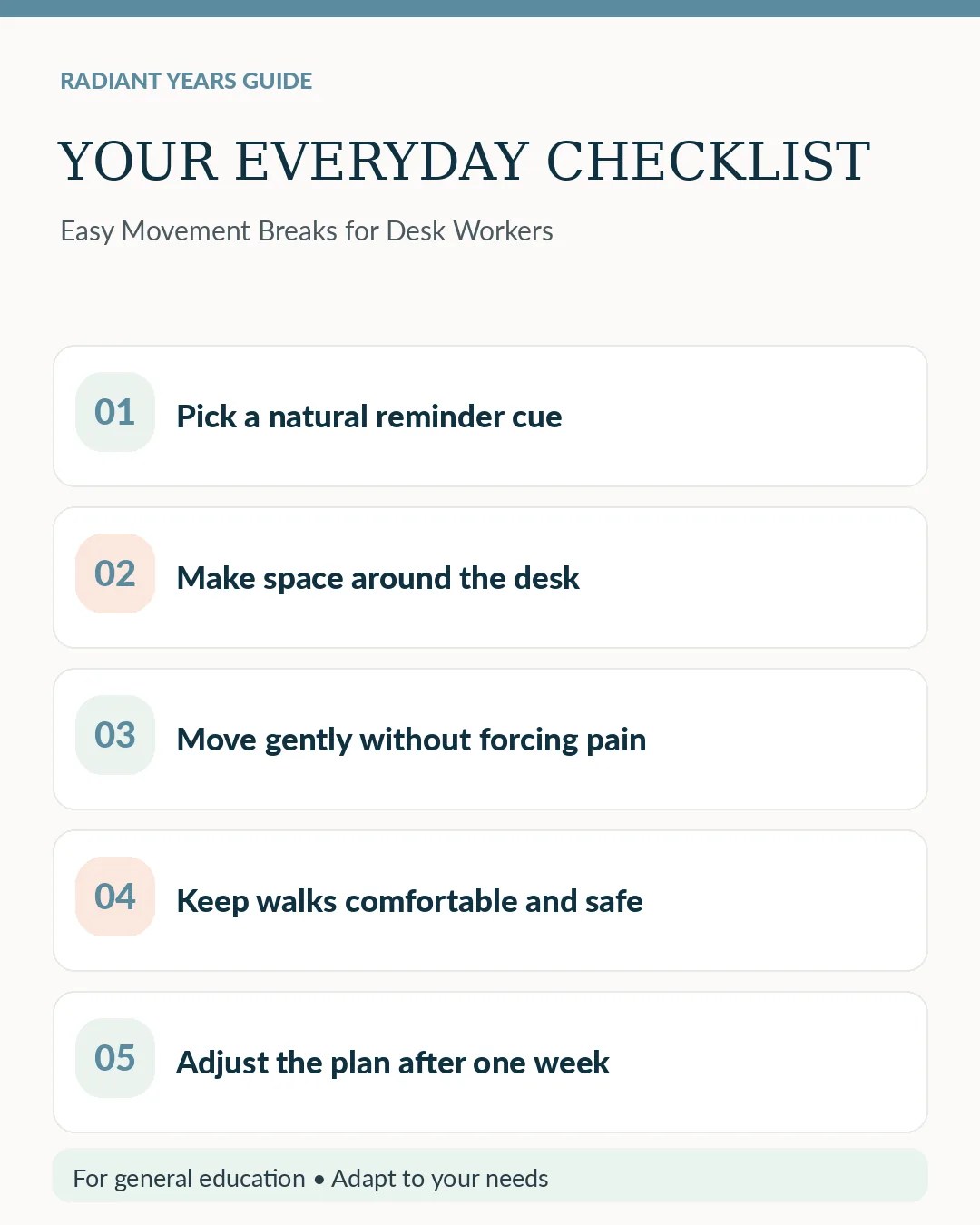
- Before work: choose a safe route for one short movement break.
- Midmorning: change position or stand when comfortable.
- Around lunch: take a relaxed walk if appropriate.
- Midafternoon: move between two tasks or meetings.
- After work: review what was manageable and adjust.
When to ask about limits
Seek clinical guidance if you have chest pain, dizziness, unexplained breathlessness, recent injury, balance problems or a condition that affects safe movement. Stop any activity that causes significant pain or concerning symptoms.
Frequently asked questions
Is standing at a desk the same as aerobic exercise? Not necessarily. Standing can change your posture, but moderate-intensity activity generally raises breathing and heart rate.
Do I need a fixed minute-by-minute schedule? No. Choose manageable opportunities to move. You do not need to invent a strict schedule to follow the CDC’s broad advice to move more and sit less.
Helpful Sources & Further Reading
What to Read Next
- A Beginner-Friendly Walking Routine — Use an accessible weekly walking example.
- Strength and Balance Basics After 50 — Consider safe strength and balance activities.
Editorial note: General physical-activity education, not workplace medical advice. Individual movement needs and limitations vary. Images are explanatory illustrations, not personal testimonials or evidence of tested outcomes. The article is not described as medically reviewed.
