
At a glance: A short reset can be a chance to step away from demands, relax your posture and refocus attention. It is not a treatment for anxiety or depression, and no five-minute routine can guarantee stress relief.
Why small resets can be worth trying
Work, caregiving, finances and daily responsibilities can leave little room for recovery. The National Center for Complementary and Integrative Health (NCCIH) describes relaxation techniques such as focused breathing and guided imagery as possible supports for managing stress.
The evidence varies by technique and medical condition, and these practices should not delay treatment. Instead of promising instant calm, try a short activity and notice whether it fits your day.
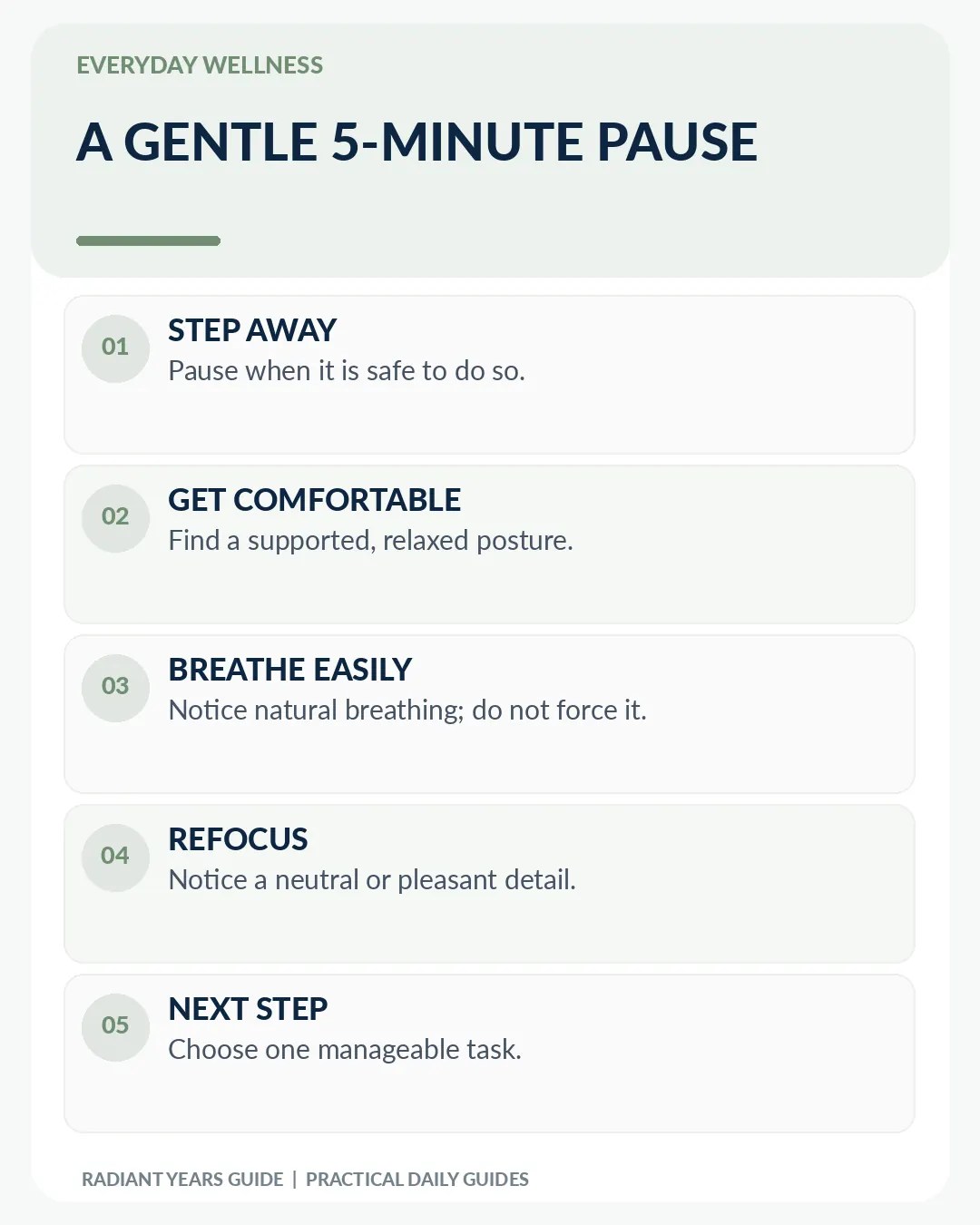
Minute 1: Step away from your current task
If it is safe to do so, put the phone face down and choose a comfortable place to sit or stand. You do not need a special room, candle or meditation app.
If you are driving or using equipment, wait until you can stop safely. If a quiet room is unavailable, a short pause at your desk can be enough to try the routine.
Minute 2: Find a comfortable posture
Rest your feet on the floor if that feels safe, allow your shoulders to soften and release unnecessary tension in your hands. Do not force a stretch or hold a posture that causes pain.
People with mobility limitations can adapt the position. Sitting, reclining or other supported postures are fine when appropriate.
Minute 3: Notice your breathing without forcing it
Pay attention to natural, comfortable breaths. Some relaxation methods encourage slow breathing, but the goal is ease—not a rigid rate, deep breath-holding or dizziness.
If breathing-focused exercises make you uncomfortable or panicky, stop and choose another grounding activity. If you have breathing or heart concerns, ask your clinician before trying specific breathing techniques.
Minute 4: Choose a simple focal point
Notice a calm part of your surroundings or picture a pleasant scene. Some people prefer to identify three ordinary things they can see, hear or feel. Others find gentle music or a short walk more helpful.
These are examples of attention shifts, not clinical treatment exercises. Choose what feels neutral or reassuring rather than following an uncomfortable script.
Minute 5: Pick a manageable next step
Decide on one small action: return to a task, get a drink, send a message or write down a priority. Try not to turn the reset into another performance goal.
A useful habit is one you can repeat when needed. If it doesn’t help, adjust it or try a different appropriate approach.
An everyday example
After several back-to-back meetings, you close unnecessary tabs, change posture, sit quietly and identify the next realistic task. The purpose is to restore a little clarity; it does not erase the workload or substitute for addressing major sources of stress.
If stress is persistent, affects sleep or daily functioning, or is accompanied by distressing symptoms, seek appropriate professional support.
What this routine does not promise
There is no evidence that one five-minute practice can cure a medical condition, prevent all burnout or guarantee lower blood pressure. Evidence for particular relaxation methods varies. Continue prescribed care and ask professionals about symptoms or treatment questions.
Five-Minute Reset Checklist
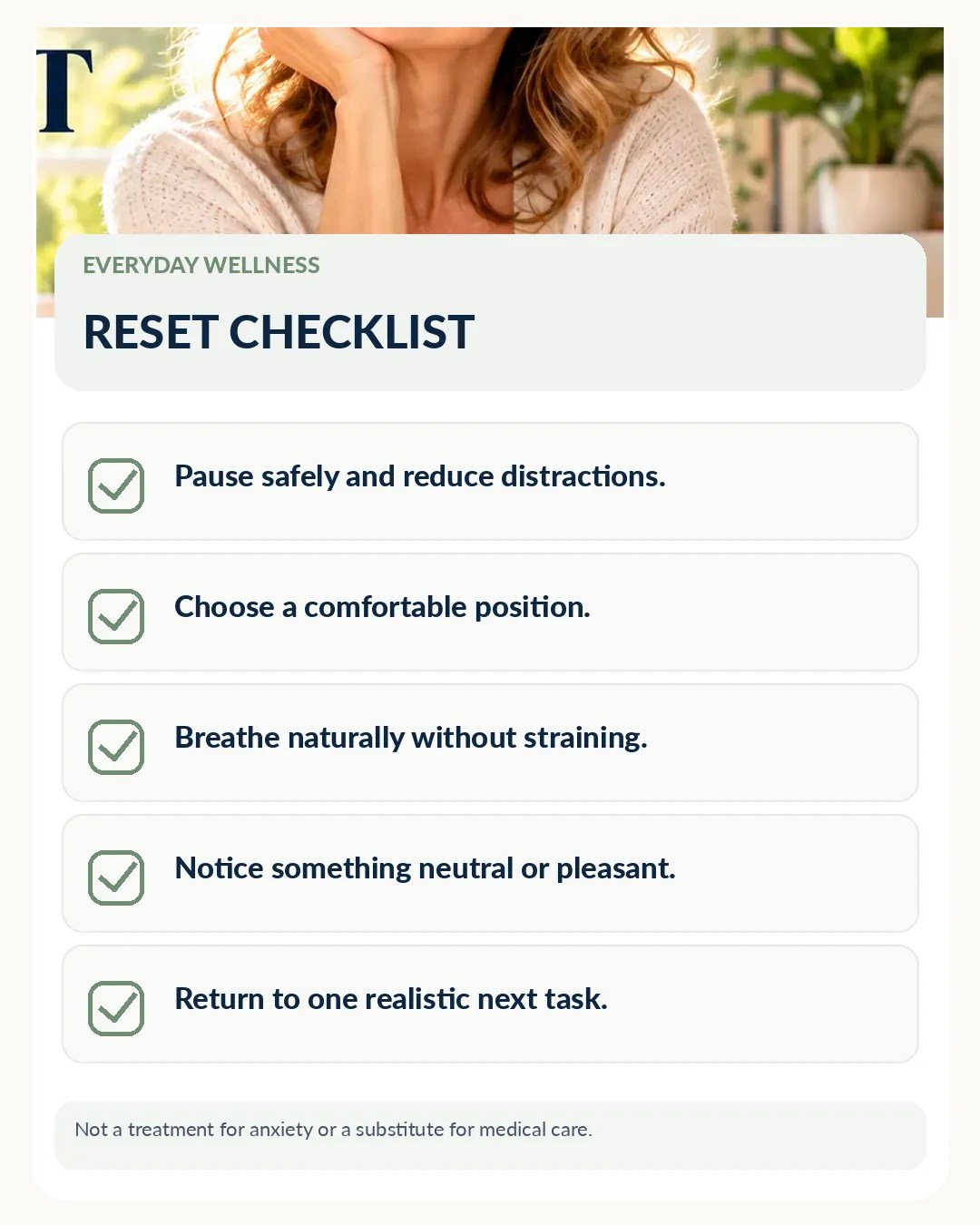
- Pause safely and set aside distractions.
- Find a comfortable, supported posture.
- Notice easy, natural breathing; do not force it.
- Focus on a neutral or pleasant sensation.
- Choose one manageable next step.
Questions Readers Often Ask
Do I need an app or expensive equipment?
No. The reset is intentionally simple and can be adapted without purchases.
What if breathing exercises make me dizzy?
Stop the exercise. Choose an alternative and discuss persistent symptoms with an appropriate clinician.
Reliable Sources
- NCCIH — Five Things to Know About Relaxation Techniques
- NCCIH — Relaxation Techniques: What You Need to Know
Read Next
- Easy Movement Breaks for Desk Workers — Use brief activity reminders.
- Better Sleep Habits After 40 — Build a calmer evening routine.
Editorial note: General wellness education, not treatment for anxiety, panic attacks, depression or other mental health conditions. Illustrations are educational, not a personal product test or medical outcome. No expert review is claimed.
