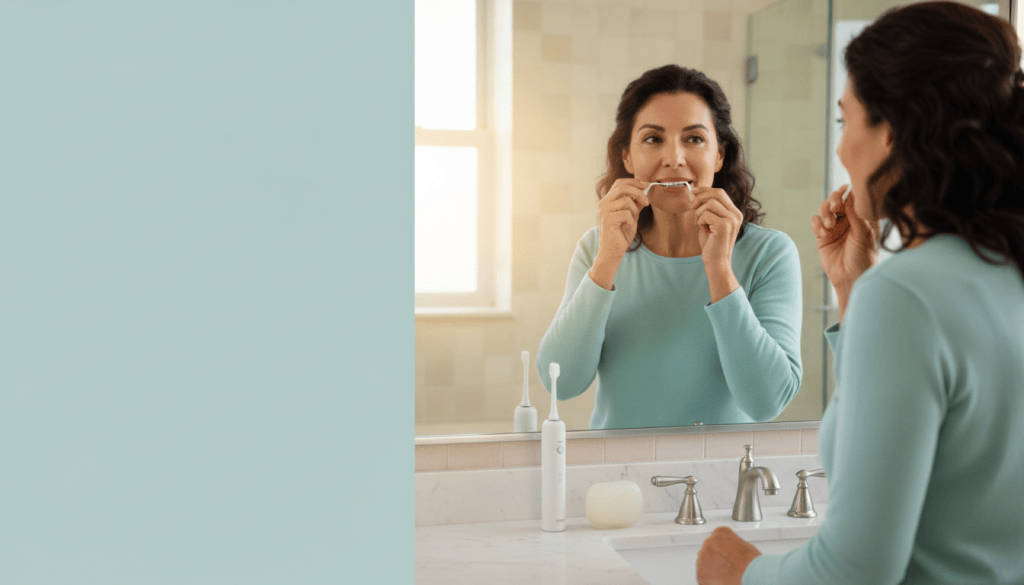
Quick answer: Brush with fluoride toothpaste twice each day, clean between teeth daily, and arrange appropriate dental care. Dry mouth is not an inevitable part of aging and may warrant review of medicines or other causes.
Oral care is easy to postpone when work, family and appointments take over a busy day. Yet taking care of teeth and gums supports comfortable eating, conversation and everyday wellbeing. Older adults can face challenges such as medication-related dry mouth or difficulty gripping a toothbrush. This guide turns information from the National Institute of Dental and Craniofacial Research (NIDCR) and American Dental Association (ADA) into manageable actions without presenting a one-size-fits-all treatment plan.
Why the basics still matter in your 50s and beyond
Tooth decay and gum disease are not inevitable consequences of getting older. Plaque can build up at any age, and some factors—including exposed roots, dry mouth, dental restorations, or changes in hand dexterity—may make home care more challenging.
The NIDCR encourages routine brushing, cleaning between the teeth and dental checkups. This site cannot examine your gums or diagnose a cavity, so persistent pain, bleeding, swelling or changes in the mouth need a dentist’s assessment.
Morning — brush thoroughly with fluoride toothpaste

Oral Care: 3 Daily Essentials
1. Brush twice a day: Use fluoride toothpaste and a gentle technique.
2. Clean between teeth: Use floss or another appropriate interdental tool daily.
3. Ask about dry mouth: Discuss persistent dryness and concerns with your dental team.
Brush your teeth twice a day using fluoride toothpaste, as NIDCR and ADA guidance recommends. Select a soft-bristled toothbrush with a comfortable head that reaches around back teeth. Gentle thorough cleaning matters more than brushing aggressively.
If you use a manual brush, angle the bristles toward the gumline and clean all tooth surfaces. People with braces, bridges, implants or gum disease may need specific technique instructions from a dental professional.
Evening — clean between the teeth
Even careful brushing cannot always remove plaque between teeth. NIDCR recommends cleaning between teeth every day using floss or an appropriate tool. Options can include floss holders, interdental brushes or water flossers depending on your dental needs.
If you are unsure which tool fits a dental bridge, wider spacing, sensitive gums or limited hand movement, a dentist or hygienist can demonstrate an appropriate method. Forcing a large brush into a narrow space can injure the gum.
Make the toothbrush easier to hold when needed
Stiff hands, joint pain or reduced grip strength can make thorough brushing awkward. The ADA notes that electric toothbrushes may be useful for people with arthritis or limited dexterity; NIDCR also describes ways to adapt handles.
The best option is one that you can control comfortably and use effectively. Avoid marketing claims that a powered brush cures gum disease or that every adult must buy the same model.
Pay attention to dry-mouth symptoms
Saliva helps wash away food particles and protect teeth. NIDCR explains that persistent dry mouth can make chewing, swallowing or talking difficult and can raise risks of tooth decay and oral infection. Dry mouth is not a normal, unavoidable part of aging.
Some medicines and medical conditions can contribute to dry mouth. Do not discontinue a prescribed medicine without professional advice. Tell your dentist or clinician about persistent symptoms so the cause and suitable relief measures can be evaluated.
Choose beverages with your individual needs in mind
Water may be a comfortable option with meals and throughout the day. Some people find that certain drinks or irritating products worsen mouth discomfort. Ask a dental professional about appropriate choices if dry mouth persists.
Fluid needs vary, and people with medical fluid restrictions should follow their clinician’s instructions. Drinking water alone is not a guaranteed treatment for salivary gland problems.
Protect your mouth with regular professional care
A dentist can assess for cavities, gum disease, dry mouth, oral lesions and the condition of restorations. Ask how often checkups and cleanings are appropriate based on your current health and dental history.
Persistent sores, unexplained patches, repeated bleeding, loose teeth or pain need timely assessment. Do not assume a mouthwash or supplement can replace examination or treatment.
Make a realistic two-minute planning check
Instead of timing every movement, ask whether your toothpaste is easy to reach, the brush is in good condition, and the interdental tool you use is comfortable. Prepare what you need the night before if mornings are hectic.
Replace a frayed toothbrush or brush head as appropriate; ADA consumer guidance suggests roughly every three or four months, sooner if bristles become worn. A fresh brush is only one part of effective cleaning.
A simple weekly reflection
During the week, notice whether morning and evening brushing happen comfortably, and whether interdental cleaning needs a different tool or demonstration. List any mouth dryness, bleeding or pain you want to bring up at the next dental visit.
This is a habit-planning exercise, not a clinical score. If you have urgent symptoms, contact a dental or medical professional rather than waiting for a weekly review.
Avoid three familiar mistakes
Do not scrub hard enough to hurt the gums, assume that bad breath always comes from poor brushing, or use a home remedy to treat persistent dental pain. Oral-health problems have different causes and often require diagnosis.
Avoid sharing personal dental tools and follow a dentist’s specialized instructions after surgery or other treatment.
Your Everyday Oral-Care Checklist
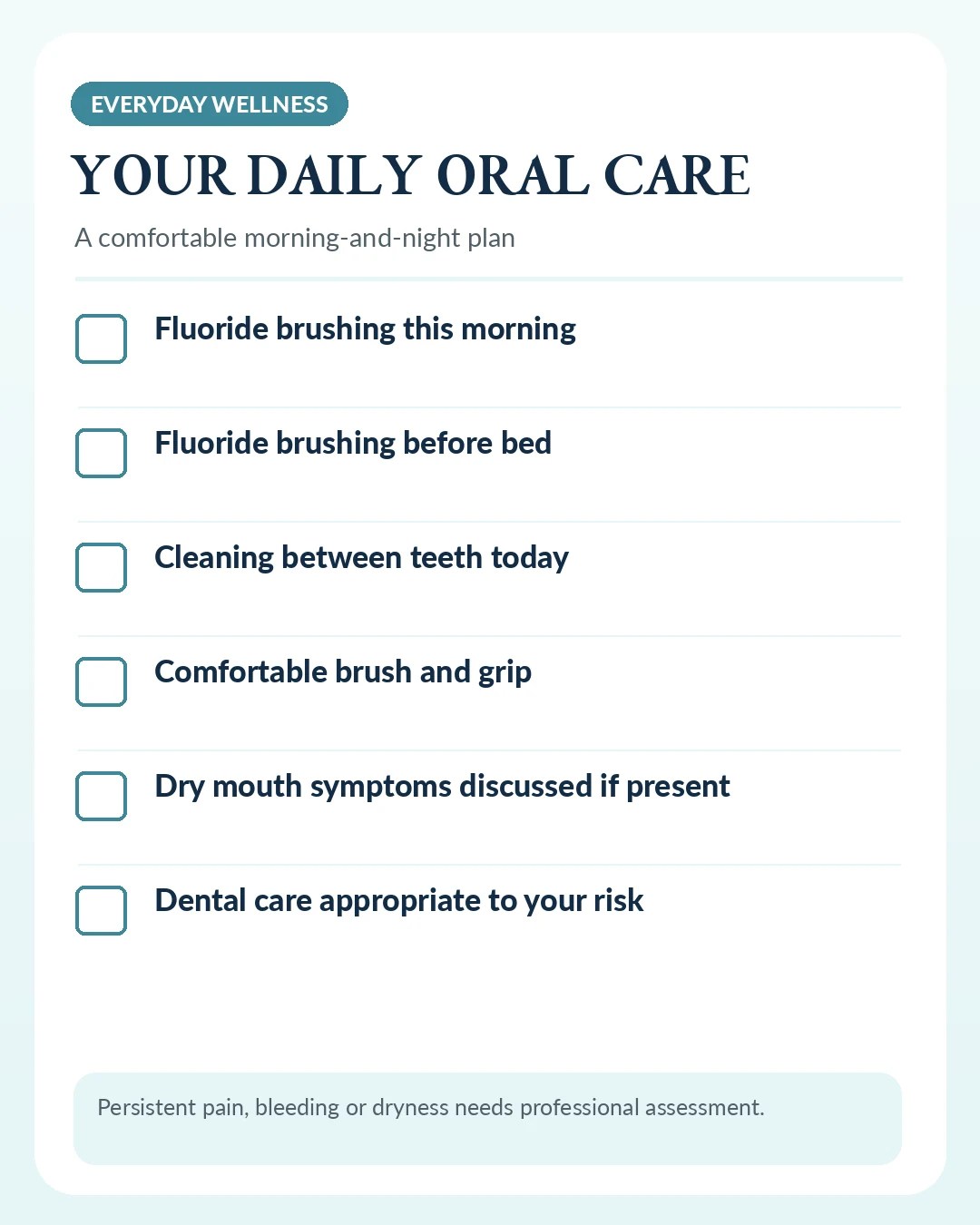
- Brush gently with fluoride toothpaste in the morning.
- Brush again before bed.
- Clean between teeth each day with a suitable tool.
- Use a toothbrush you can grip and control comfortably.
- Mention persistent dry mouth or medicine-related concerns to your care team.
- Arrange dentist visits appropriate to your personal risk.
Frequently Asked Questions
Is dry mouth a normal part of aging?
NIDCR says no. Persistent dry mouth deserves evaluation because it may be linked to medicines, medical conditions or other factors.
Can a water flosser replace all other dental advice?
The right interdental method depends on your teeth, gums and restorations. Ask a dental professional to help select an effective tool.
Should all adults over 50 have the same checkup schedule?
No. Your dental professional can recommend a schedule based on personal risk factors and findings.
Official Sources
- National Institute of Dental and Craniofacial Research — Oral Hygiene
- NIDCR — Dry Mouth
- American Dental Association — Healthy Teeth and Gums for Adults Over 60
Read Next
- Simple Hydration Habits After 50 — Build flexible beverage routines.
- How to Prepare for a Doctor’s Appointment After 50 — Organize questions about medicines and symptoms.
- Better Sleep Habits After 40 — Explore another practical daily routine.
Editorial note: General oral-health information, not professional dental diagnosis, treatment, or individualized advice. Illustrations are educational and do not depict a verified medical outcome, professional inspection, or product endorsement. No medical expert review is claimed.
