
Quick answer: A varied, flexible eating pattern can include vegetables, fruit, whole grains, different protein foods and dairy or fortified soy alternatives. Begin with foods you enjoy and can prepare regularly, rather than a restrictive age-based diet.
Why a simple approach is more helpful than a perfect plate
Nutrition marketing often presents one magic ingredient as the key to aging well. Real life is more complicated: food preferences, budgets, access to groceries, cultural traditions and medical conditions all influence meals.
USDA MyPlate materials for older adults emphasize a variety of nutrient-rich foods, along with awareness of added sugars, saturated fat and sodium. You do not need expensive powders or dramatic promises to start making practical changes.
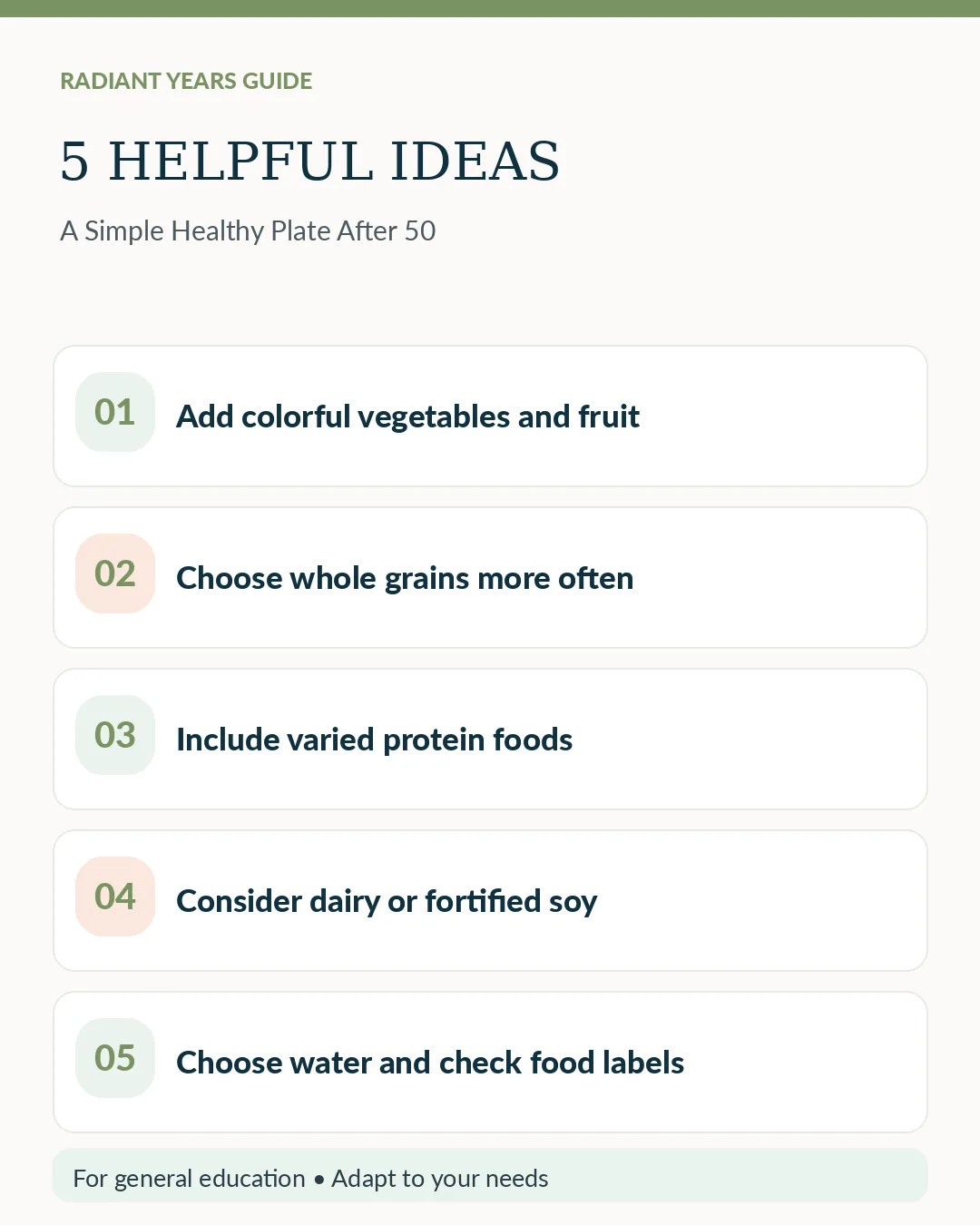
1. Add color with vegetables and fruit
Try adding a vegetable or fruit you genuinely like to meals you already make. Frozen and canned produce can be useful options when fresh items are expensive or inconvenient. Compare labels and choose options that fit your needs.
Examples include frozen mixed vegetables with a quick lunch, berries or sliced fruit with breakfast, or a side salad with dinner. Variety matters more than making every plate look like an advertisement.
2. Choose whole grains when practical
Oatmeal, brown rice, whole-wheat pasta and whole-grain breads are examples of ways to vary your grains. The exact choice depends on your preferences and dietary restrictions.
Read the product label when a grain food is heavily marketed as wholesome. A simple choice you enjoy and use routinely may be more sustainable than a complex replacement plan.
3. Vary your protein foods across the week
The USDA Protein Foods Group includes seafood, meat, poultry, eggs, beans, peas, lentils, nuts, seeds and soy products. Having different options can make shopping and meal preparation easier.
Try adding lentils to soup, using eggs for a quick meal, keeping canned fish for a convenient lunch, or choosing tofu with vegetables. People with kidney disease or other medical conditions may need individualized protein guidance.
4. Remember dairy or fortified soy alternatives
MyPlate includes dairy foods and fortified soy alternatives as options that can provide nutrients important across life stages. Lactose-free dairy may work for people who avoid lactose.
If you avoid these foods, ask a qualified clinician or registered dietitian about alternatives that meet your needs. Plant drinks differ in nutritional content, so check labels rather than assuming they are interchangeable.
5. Choose beverages and look beyond front-of-pack claims
Water is a common, practical beverage choice for many adults, but individual fluid needs vary. Some people need fluid restrictions or tailored advice for specific conditions.
Read ingredient lists and Nutrition Facts labels when comparing similar packaged products. Pay attention to sodium, saturated fat and added sugars rather than relying only on phrases such as ‘healthy,’ ‘natural’ or ‘anti-aging’.
A realistic grocery planning checklist
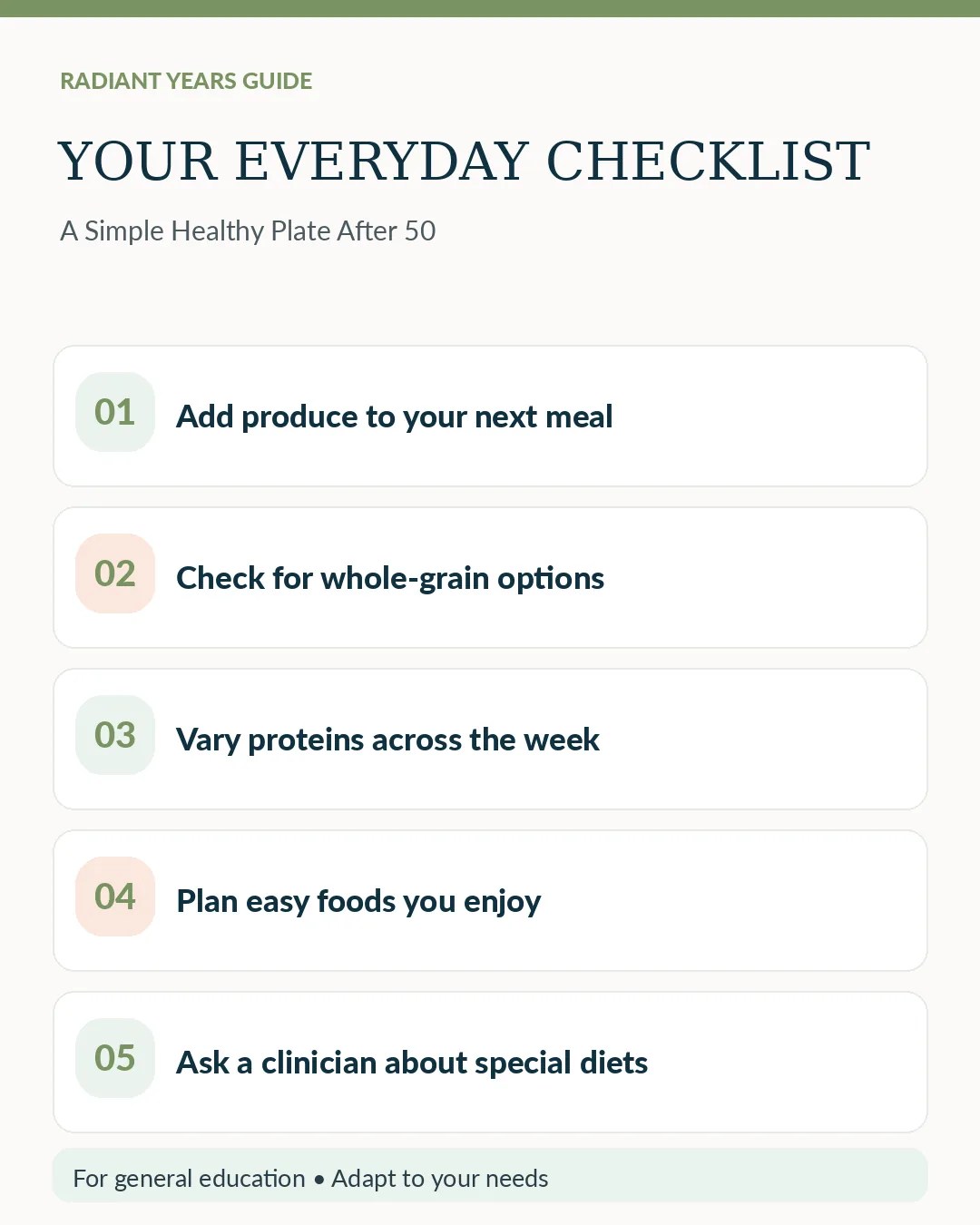
- Choose two or three vegetable options you will use.
- Choose one or two fruit options for snacks or meals.
- Keep a whole-grain food you already enjoy.
- Plan more than one type of protein food.
- Consider dairy or appropriate fortified alternatives.
- Check dietary restrictions with your care team.
Two easy meal combinations to adapt
Option A: Oatmeal with fruit, plus a suitable protein-rich addition based on your needs. Option B: Brown rice or another grain, colorful vegetables, and beans, tofu, chicken or fish.
These are examples, not prescribed portion sizes. Individual calorie needs, swallowing difficulties, allergies, food interactions and therapeutic diets require personal guidance.
When to ask a professional
If you are losing weight unintentionally, have difficulty chewing or swallowing, follow a medically prescribed diet, or have concerns about nutrient deficiencies, consult your healthcare professional or a registered dietitian rather than relying on a generic plate guide.
Helpful Sources & Further Reading
- USDA MyPlate — Healthy Eating for Older Adults
- USDA MyPlate — Protein Foods
- USDA MyPlate — Dairy and Fortified Soy Alternatives
What to Read Next
- Strength and Balance Basics After 50 — Combine thoughtful food choices with appropriate activity.
- A Beginner-Friendly Walking Routine — Build an approachable movement habit.
Editorial note: General nutrition education, not a meal prescription. If you have diabetes, kidney disease, allergies or other conditions requiring a specialized diet, seek individualized guidance. Images are explanatory illustrations, not personal testimonials or evidence of tested outcomes. The article is not described as medically reviewed.
