
At a glance: A realistic hydration habit means making appropriate fluids available through the day, not forcing everyone to drink the same number of glasses. Your needs may depend on health, activity, climate and medical advice.
Why hydration deserves a practical plan
The National Institute on Aging notes that thirst sensation can become less reliable with age. For some older adults, waiting until thirsty may not be the best reminder to drink. At the same time, individual fluid requirements vary substantially.
A simple plan can make drinking more convenient without turning it into a challenge to consume excessive amounts. The priority is following your own medical guidance if you have heart, kidney or other conditions affecting fluid intake.
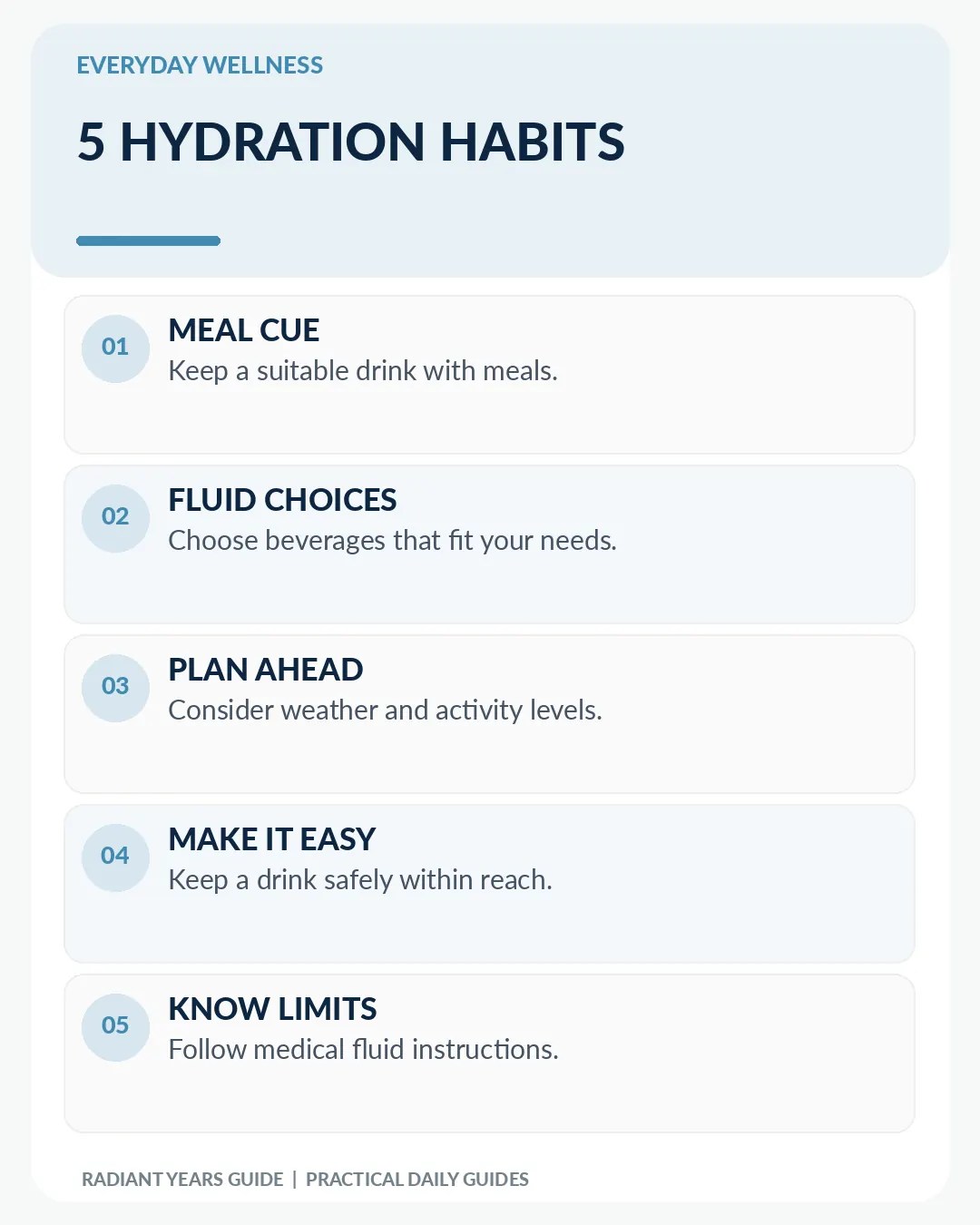
1. Pair a drink with something you already do
An accessible cup or bottle near your breakfast spot can make drinking easier to remember. Some people enjoy fluids with meals, after outdoor activity, or while taking a planned break.
The cue can be as simple as ‘have a beverage with lunch’ rather than aiming for an arbitrary total seen on social media.
2. Include different suitable beverages
Plain water is an easy option, but suitable fluids may also come from milk, broth, or other beverages based on your nutritional needs and medical instructions. Fruits and soups can contribute fluid too.
If you limit added sugars, compare labels on sweetened drinks. If caffeine affects sleep or symptoms, choose an option that fits your routine. The healthiest choice for one person is not automatically right for everyone.
3. Adapt to weather and activity
A warm day, long walk or physically demanding work can change your comfort and fluid needs. Plan access to drinks before activity rather than relying on a fixed schedule.
Some illnesses, medicines and health conditions also affect fluid needs. Ask a healthcare professional for individualized advice about unusual thirst, fluid restriction or symptoms.
4. Make access convenient and safe
Keep beverages in a place you can reach without creating obstacles or carrying heavy containers that feel unsafe. At work or while traveling, think about where you can obtain drinking water and when bathroom access will be available.
For caregivers, offering a choice of suitable drinks and a reachable cup may be more practical than repeated pressure to finish a large bottle.
5. Know when to seek medical help
Signs such as significant dizziness, confusion, unusual weakness, very low urine output or feeling seriously unwell need attention; they should not be managed by following a website checklist alone.
Both dehydration and excessive fluid intake can cause problems, depending on circumstances. If you have been advised to restrict fluids, do not override that instruction with generic internet advice.
An example of a flexible day
Morning: Prepare a suitable drink with breakfast. Midday: Keep water or another appropriate beverage available during a meal or break. Afternoon: Consider weather and your activity. Evening: Follow your comfort and health guidance without disrupting sleep unnecessarily.
This example intentionally gives no universal quantity. Individual fluid goals belong with your clinician when medical factors are involved.
A Gentle Daily Hydration Checklist
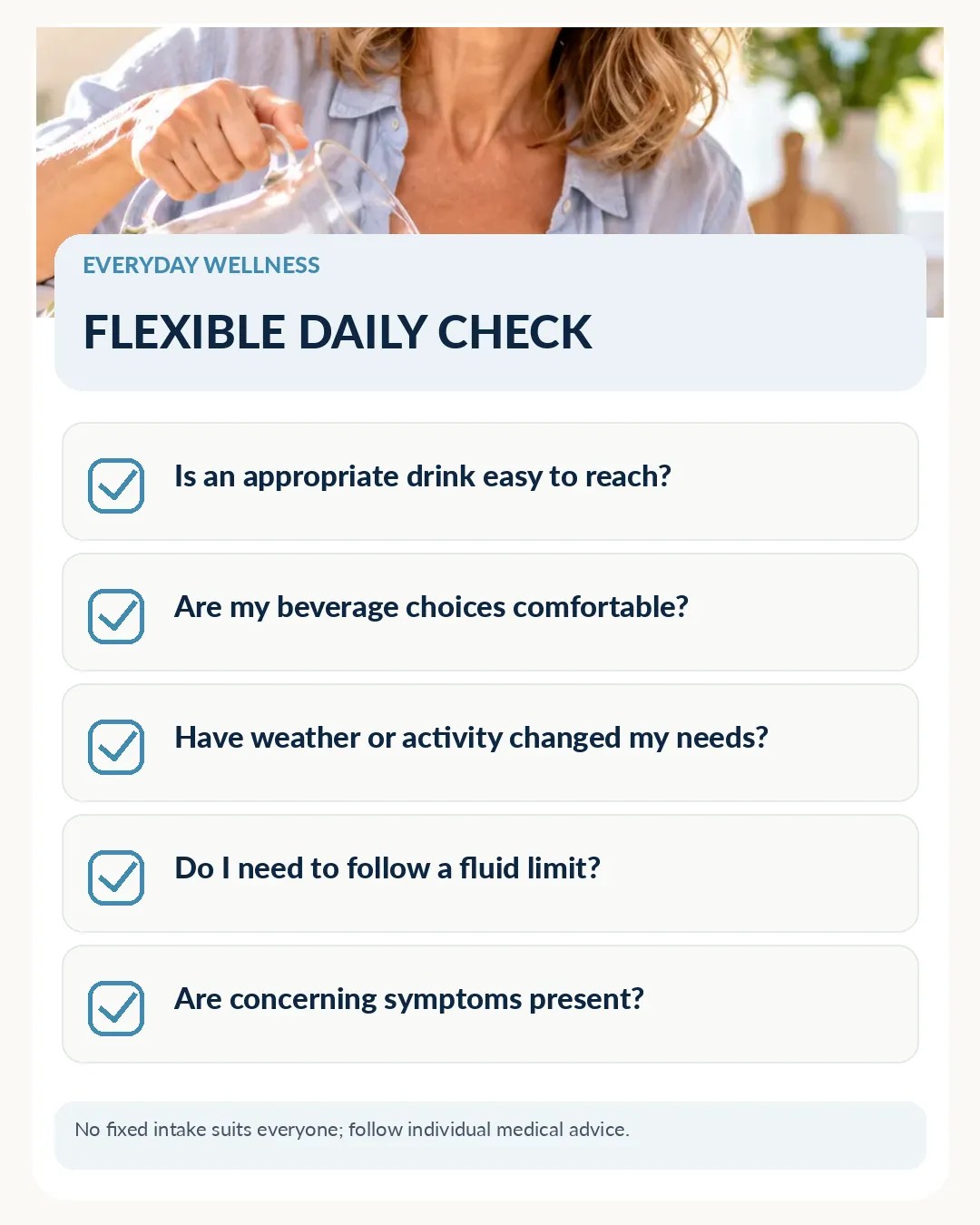
- Do I have a drink within easy reach at normal meal times?
- Do my beverage choices fit my nutrition preferences?
- Have weather or activity changed my needs today?
- Do I have clinician-provided restrictions to follow?
- Am I noticing concerning symptoms that require care?
Questions Readers Often Ask
Do all adults over 50 need eight glasses?
There is no single ‘eight glasses’ prescription that applies to everyone. Individual requirements vary.
Can I drink too much water?
Excessive fluid intake can be unsafe in some circumstances. Follow professional guidance for medical conditions and avoid rigid online challenges.
Reliable Sources
Read Next
- A Simple Healthy Plate After 50 — Use flexible food-group ideas.
- Better Sleep Habits After 40 — Consider your evening routine, too.
Editorial note: General hydration education only. People taking fluid-restricting medications or living with kidney, heart or other medical conditions need individualized advice. Illustrations are educational, not a personal product test or medical outcome. No expert review is claimed.
