At a glance: A small household can shop more efficiently by checking the pantry first, planning a few repeatable meals and choosing the package sizes it can realistically use. A giant bargain pack is not a bargain if half is wasted.
Why shopping for one or two takes a different approach
Shop Smarter for 1 or 2
1. Check what you have: Look through the fridge and pantry first.
2. Plan a few meals: Reuse ingredients across simple recipes.
3. Buy usable amounts: Choose portions you can finish safely.
Many meal plans assume a large family. If you are shopping for yourself or one other person, you may prefer smaller amounts, flexible ingredients and meals that can be adapted over several days.
USDA MyPlate and the National Institute on Aging recommend advance planning and budget-friendly foods. A realistic plan also accounts for your transportation, storage capacity, mobility and dietary needs.
1. Check your freezer and pantry before leaving
Look at what you already have: rice, oats, beans, pasta, frozen vegetables or other staples you enjoy. Choose one or two of those items as the starting point for this week’s meals.
Use your refrigerator’s contents to decide what needs to be eaten sooner. This simple step can prevent buying another ingredient that will sit unused.
2. Plan only a few flexible meals
Rather than creating seven elaborate menus, choose a handful of combinations that can be adapted: grain plus vegetables and a protein food; soup with beans and vegetables; or an egg-and-vegetable meal if suitable.
Leave room for days when you prefer a quick option. Overly ambitious menus can create wasted groceries and time.
3. Make a short shopping list by section
Group items by produce, proteins, grains, dairy or fortified alternatives, frozen foods and shelf-stable basics. A list makes the trip faster and helps you compare actual needs with promotions.
If you shop online, the same approach helps with digital carts. Watch for automatic substitutions that may not fit allergies, dietary instructions or your budget.
4. Compare unit prices and package sizes
A unit price can help compare two similar products. But it is only one part of the decision: an economical family-size item may not be useful when it is more than you can use before quality declines.
Check storage space and whether portions can be frozen safely. Do not buy bulk quantities just because a promotional tag looks impressive.
5. Use fresh, frozen and shelf-stable choices
Frozen produce, canned beans or fish, and other pantry foods can help you prepare meals without shopping every day. Compare sodium or added-sugar content if those matter for your needs.
Choose foods you enjoy. Healthy shopping does not require one specific brand or a menu that ignores cultural preferences and dietary restrictions.
6. Treat leftovers as planned ingredients
If you prepare extra servings, cool and refrigerate or freeze food safely following USDA food safety guidance. Don’t leave cooked perishable foods unrefrigerated for extended periods.
For specific foods, follow current safe storage and reheating guidance. Do not rely on smell alone to judge food safety.
A two-person example, not a prescription
A short list might include one whole grain, two vegetables, fruit, two protein options and a few flexible pantry foods. For one person, reduce quantities. For a couple, consider each person’s preferences and needs.
The example is designed to support planning, not to tell anyone their personal portion size or medical diet.
How to avoid ‘health halo’ spending
‘Superfood,’ ‘detox’ and ‘age-reversing’ are marketing-friendly phrases, not a shopping plan. Compare the Nutrition Facts label, the cost per usable serving and whether you will actually eat the item.
Before-You-Shop Checklist
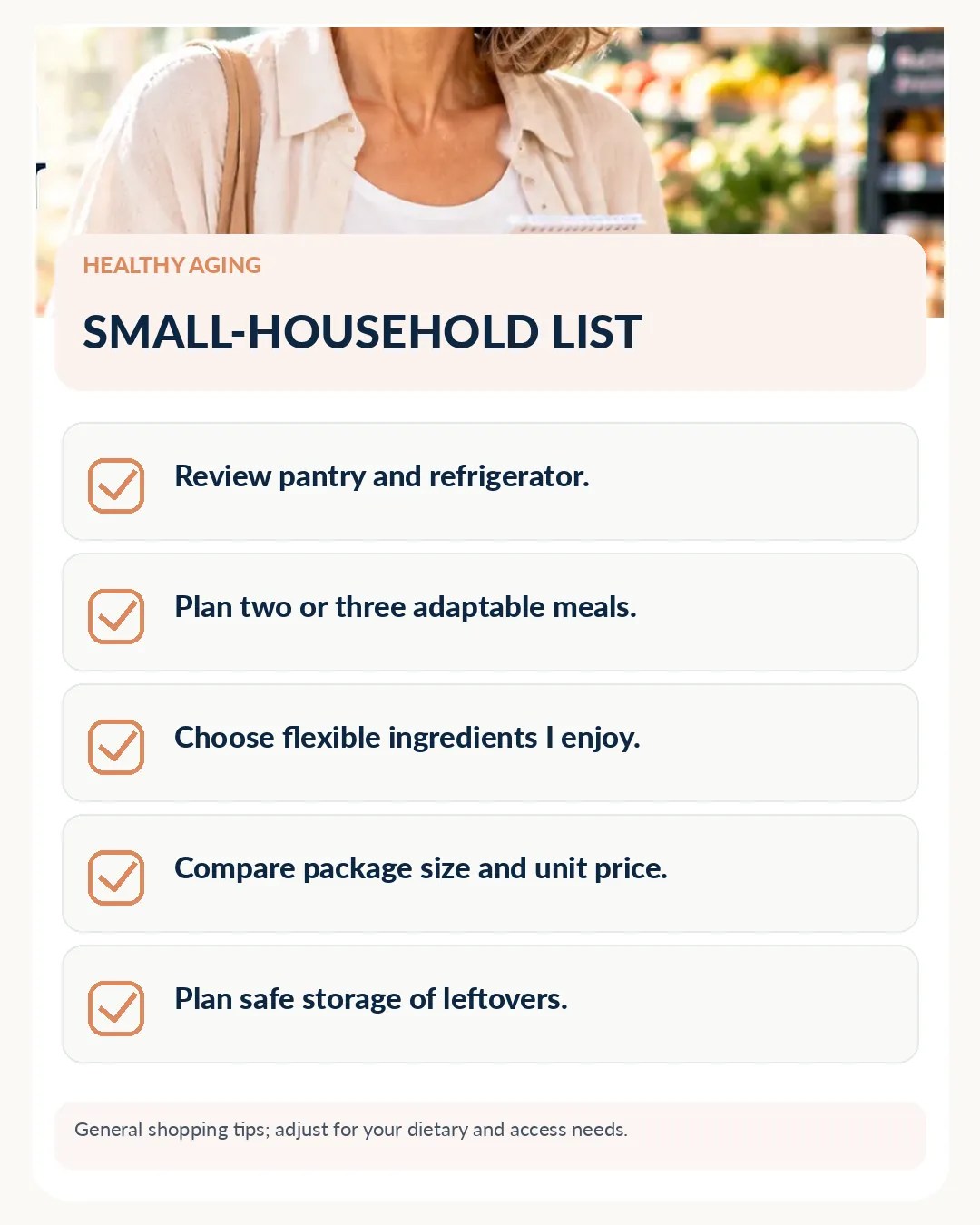
- Check what is already in the pantry, refrigerator and freezer.
- Plan two or three adaptable meals, not a perfect week.
- Write a short list arranged by store section.
- Compare unit prices and realistic package sizes.
- Include some frozen or shelf-stable options.
- Plan safe storage or freezing of leftovers.
Questions Readers Often Ask
Is bulk buying always cheaper?
Not if you cannot finish or safely store the food. Compare cost per usable portion, not only the shelf price.
Is frozen produce less healthy than fresh?
Frozen vegetables and fruit can be practical options for variety and convenience. Consider product ingredients, storage and your overall food choices.
Reliable Sources
- USDA MyPlate — Make a Plan
- USDA MyPlate — Healthy Eating on a Budget
- NIA — Healthy Meal Planning for Older Adults
Read Next
- A Simple Healthy Plate After 50 — Choose food groups for everyday meals.
- Simple Hydration Habits After 50 — Consider suitable beverages throughout the day.
Editorial note: General budget and meal-planning guidance, not an individualized diet. Discuss medical dietary needs with a clinician or registered dietitian. Illustrations are educational, not evidence of personal outcomes, and no professional medical review is claimed.
