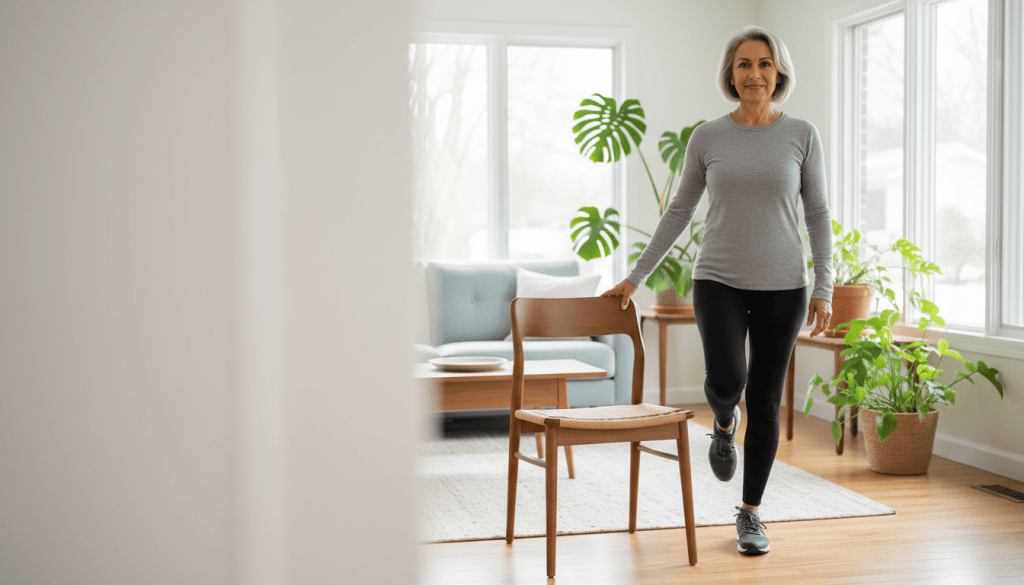
Quick answer: Strength and balance matter for healthy aging because they support everyday abilities such as carrying groceries, getting up from a chair, and moving confidently. Begin with movements that match your current abilities and build gradually rather than trying to copy an intense workout.
If you are in your 50s or beyond, you may already walk regularly but wonder whether that is enough. Walking is valuable aerobic activity, yet muscle-strengthening and balance practice are also important components of physical fitness. The right starting point depends on how active you already are and whether you have any health or mobility limitations.
Why Strength and Balance Deserve Attention
Muscles and physical function can change with age, but people of different ages and abilities may benefit from being active. The National Institute on Aging (NIA) describes strength and balance as important for everyday functioning and independence. Consistent activity can also help with many aspects of long-term health. No particular routine can guarantee that someone will avoid falls or health problems.
Know the Three Pieces of a Balanced Activity Routine
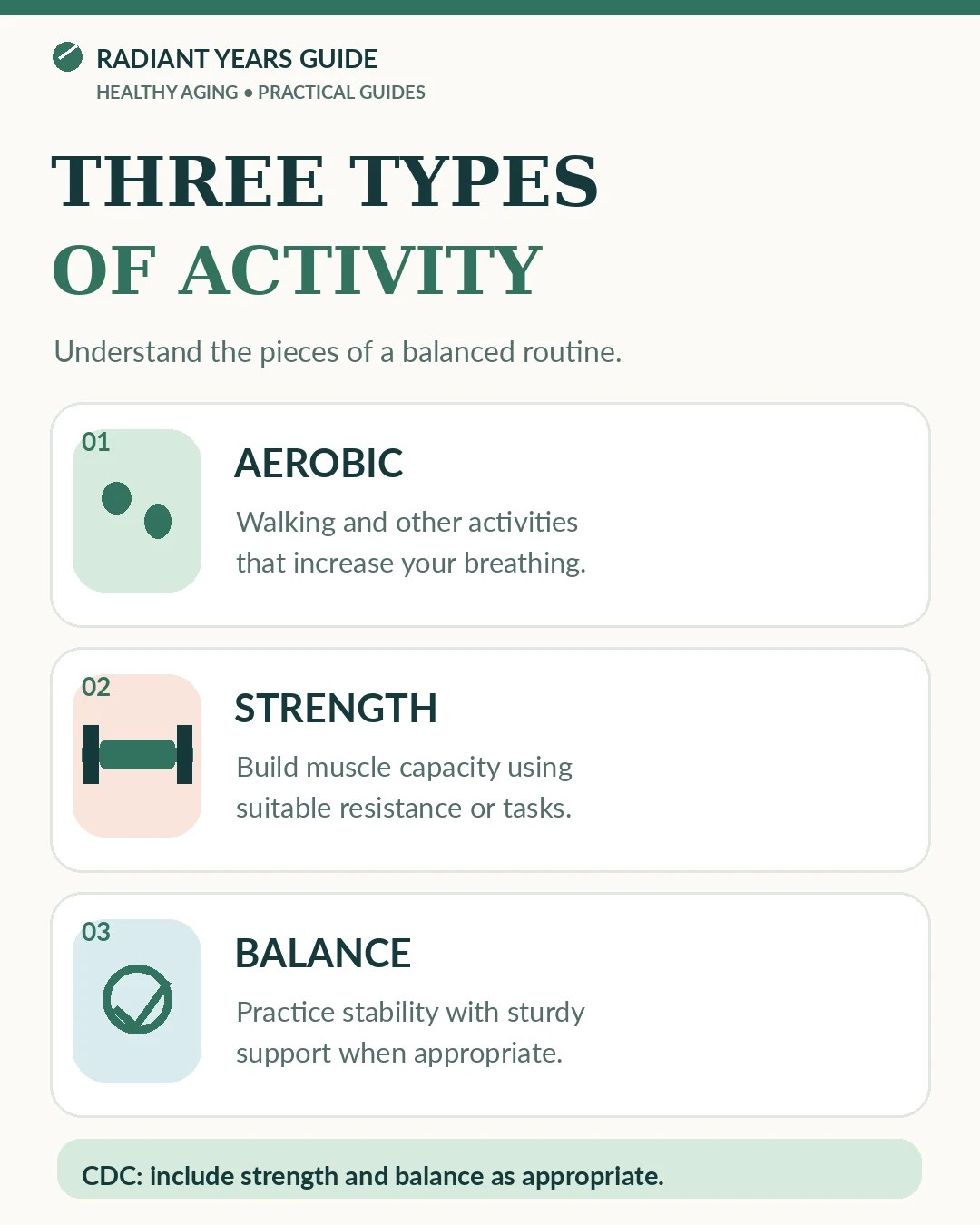
- Aerobic activity: Activities such as comfortable or brisk walking that increase breathing and heart rate.
- Muscle strengthening: Activities that challenge the muscles, such as appropriately chosen resistance exercises or everyday lifting tasks.
- Balance activities: Movements that help you practice stability and controlled weight shifts, with appropriate support.
For adults generally, U.S. activity guidance includes at least 150 minutes of moderate-intensity aerobic activity per week plus muscle-strengthening activity on at least two days. The CDC particularly emphasizes adding balance training for adults aged 65 and older. These are population-level goals, not a required first-week workload or personal prescription.
Three Beginner-Friendly Movement Ideas
1. Standing up from a stable chair
A supervised or appropriately supported sit-to-stand movement is an everyday example of using the legs and hips. If you try it, use a stable chair that cannot roll or tip, keep the area free of clutter, and use your hands or assistance when necessary. Stop if the movement is painful or unstable. People at risk of falling should ask a qualified professional which exercises are appropriate.
2. Gentle wall-supported pushing
For someone who can stand comfortably, an appropriately scaled wall push movement can introduce a little upper-body effort without gym equipment. Keep the motion controlled and never force through pain. If standing is difficult, ask a professional about a safer alternative suited to your mobility.
3. Practicing stability near a sturdy support
Some people practice gentle weight shifts while standing near a solid countertop or rail, with supervision if needed. A fall risk, dizziness, nerve problems or unsteadiness can make unsupported balance drills unsafe. Do not stand on one foot or close your eyes simply because an online routine suggests it.
A Practical First-Week Planning Example
The ideas below are for organizing a conversation with yourself or a professional, not a prescribed exercise dose. You may need to adjust the sequence or skip an activity.
- Monday: Notice which ordinary movements feel easy and which feel difficult.
- Tuesday: Choose one safe muscle-strengthening option appropriate for you.
- Wednesday: Enjoy an accessible walk or another comfortable aerobic activity, if appropriate.
- Thursday: Rest or choose easy movement that suits your situation.
- Friday: Repeat a comfortable activity or seek guidance about a balance exercise.
- Saturday: Choose something enjoyable such as easy walking or a supervised group class.
- Sunday: Review comfort, confidence and any obstacles before adjusting next week.
Simple Ways to Build Consistency
A realistic routine does not need to be complicated. Connect movement to things you already do, prepare appropriate footwear, choose a safe environment, and make the first goal small enough to repeat. If you want more challenge, increase activity gradually over weeks or months, paying attention to fatigue and symptoms.
Making movement a social activity can help some people stay engaged. Consider a community center, a suitable beginner class or a walk with a friend. Individual preferences and accessibility needs matter more than copying a rigid online challenge.
Safety: When to Pause and Ask for Advice
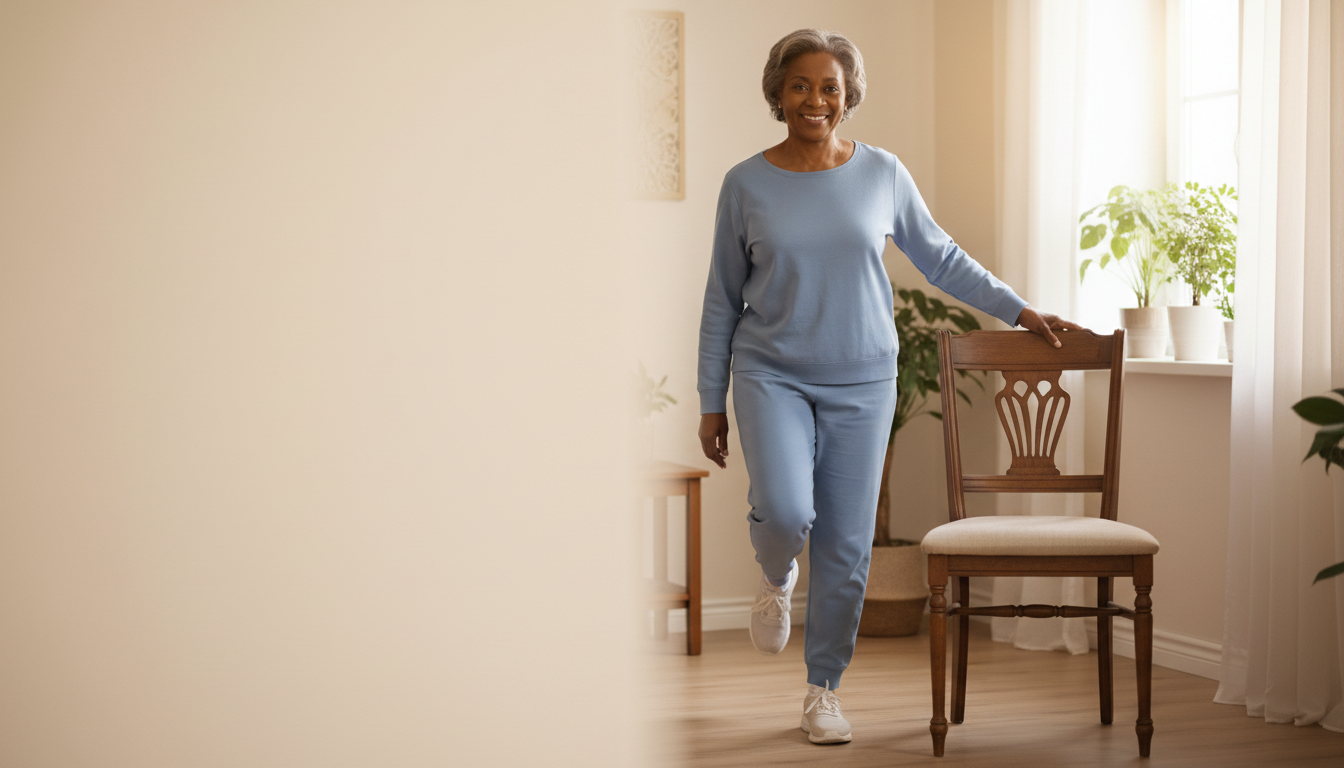
Balance Safety: 3 Practical Reminders
1. Use sturdy support: practice near a steady chair or counter.
2. Start gently: choose manageable movements and progress gradually.
3. Watch for symptoms: stop for pain or dizziness; seek professional guidance if needed.
- Talk with a healthcare professional about exercise if you have a chronic medical condition, recent injury, significant joint pain, unexplained dizziness, a history of falls or uncertainty about safe activity.
- Stop activity and seek appropriate medical attention for chest pain, severe breathlessness, fainting, or other concerning symptoms.
- Use stable supports, safe floors, suitable shoes and supervision when needed. Avoid movements that make you feel likely to fall.
- Do not treat a general checklist as a substitute for personal assessment or rehabilitation advice.
A Small Weekly Reflection
- Which activity felt comfortable enough to repeat?
- Did the environment and equipment feel stable and accessible?
- Would a shorter session or professional advice make the routine safer?
- What is one realistic next step for the coming week?
Frequently Asked Questions
Is walking enough for healthy aging?
Walking is valuable aerobic activity, but guidelines also include strength work and, especially for older adults, balance activities. You can read our beginner walking guide for ideas on building that habit.
Do I need a gym or heavy weights?
Not always. Activities can be adapted to different abilities and settings. A healthcare professional or qualified trainer can help you choose an appropriate level and safe technique.
Do all adults over 50 need the same routine?
No. Fitness level, mobility, health conditions and preferences vary. Guidelines describe general goals rather than a one-size-fits-all plan.
\nSources and Further Reading
- National Institute on Aging — Three Types of Exercise Can Improve Your Health and Physical Ability
- National Institute on Aging — Tips for Getting and Staying Active as You Age
- CDC — Older Adults: Adding Activity Recommendations
- National Institute on Aging — Health Benefits of Exercise and Physical Activity
Editorial note: General educational content. This page is not a clinical exercise prescription or personalized fall-prevention plan. References inform general guidance; no medical professional review is claimed. Any illustrations are explanatory, not evidence of a specific individual’s experience.
