
At a glance: Look for walking shoes that fit comfortably, stay secure on your feet and provide suitable grip and stability. Price or style alone cannot tell you whether a shoe suits your needs.
Why footwear matters for everyday movement

Walking Shoe Fit: 3 Checks
1. Comfortable fit: Leave room for toes without heel slipping.
2. Reliable grip: Check outsoles and wear for traction.
3. Secure fastening: Walk a little to test comfort and stability.
Walking is often an accessible activity, but worn or poorly fitted shoes can add discomfort and instability. CDC STEADI materials identify inappropriate footwear and foot problems as factors associated with fall risk in older adults.
The most appropriate shoes depend on your feet, mobility, walking surfaces and any medical conditions. This is a checklist for informed shopping, not a prescription for a particular brand.
1. Check the fit before the color
Shoes should feel secure without squeezing your toes or rubbing painfully. Walk on a safe surface and notice any sliding of the heel, pinching or pressure points.
Feet can change over time. If the shoes you used comfortably for years now cause pain, consider a fitting assessment instead of simply buying the same size online.
2. Look for secure fastening
Laces, straps or other suitable fastening features can help shoes stay on your feet. Loose, backless slip-ons may be less secure for some walkers than a shoe with a supportive heel structure.
Mobility or dexterity limitations can affect what closure you can manage. A practical choice should be both secure and usable.
3. Consider traction and the walking surface
Check whether the sole offers traction appropriate for where you walk, such as indoor floors or outdoor paths. A slick, heavily worn sole can be a hazard on wet or uneven surfaces.
No sole completely prevents slipping. Adjust your pace, choose suitable routes and avoid unsafe conditions when possible.
4. Look at heel and overall stability
CDC guidance for older adults discusses a firm heel collar, an appropriately broad heel and a stable shoe structure. Very high heels or unstable, narrow heels may make balance more difficult.
Softness does not automatically mean better safety. The right combination of support and comfort varies among individuals, and specialized footwear may be needed.
5. Try shoes with your usual walking habits in mind
Think about whether you walk mainly on sidewalks, paths, indoors or mixed terrain. Wear the type of socks you typically use when trying shoes and notice comfort during several steps.
Do not assume that a short store try-on proves how a shoe will perform over a longer walk. If possible, understand the store’s return policy before purchasing.
6. Pay attention to your feet
Persistent foot pain, numbness, sores, deformities or frequent tripping deserve evaluation, especially for people with diabetes or circulation problems. A clinician or podiatrist can provide individual advice.
Check your shoes regularly for uneven wear and damage. Replace footwear when its fit or traction is no longer suitable.
A realistic buying example
Shoe A looks attractive but slips at your heel and has a slick outsole. Shoe B feels secure, permits comfortable toe movement and has better traction for your usual route. Those practical factors may matter more than marketing claims.
Fit still needs individual assessment, and some foot conditions require specialized footwear.
Make the shoes part of a broader safety plan
Footwear is one part of safe walking. Well-lit routes, awareness of weather, appropriate activity level and discussing dizziness or falls with clinicians also matter. Shoes alone cannot guarantee fall prevention.
Seven-Point Walking Shoe Checklist
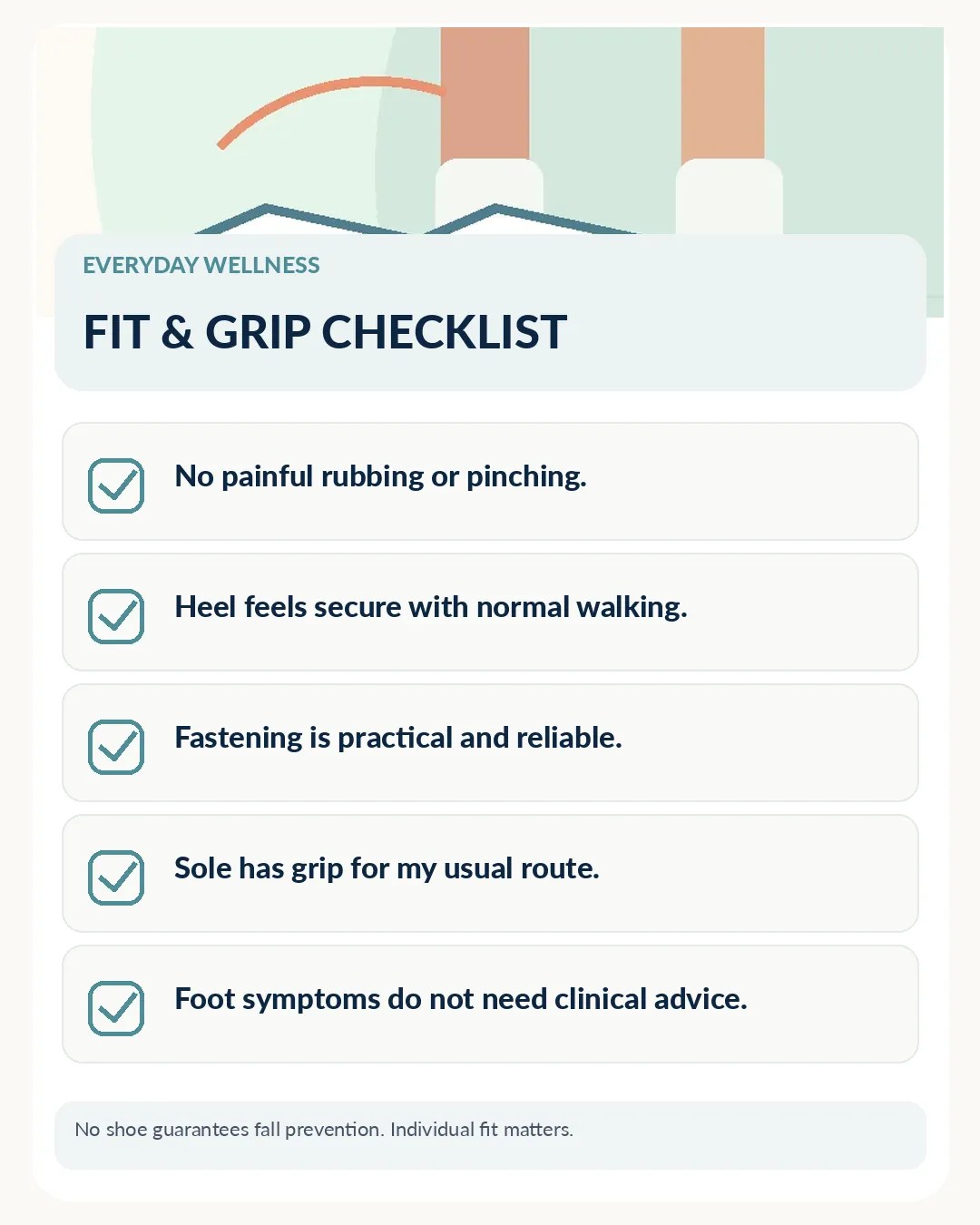
- Do the shoes fit without painful pressure?
- Is the heel reasonably secure?
- Can I fasten the shoes reliably?
- Does the sole have grip appropriate for my routes?
- Does the shoe feel stable when I walk normally?
- Can I use it comfortably with my usual socks?
- Do foot symptoms suggest a professional fitting or medical review?
Questions Readers Often Ask
Do older adults need a special brand of shoe?
No universal brand is appropriate for everyone. Individual fit, stability, medical needs and walking surfaces matter.
Should I keep wearing worn shoes if they feel broken in?
Inspect fit, sole traction and structural wear. Significant wear or slipping is a reason to reconsider the footwear.
Reliable Sources
- CDC STEADI — Footwear and Fall Prevention Resources
- CDC STEADI — Feet and Footwear for Older Adults
- CDC — Vision and Falls Prevention
Read Next
- A Beginner-Friendly Walking Routine — Choose a realistic walking plan.
- Strength and Balance Basics After 50 — Pair walking with appropriate strength and balance activities.
Editorial note: General consumer footwear information, not a diagnosis or fall-prevention guarantee. Foot pain, neuropathy or recurrent instability needs professional assessment. Illustrations are educational, not evidence of personal outcomes, and no professional medical review is claimed.
