Quick answer: Protect your hearing by turning volume down, reducing time near loud noise, moving farther from sound sources and using suitable earplugs or earmuffs when noise cannot be avoided. Risk depends on both how loud the sound is and how long you hear it.
Why everyday sound deserves attention
Hearing damage can result from one very loud sound or repeated exposure over time. The CDC explains that risk depends on both loudness and duration. Lawn equipment, power tools, concerts, headphones and sporting events can all create noisy situations. These habits apply at any age, even though this guide is written with busy midlife adults in mind.
1. Ask Whether Conversation Requires Shouting
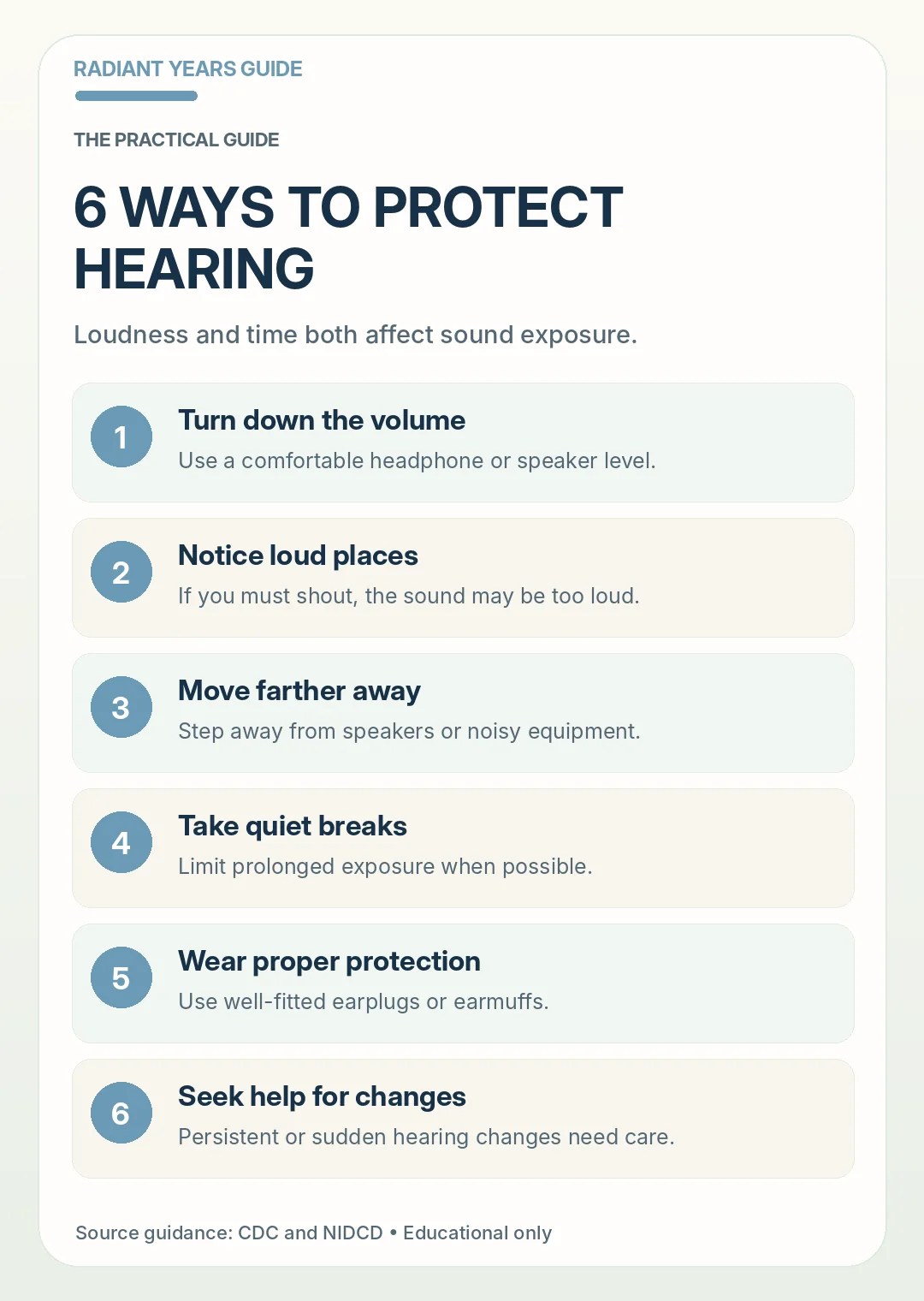
A useful real-world clue is whether you have to raise your voice to be heard at arm’s length. The CDC notes this can indicate sound that may damage hearing. Do not rely solely on how comfortable or familiar a sound feels. Equipment and venues can be louder than expected.
2. Lower Personal Listening Volume
Music, audiobooks and podcasts are convenient, but high-volume headphone listening can expose ears to harmful levels. Turn down volume and take breaks, especially if background noise tempts you to turn up the sound. Some phones show volume warnings, but an indicator is not proof that every session is safe.
3. Consider Loudness Together With Duration
NIDCD notes that sounds at or below around 70 dBA are generally safe, while long or repeated exposure at or above 85 dBA can damage hearing. These are broad educational benchmarks, not a simple all-or-nothing guarantee. A louder sound may cause harm over a shorter duration.
4. Prepare Before Yard Work or Events
When mowing, working with power tools, attending a loud concert or watching motorsports, think ahead about appropriate hearing protection. Bring earplugs or earmuffs when exposure is likely. Correct fit and use matter. At work, follow your safety program rather than substituting a consumer gadget for certified protection.
5. Move Away and Take Quiet Breaks
Increasing your distance from loudspeakers or machinery may reduce exposure, depending on the environment. During a loud event, visit a quieter location from time to time. Neither strategy eliminates all risk, but both may help reduce exposure when combined with suitable hearing protection.
6. Choose Appropriate Earplugs or Earmuffs
NIDCD describes insert-type earplugs, protective earmuffs and specialized hearing protectors. A device should suit the noise and fit correctly. Standard consumer noise-canceling headphones do not automatically replace certified hearing protection for hazardous environments. Maintain awareness of important alarms and safety signals.
7. Recognize When Professional Help Matters
Ringing, muffled hearing, trouble understanding conversations or other ongoing changes deserve professional assessment. Noise is not the only possible cause of hearing problems. Sudden hearing loss is a medical urgency: seek immediate medical care rather than trying an online remedy.
Four Situations to Plan For
At home: Keep TV and headphone volume comfortable. In the yard: Have proper hearing protection ready before starting noisy equipment. At concerts: Bring earplugs and plan quieter breaks. At work: Follow occupational hearing-protection procedures and equipment instructions.
Frequently Asked Questions
Is hearing protection only for people over 50? No. Dangerous noise affects all ages. Do all headphones prevent noise damage? No. Protection depends on volume, time and appropriate gear. Will a supplement reverse hearing damage? No ordinary supplement is a proven universal treatment; ask a qualified clinician for diagnosis and options.
Your Hearing-Friendly Habit Checklist
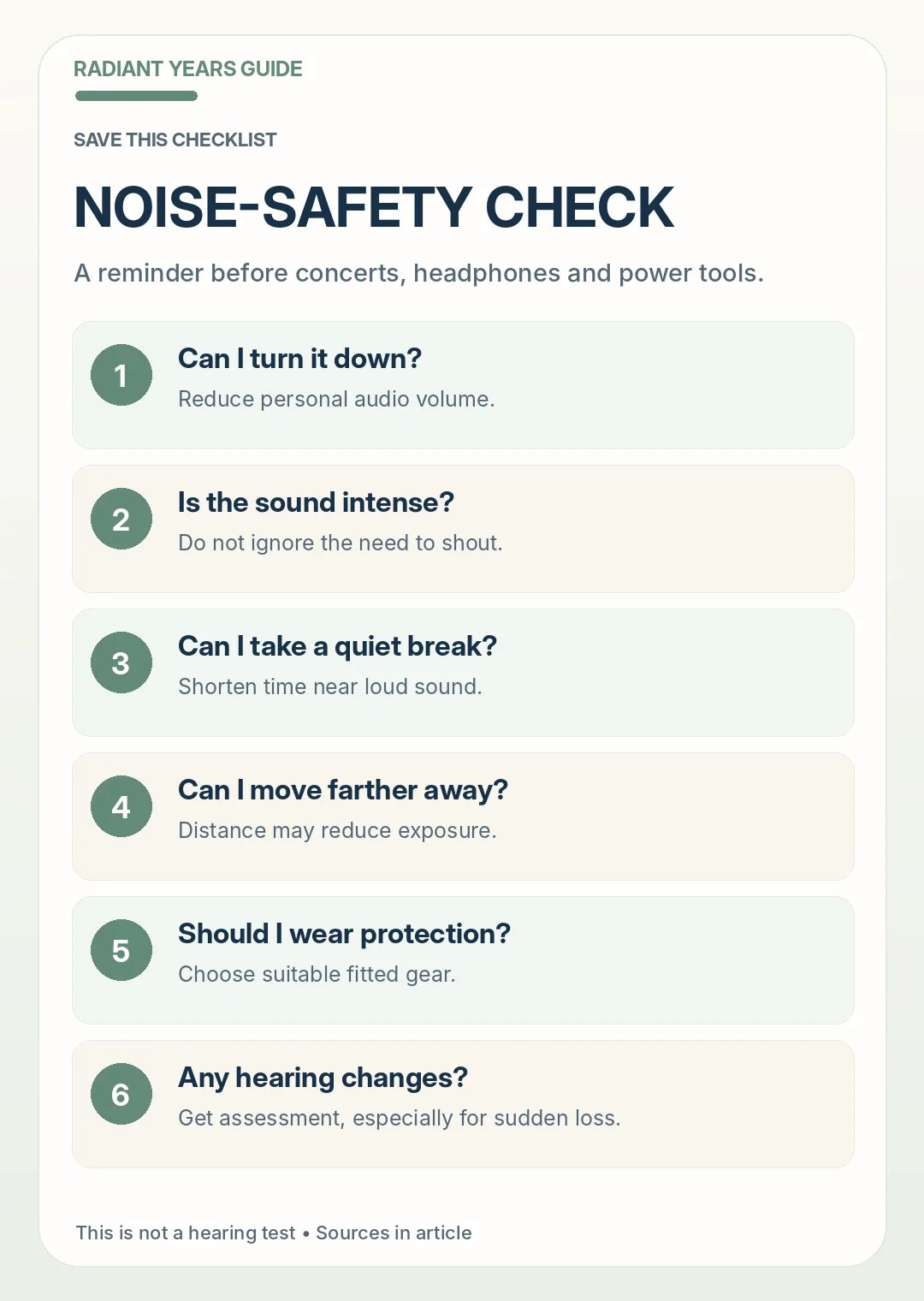
- Is this environment loud enough that I need to shout?
- Can I lower the volume of my headphones or speaker?
- Can I shorten the noisy activity or take a quieter break?
- Can I move farther from loud equipment or speakers?
- Should I use properly fitted earplugs or earmuffs?
- Are ongoing hearing changes a reason to book a professional assessment?
Official Sources
- CDC — Preventing Noise-Induced Hearing Loss
- NIDCD — Hearing Protectors
- CDC — About Noise-Induced Hearing Loss
Explore More Guides
General noise-safety education only. This is not an audiology examination, medical treatment or a guarantee against hearing loss. Illustrations are educational, not patient records.

Leave a Reply