
Quick answer: The fundamentals do not change after 40: choose broad-spectrum, water-resistant SPF 30 or higher for outdoor use; apply enough for exposed skin; reapply as directed; and use clothing and shade as additional protection.
Sunscreen can be part of an ordinary morning skincare routine, yet even people who use it regularly can miss important details. Here are common situations where small adjustments may help, based on guidance from the American Academy of Dermatology (AAD).
Mistake 1: Looking only at the SPF number
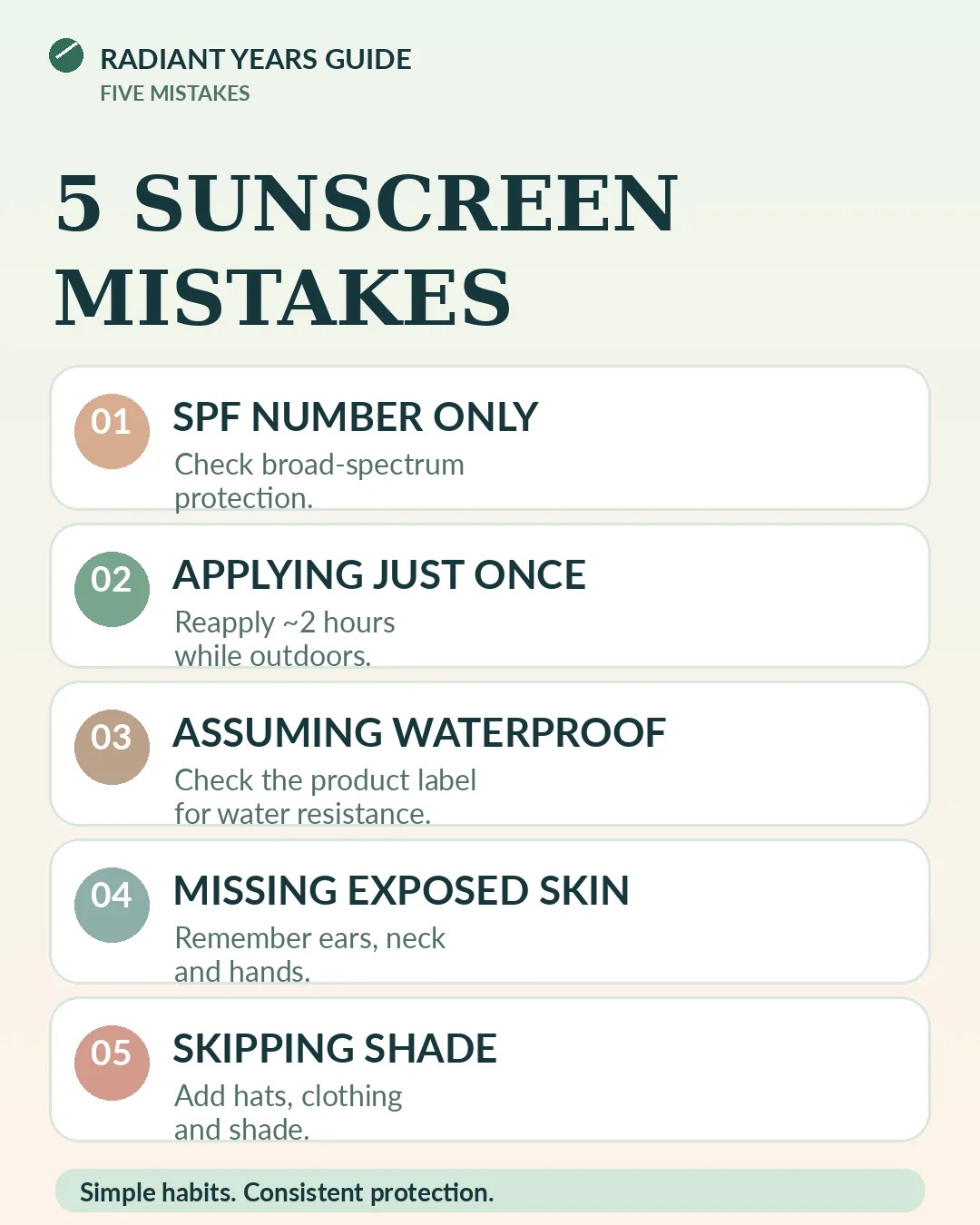
SPF matters, but it does not tell the whole story. Check for broad-spectrum protection, which covers UVA and UVB rays, and look for water resistance when choosing protection for outdoor activity.
An SPF of 30 or higher is a widely recommended starting point. A much higher number is not permission to stay outside without reapplication or other protective measures.
Mistake 2: Treating sunscreen as a one-time morning step
When you’re outdoors, sunscreen needs to be reapplied. The AAD recommends reapplying about every two hours and after swimming or sweating. Follow the label for its specific water-resistance duration.
Set a phone reminder before a long walk, gardening session, outdoor event, or afternoon at the park. A reminder is an organizational aid, not a guarantee of protection.
Mistake 3: Believing a bottle marked ‘water resistant’ is waterproof
There is no waterproof sunscreen. Water-resistant products are labeled for a tested interval, typically 40 or 80 minutes in water. Read the label and reapply after swimming, sweating, or toweling off as directed.
Mistake 4: Missing frequently exposed areas
People often focus on their cheeks and forehead but may forget the ears, neck, exposed scalp, backs of hands, or areas uncovered by clothing. Pay attention to every exposed area and use a suitable product according to its directions.
Mistake 5: Relying on sunscreen alone
Sunscreen works best as one part of a sun-safety routine. Choose shade when practical and wear a wide-brimmed hat, UV-protective sunglasses, and clothing that covers skin. When the sun is strongest, these habits matter especially.
A realistic outdoor checklist
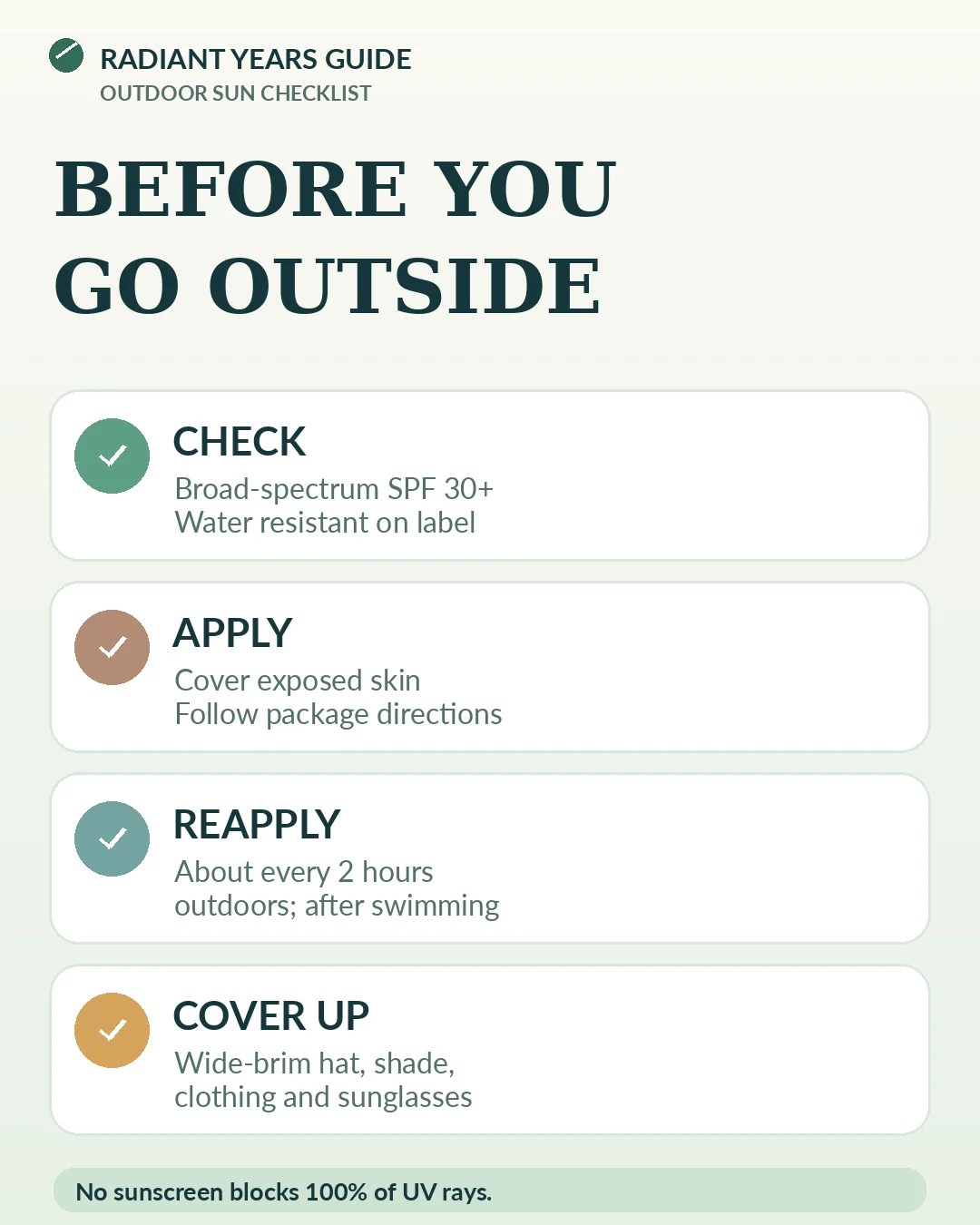
- Before going outside: Check the label for broad-spectrum coverage, water resistance, and SPF 30+.
- Apply: Use enough to cover exposed skin and follow product directions.
- While outdoors: Reapply at the recommended intervals and after water exposure or sweating.
- Pack: A hat, sunglasses, and a light layer of sun-protective clothing.
- Afterward: Store your product as directed and check its expiration date.
Does your complexion change the need for sun protection?
People of all skin tones can be affected by harmful UV exposure. A sunscreen texture or finish that you are comfortable wearing regularly may make consistency easier. Some tinted formulas can also help with visible-light-related dark spots; product selection remains personal.
How this fits into a skincare routine
A simple morning routine might be gentle cleansing, moisturizer when needed, and suitable sunscreen before outdoor exposure. Makeup or expensive products are not required to make a good sun-protection habit. Remember, no sunscreen can promise complete prevention of skin aging or skin cancer.
Trusted sources
- American Academy of Dermatology — 5 common sunscreen mistakes
- American Academy of Dermatology — How to decode a sunscreen label
- American Academy of Dermatology — Practice safe sun
Editorial note: This is general educational guidance, not individualized medical advice. Illustrations are for education and do not replace product-label directions.
