
Quick answer: Keep washing hands when needed, then apply a comfortable fragrance-free cream, especially after washing. Protect hands during wet household tasks and seek dermatology care for persistent or painful changes.
Why hands often need extra care
Hands face repeated washing, weather, soaps, cleaning supplies and friction. Unlike a face routine, hand care often needs to happen several times during the day because hands are used so frequently.
The American Academy of Dermatology (AAD) recommends a consistent moisturizing routine for dry skin and extra protection for hands exposed to water or cold air. You do not need to buy a collection of luxury treatments to start.
Step 1: Wash for hygiene, but keep the process gentle
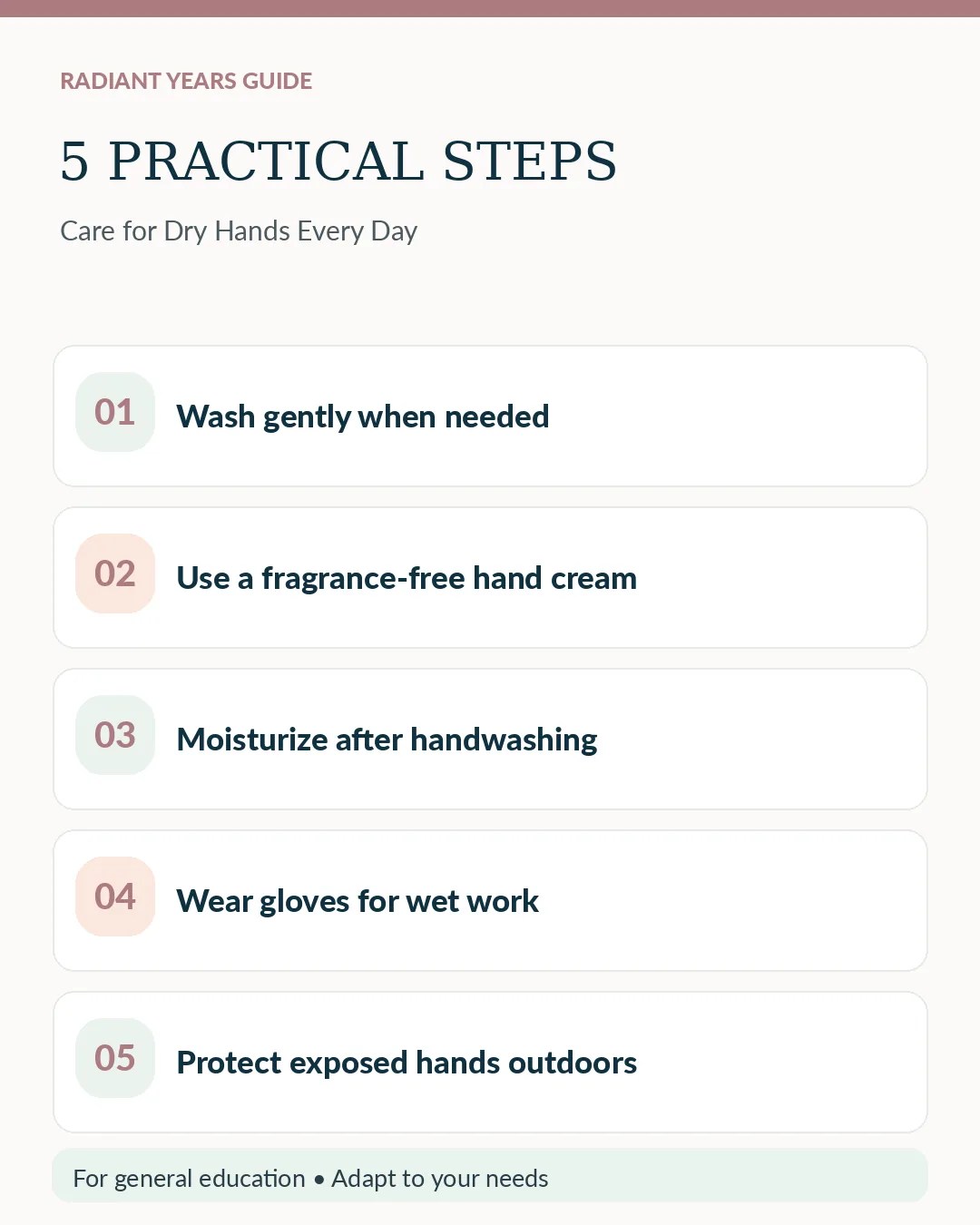
Hand hygiene is important. Do not stop necessary handwashing to avoid dryness. Instead, use a gentle cleanser where suitable, rinse thoroughly and avoid unnecessarily hot water.
Pat hands dry with a clean towel rather than rubbing aggressively. Follow hygiene recommendations for cooking, illness and public settings even if your hands are sensitive.
Step 2: Moisturize after washing
Apply a suitable fragrance-free hand cream soon after washing while the skin is still a little damp. A cream or ointment may feel more protective than a very light lotion for dry hands.
If a moisturizer stings or causes worsening irritation, stop using that product and consider professional advice. More expensive does not automatically mean better for your skin.
Step 3: Protect hands during chores
Dishwashing, frequent immersion in water and cleaning chemicals can aggravate already dry skin. Use appropriate protective gloves when cleaning or doing wet work, and follow chemical product labels.
Choose gloves that fit comfortably. If a glove material itself irritates your skin, consider another suitable material or talk with a dermatologist about potential sensitivities.
Step 4: Remember cold weather and outdoor time
Cold, dry air and indoor heating may aggravate dryness. Carrying a hand cream can make frequent moisturizing more convenient. Gloves may also protect skin from cold outdoor conditions.
When hands are exposed to the sun during outdoor activities, remember appropriate sun protection. The backs of hands are easy to overlook.
Step 5: Know when dryness may be more than dryness
Deep painful cracks, bleeding, persistent itchy patches, blisters or rashes can indicate a skin condition that requires assessment. AAD notes that hand eczema may look like ordinary dry skin.
A hand-care article cannot diagnose eczema, allergy or an infection. If symptoms persist or worsen despite gentle care, seek advice from a board-certified dermatologist.
A simple care routine for busy days
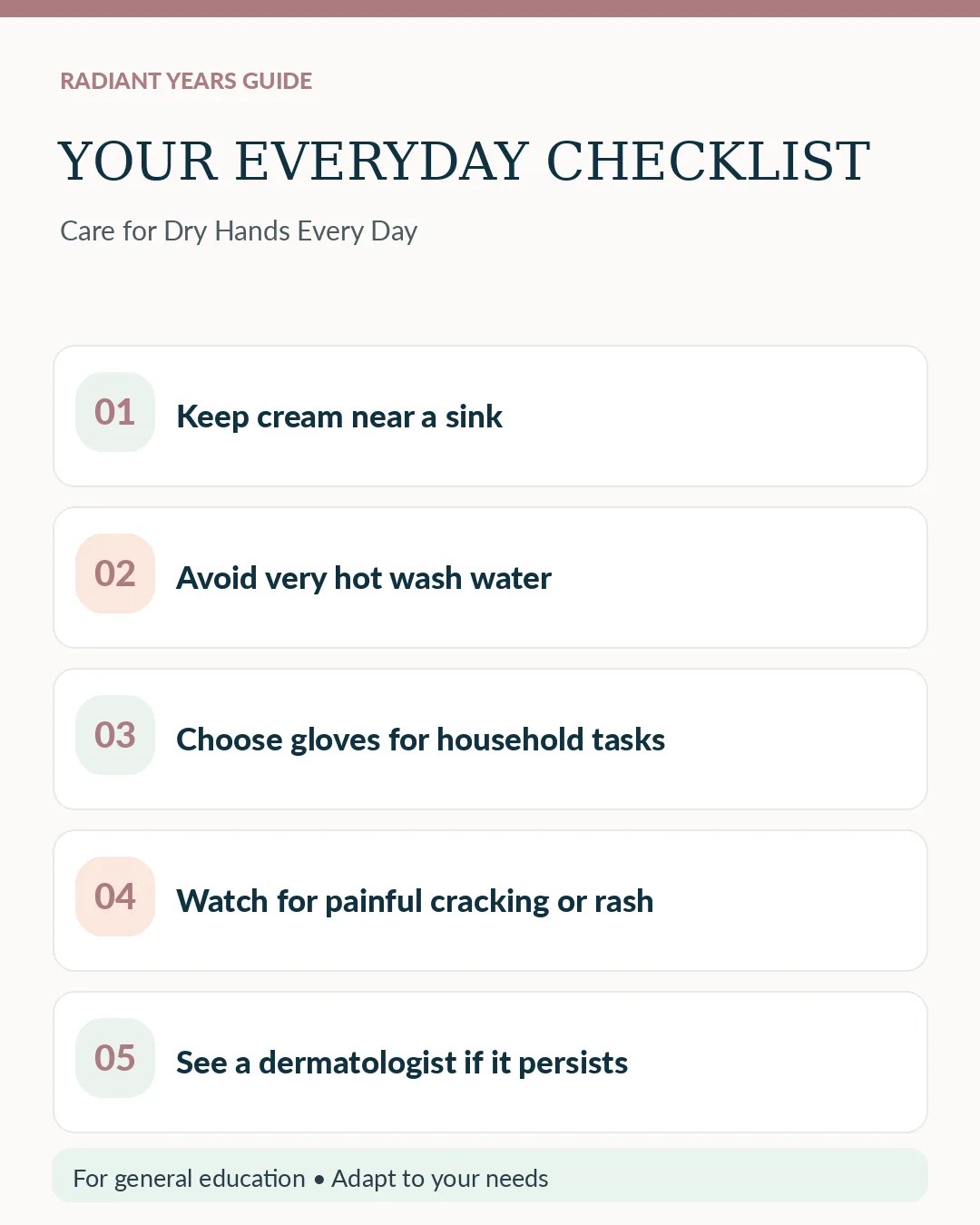
- After handwashing, use your hand cream if suitable.
- Keep a small product near a frequently used sink.
- Use suitable gloves for dishes and cleaning.
- Reapply moisturizer when hands feel dry.
- Watch for persistent pain, cracks, itching or rash.
Common mistakes to avoid
Using harsh scrubs on irritated hands: This can aggravate skin. Assuming unscented equals fragrance-free: AAD advises that these labels may differ. Stopping hygiene: Good handwashing and moisturizing can coexist.
A practical shopping note
Start with a simple fragrance-free product that fits your texture preference. You may see ingredients such as glycerin, ceramides or petrolatum in moisturizers. For a broader texture comparison, read our related guide below.
Helpful Sources & Further Reading
- AAD — 4 Skin Care Tips for Your Hands
- AAD — Dermatologists’ Tips for Relieving Dry Skin
- AAD — Hand Eczema May Resemble Dry Skin
What to Read Next
- How to Choose a Moisturizer After 40 — Compare lotions, creams and ointments.
- A Simple Skincare Routine for Your 40s and 50s — See a gentle full routine.
Editorial note: General skincare education only. Persistent hand symptoms, possible eczema or infection require individual clinical assessment. Images are explanatory illustrations, not personal testimonials or evidence of tested outcomes. The article is not described as medically reviewed.
