
Quick answer: Social connection does not require a packed calendar. One thoughtful message, a regular call or a shared interest can be a manageable place to begin, especially when life changes make routines feel less connected.
Why connection deserves a place in healthy aging
Retirement, relocation, caregiving, changes in mobility and the loss of friends or family may change how much time people spend with others. Feeling alone is not the same as being socially isolated: some people enjoy substantial time alone and still feel connected.
The National Institute on Aging (NIA) notes that loneliness and social isolation can affect mental and physical well-being. These associations do not mean that a particular friendship or activity can guarantee protection against disease.
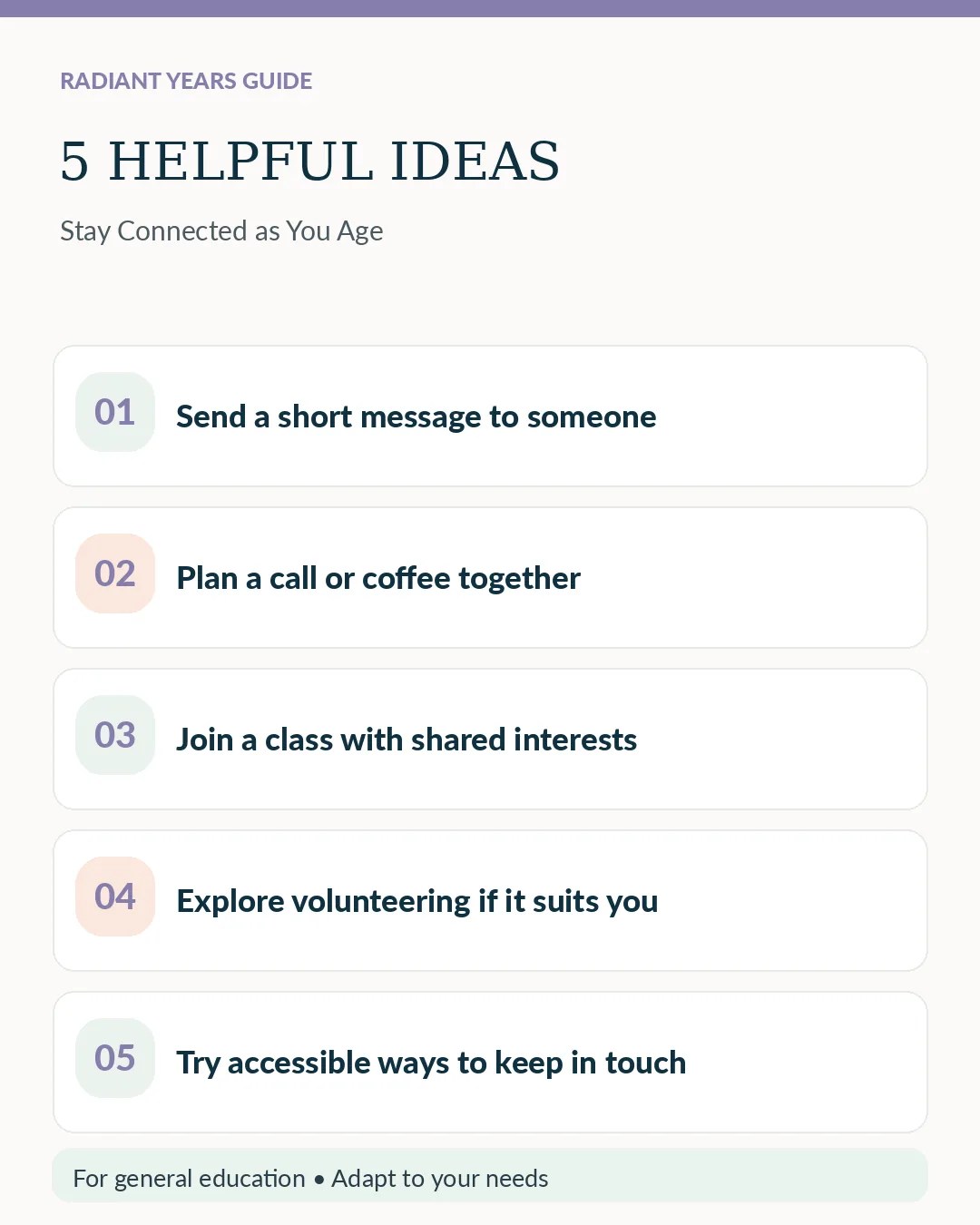
1. Reach out to one person you already know
Think of someone you would enjoy hearing from: a sibling, a former coworker, a neighbor or a longtime friend. A short check-in text can be easier than planning a big event.
You might write, ‘I thought of you today—how have you been?’ If the other person is busy or cannot reply immediately, do not treat silence as a verdict on the relationship.
2. Choose a repeatable contact routine
Weekly calls, coffee once a month or a short walk with someone can offer structure. Ask what works for both people rather than insisting on a fixed schedule.
For families across time zones, video calls or voice messages may fit better than in-person meetings. Technology can support relationships, but it is not a requirement.
3. Follow an interest into a community
A library class, local walking group, community garden, book club or creative hobby can introduce people who enjoy similar activities. Choose something accessible, affordable and genuinely interesting to you.
Some classes offer online participation or alternative formats. If transportation or disability is a barrier, ask a community center or library about accessible opportunities.
4. Consider volunteering if it fits your situation
Volunteering may provide a shared purpose and opportunities to meet people. It is not the right choice for everyone, and commitments should fit your health, energy, time and interests.
You can begin by exploring what is available locally, asking about flexible roles or starting with occasional projects. Avoid overcommitting simply to make your schedule look active.
5. Keep different kinds of connection in mind
A supportive conversation, shared practical help or participating in a group may all matter in different ways. Large social circles are not the only model of a meaningful life.
Be attentive to what leaves you feeling supported and what feels draining. Healthy boundaries are as important as the number of contacts on your phone.
A gentle seven-day connection checklist
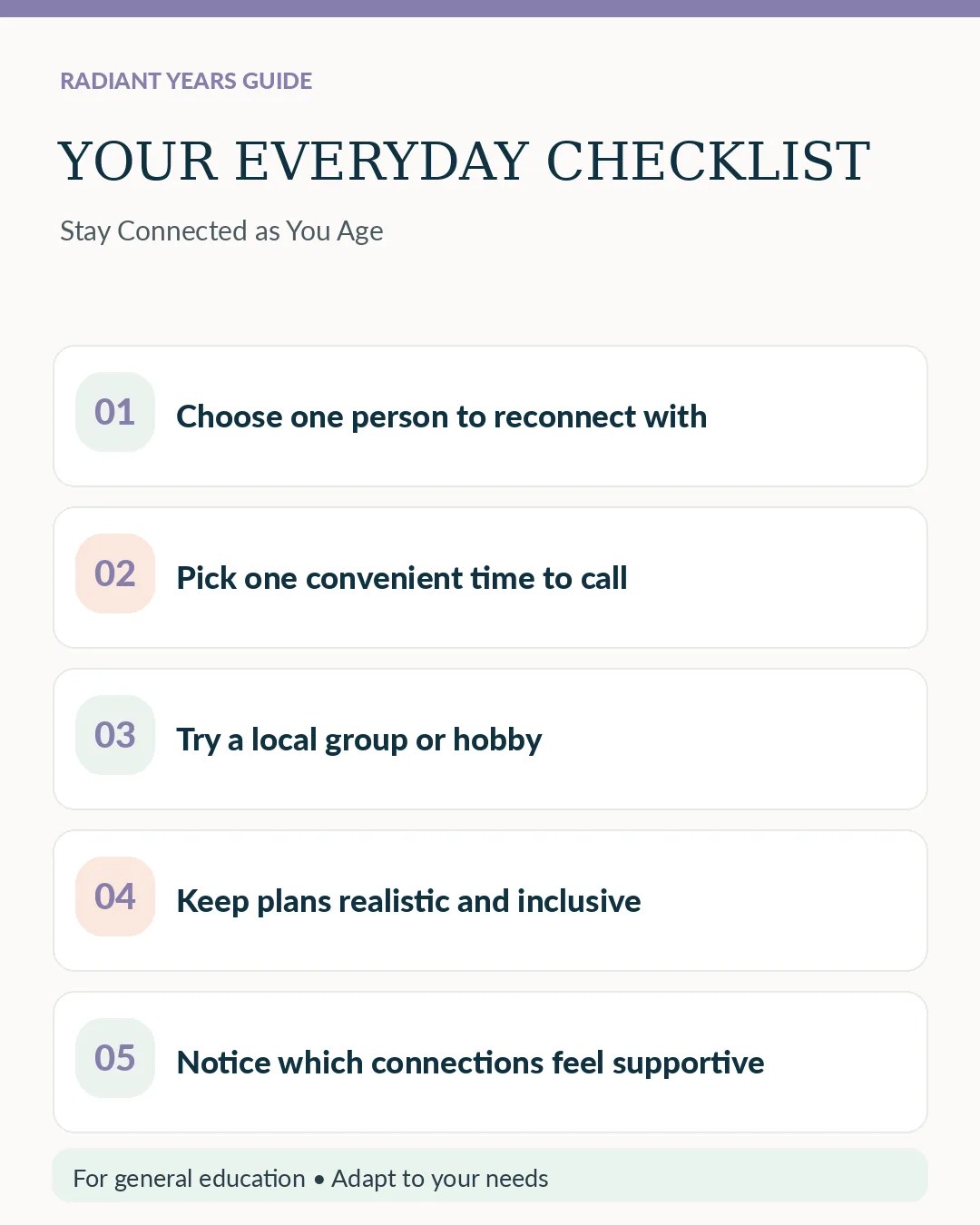
- Choose one person or group you would like to contact.
- Send a short message without pressure.
- Explore one local or online activity you might enjoy.
- Offer a convenient time for a call or shared outing.
- Reflect on which contact felt comfortable and supportive.
If you feel lonely or isolated
Persistent loneliness, major changes in mood or difficulty functioning deserve compassionate attention. Consider talking with a trusted person, healthcare professional or mental health professional, especially if feelings become overwhelming.
If there is immediate danger or a mental health crisis, use the appropriate emergency or crisis resources in your location. An educational article cannot replace professional support.
A practical approach for family and friends
If you want to support someone else, ask rather than assume what they need. Offer low-pressure invitations, respect accessibility needs, and give people choices about phone calls, visits or shared activities.
What makes a habit sustainable?
Choose connection that suits your personality, culture, language and schedule. A meaningful phone call or recurring shared interest can be more realistic than adding activities purely to meet a numerical goal.
Helpful Sources & Further Reading
- NIA — Tips for Staying Connected
- NIA — Participating in Activities You Enjoy as You Age
- NIA — What Do We Know About Healthy Aging?
What to Read Next
- A Beginner-Friendly Walking Routine — A walk with a friend may fit both movement and social plans.
- Strength and Balance Basics After 50 — Read the safe-activity beginner guide.
Editorial note: General educational information about social well-being, not therapy or treatment for depression, anxiety or isolation-related health conditions. Images are explanatory illustrations, not personal testimonials or evidence of tested outcomes. The article is not described as medically reviewed.
