
At a glance: A useful skincare label tells you what the product is, how to use it and what ingredients it contains. Marketing phrases such as ‘miracle’ or ‘age-defying’ are not the same as independent proof of results.
Start with the problem you want to solve
Before comparing dozens of bottles, write down one everyday goal: keeping skin comfortable after washing, finding a gentle cleanser or choosing a moisturizer that feels pleasant. A focused goal makes it easier to ignore products promising everything at once.
A product that suits someone else’s skin may not suit yours. Skin sensitivity, allergies, texture preference and your routine all matter more than an age printed on the packaging.
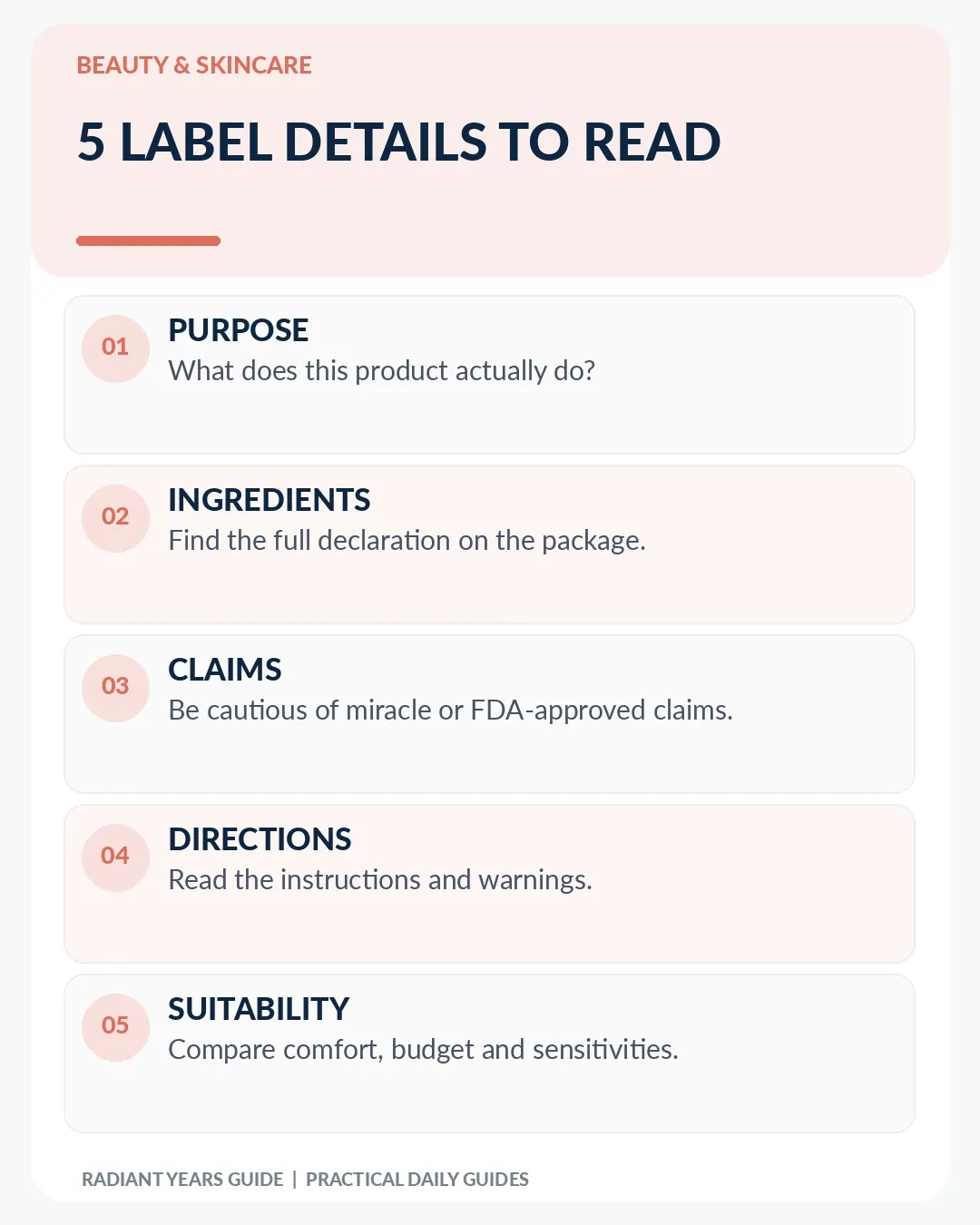
1. Find the actual product purpose
Read the front label, then turn the package around. Is it a cleanser, a basic moisturizer, a sunscreen or a product making a treatment claim? Cosmetics and drugs are regulated differently in the United States. A sunscreen, for example, is regulated as a drug, even though it may look like an ordinary skincare product.
The FDA explains that most ordinary cosmetics do not undergo premarket FDA approval. That does not mean they are unregulated or automatically unsafe; it means ‘FDA approved’ is not a meaningful general seal for an ordinary moisturizer.
2. Locate the ingredient declaration
FDA rules generally require cosmetics sold to consumers to list ingredients, typically in descending order of predominance, with particular exceptions. Read the actual panel instead of relying only on the front-package slogan.
The position of an ingredient in a list cannot by itself tell you whether the finished product will suit your skin. Concentration, formulation and individual sensitivity also matter.
3. Interpret fragrance and sensitive-skin claims cautiously
Words such as ‘natural,’ ‘clean,’ ‘hypoallergenic’ or ‘for sensitive skin’ can be useful clues to a brand’s positioning, but they are not guarantees that a product cannot irritate you.
If you have a known allergy or past skin reaction, review the full ingredient list and consider asking a dermatologist about a safer approach. Products labeled unscented may still contain masking ingredients, and a fragrance-free claim should not replace careful review.
4. Read directions and warnings before buying
Check whether a product is meant for the face, hands or body, and whether the instructions specify a particular use. Look for warnings about eyes, damaged skin, sun sensitivity or combinations with other products.
A strong-sounding active ingredient is not automatically better. Applying products more often than directed or mixing several new products can lead to irritation.
5. Make price and packaging part of your decision
A high price or beautiful jar does not prove stronger results. Consider whether the amount and packaging fit how often you plan to use a product, and whether you can comfortably repurchase it.
For online shopping, look for a complete ingredient list, product directions and a credible seller. If these are missing, wait or ask the seller for the label information.
One realistic shopping example
Suppose you’re choosing between two moisturizers. Product A has elaborate anti-aging claims but no accessible full label online. Product B provides a clear ingredient declaration, sensible directions and a texture you usually enjoy. The second option offers more practical information for an informed decision; that alone does not establish which formula works best.
Compare products according to your skin’s needs, not because an advertisement promises a younger-looking face in a certain number of days.
Five Things to Check on Any Skincare Label
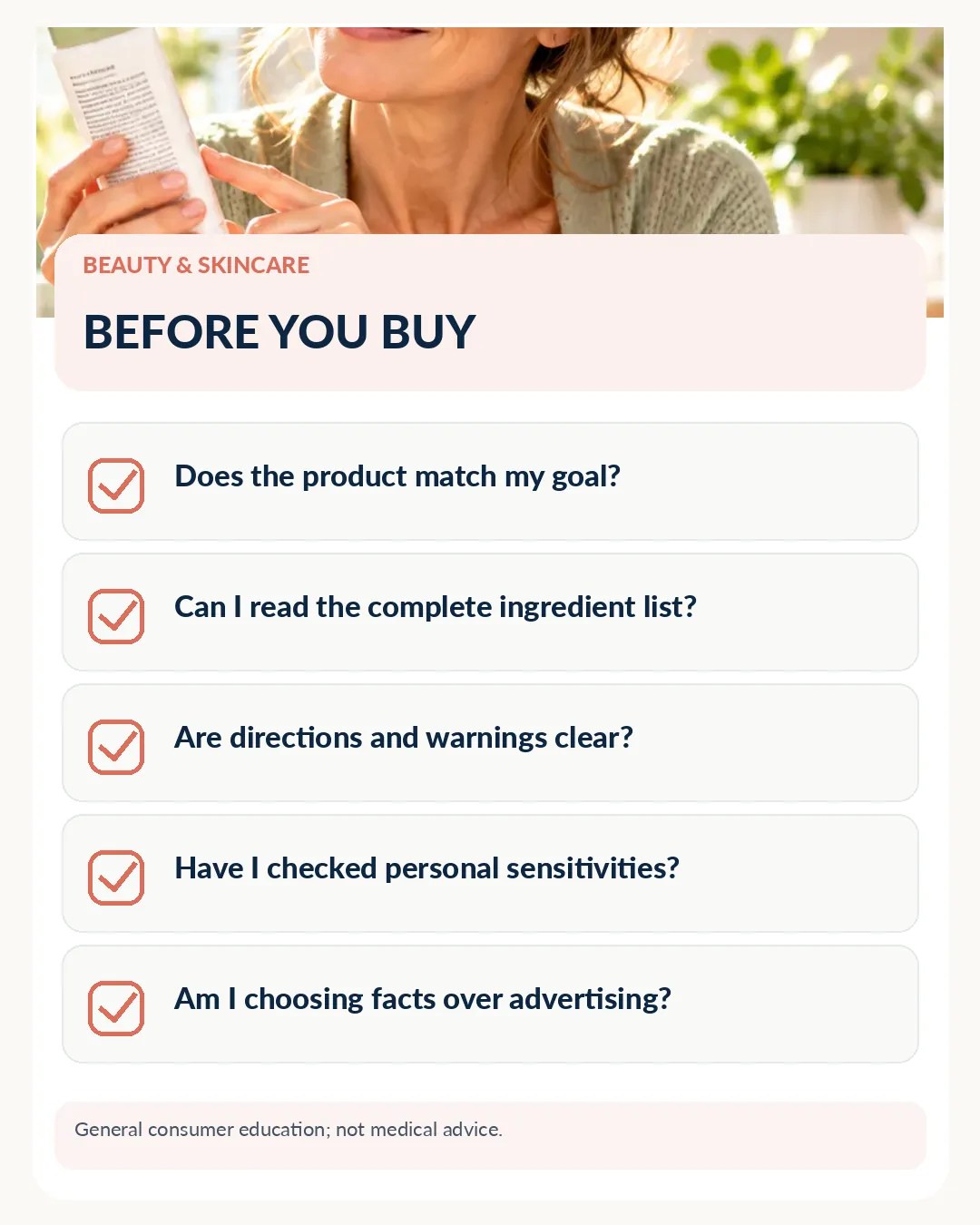
- What does the product actually do: clean, moisturize or protect?
- Can I see the complete ingredient declaration?
- Are the directions, warnings and intended skin area clear?
- Could a listed ingredient cause a reaction I already know about?
- Am I choosing it for a realistic purpose, not a miracle promise?
Questions Readers Often Ask
Does FDA approve all skincare products?
No. Ordinary cosmetics generally do not require FDA premarket approval; products regulated as drugs, such as sunscreens, follow different rules.
Can one ingredient guarantee results?
No. A product’s formulation and your individual response matter, and the label alone cannot predict a personal outcome.
Reliable Sources
Read Next
- How to Choose a Moisturizer After 40 — Compare useful product textures.
- A Simple Skincare Routine for Your 40s and 50s — Start with a gentle basic routine.
Editorial note: General consumer education; not a diagnosis, product endorsement or individualized advice for skin disease. Illustrations are educational, not a personal product test or medical outcome. No expert review is claimed.
