
Quick answer: If you want to move more, you do not have to begin with a long daily workout. Choose a comfortable walking time, start with a manageable amount, and build gradually. Even small amounts of physical activity can offer benefits.
Between work, family obligations, commuting, and everyday errands, finding a new exercise habit can feel like another appointment. Walking is often a practical place to start because it needs little equipment and can fit around ordinary routines.
What do the official guidelines say?
The U.S. Centers for Disease Control and Prevention (CDC) recommends that adults generally aim for at least 150 minutes of moderate-intensity aerobic activity per week and muscle-strengthening activities on two days. That is a longer-term activity target, not a required starting point for everyone.
Older adults should also include activities that improve balance. People with chronic health conditions, disabilities, injuries, or other limitations may need a tailored plan and should ask a qualified professional about appropriate activities.
Before your first walk

Walk Smart: Safety at a Glance
1. Comfort first: Wear supportive, well-fitting walking shoes.
2. Choose an easy pace: Use a comfortable speed on a safe, familiar path.
3. Build gradually: Increase time slowly; rest if you feel pain or dizziness.
- Choose comfortable shoes and an accessible route that feels safe.
- Start at a pace you can manage, especially if you have not been active recently.
- Pick a time that is easy to remember, such as after lunch or after work.
- Consider weather, visibility, traffic and terrain.
- If you have health concerns, ask a clinician whether any precautions are needed.
A flexible seven-day starter example
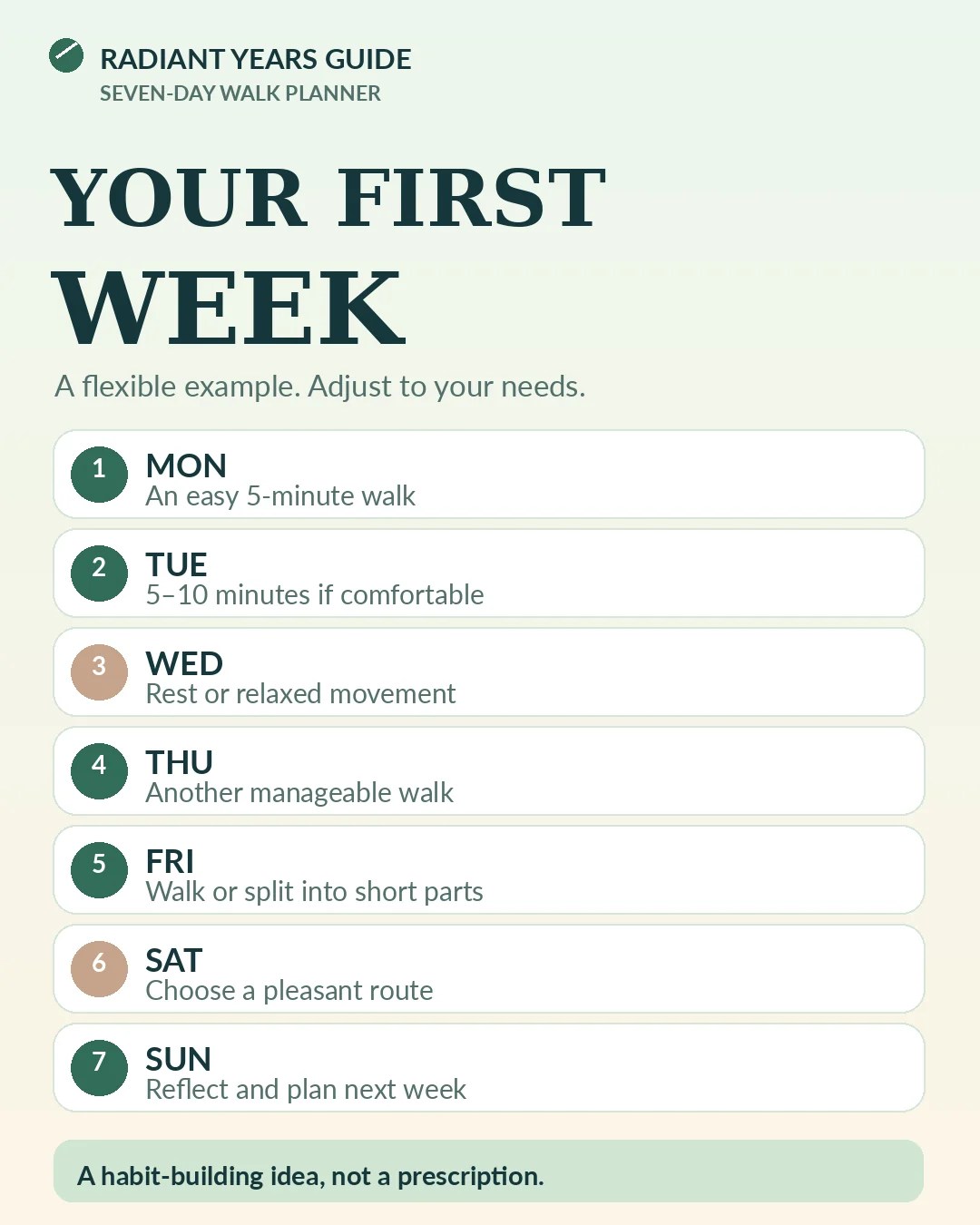
This is a planning example for adults who can walk comfortably, not a medical prescription. Adjust or repeat days based on how you feel; resting is fine. Stop if you experience chest pain, dizziness, or unusual shortness of breath and seek appropriate medical guidance.
- Monday: An easy 5-minute walk to establish the routine.
- Tuesday: 5–10 minutes at a comfortable pace.
- Wednesday: A rest day or relaxed movement as comfortable.
- Thursday: Another manageable short walk.
- Friday: A 5–10 minute walk, or split it into smaller sessions.
- Saturday: Choose a pleasant walking destination.
- Sunday: Review what felt good and decide on next week’s achievable plan.
How to make the habit stick
Tie your walk to something you already do. A short loop before your first meeting or a walk after a meal can be easier to remember than an ambitious new schedule. Make the plan flexible enough to handle changing weather and workdays.
How to judge intensity
Moderate-intensity activity generally makes you breathe harder and raises your heart rate. You do not need to walk briskly on your first day. As your comfort and fitness improve, you can gradually work toward an appropriate intensity and the recommended weekly amount.
Tracking without turning it into a competition
A weekly calendar with checkboxes can be enough. Record whether you walked, roughly how long it took, and how you felt. Avoid comparing your progress with someone else’s step count; the point is consistency and an activity level that suits you.
What about strength and balance?
Walking is useful but it does not replace all other activity needs. The CDC recommends muscle-strengthening activities on at least two days for adults, and balance activities for older adults. Incorporate them at an appropriate level with professional advice when needed.
Simple weekly reflection
- Which walking time was easiest to maintain?
- Was the route safe, convenient, and enjoyable?
- Did I need more rest or a shorter route?
- What is one small change that would make next week easier?
Sources
- CDC — Adding Physical Activity as an Adult
- CDC — Steps for Getting Started with Physical Activity
- CDC — Older Adults: Adding Activity Recommendations
Editorial note: General education only. Consult an appropriate professional about activity with underlying conditions or symptoms. The starter example is an adaptable habit-building idea, not a clinical exercise program.
