
At a glance: The most useful moisturizer is the one that suits your skin’s dryness, sensitivity, and daily routine. People with very dry skin often find creams or ointments more useful than lightweight lotions. Skin changes with age, but there is no single product everyone needs.
Walk into a pharmacy or browse an online beauty store and you may see dozens of moisturizers described as hydrating, renewing, firming or age-defying. Those promises can distract from a simpler question: Does this formula help your skin feel comfortable without irritation?
Start with how your skin feels — not the age printed on a label
Notice whether your skin feels tight after washing, rough around the cheeks, dry in winter, or easily irritated by new products. You do not need to diagnose a skin condition to use those observations when selecting a basic moisturizer.
- Mostly comfortable: A lotion or cream that feels pleasant may be enough.
- Dry and tight: Consider a richer cream instead of a light lotion.
- Very dry patches: An ointment may help retain moisture in some areas, especially when recommended by a clinician.
- Often sensitive: Look for a gentle, fragrance-free formula and avoid layering several new products at once.
Lotion, cream, or ointment: what is the difference?

Which Moisturizer Texture Fits?
1. Lotion: Usually lighter; comfortable for many skin types.
2. Cream: Richer moisture for dry or changing skin.
3. Ointment: Very protective for especially dry areas; may feel greasy.
Think of these as textures rather than rankings. Lotions tend to feel lighter. Creams are thicker. Ointments typically form a heavier barrier that slows water loss. There is no prize for choosing the richest option if it makes your skin uncomfortable.
The American Academy of Dermatology recommends creams or ointments over lotions for very dry skin. For oily or combination skin, a lighter product may feel better in some areas, while drier areas may benefit from a cream.
Read labels without getting overwhelmed
A simple ingredient list can be more helpful than dramatic advertising copy. Moisturizer formulas may contain glycerin or hyaluronic acid, which help support hydration, and ingredients such as dimethicone or petrolatum, which help slow moisture loss.
- Fragrance-free: Often a good starting point if your skin is dry or sensitive. Note that unscented is not necessarily the same thing.
- Non-comedogenic: Worth looking for if you’re prone to clogged pores.
- Texture: Choose a product you will enjoy using consistently.
- Price: A higher price or elaborate packaging does not automatically mean better performance.
When and how to apply it
For dry skin, apply moisturizer shortly after washing while skin is still slightly damp. Use it again when skin feels dry. Gentle cleansing and lukewarm water may help reduce irritation. Your moisturizer is not a replacement for broad-spectrum SPF 30+ sun protection when outdoors.
A five-question shopping checklist
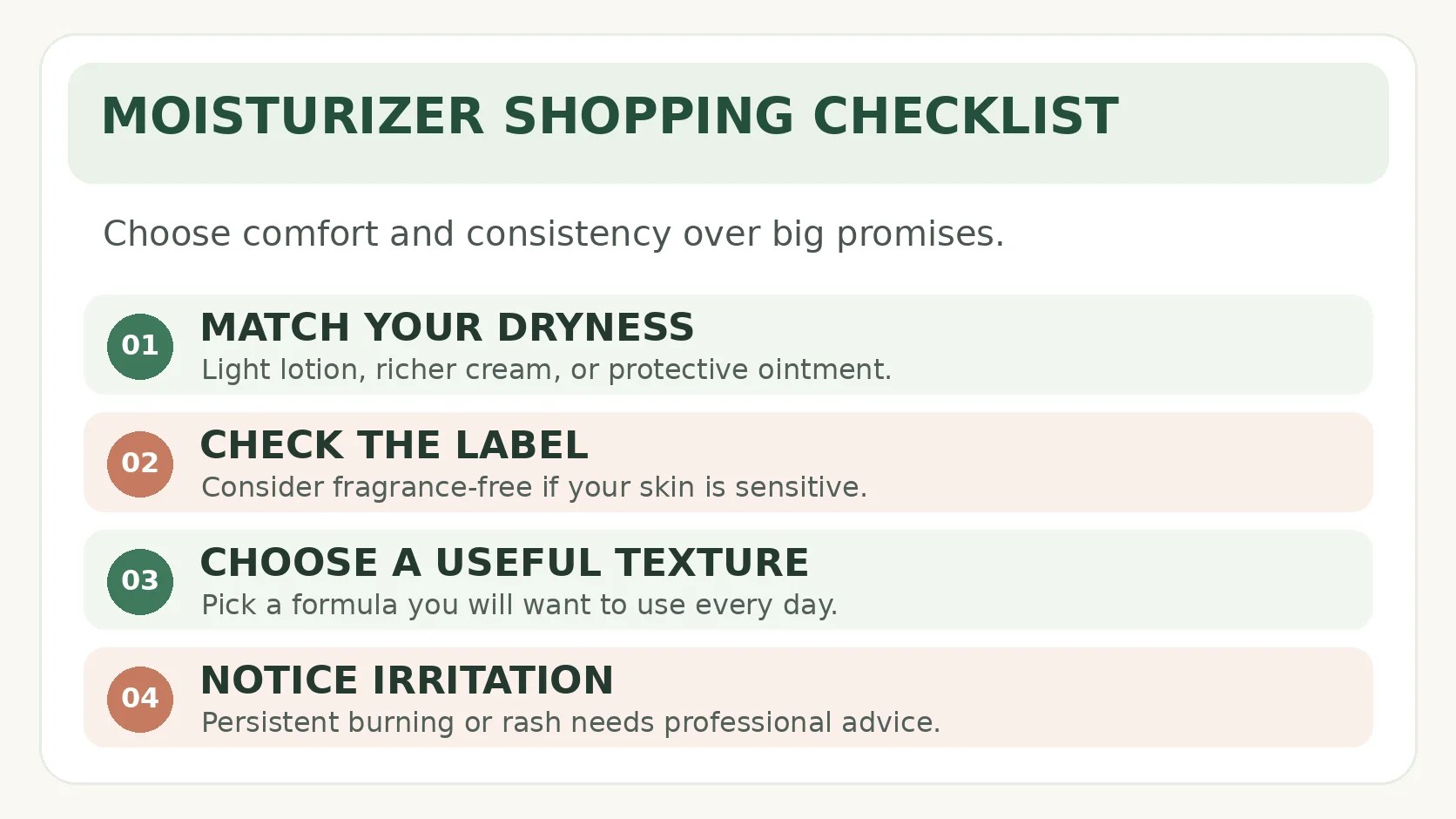
- Does this product match how dry my skin actually feels?
- Is it fragrance-free if my skin is sensitive?
- Do I like the texture enough to use it every day?
- Does the label make exaggerated promises, or explain what the product does?
- Can I introduce this one product without changing my entire routine?
Signs your routine needs a closer look
If you experience persistent itching, significant cracking, bleeding, burning, rash, or painful irritation, consult a board-certified dermatologist. Skin problems can have causes that a moisturizer alone will not address.
A simple first-week plan
Use your chosen moisturizer consistently and notice comfort, tightness and irritation rather than expecting visible age reversal. Change one thing at a time. Keeping a short note about what you used helps if you need to discuss a reaction with a clinician.
Reliable sources
- American Academy of Dermatology — How to pick the right moisturizer for your skin
- American Academy of Dermatology — Dermatologists’ top tips for relieving dry skin
Editorial note: General educational information only, not personalized medical advice. No clinician review is claimed. The article includes a featured image and visual guidance. Last updated October 12, 2026.
