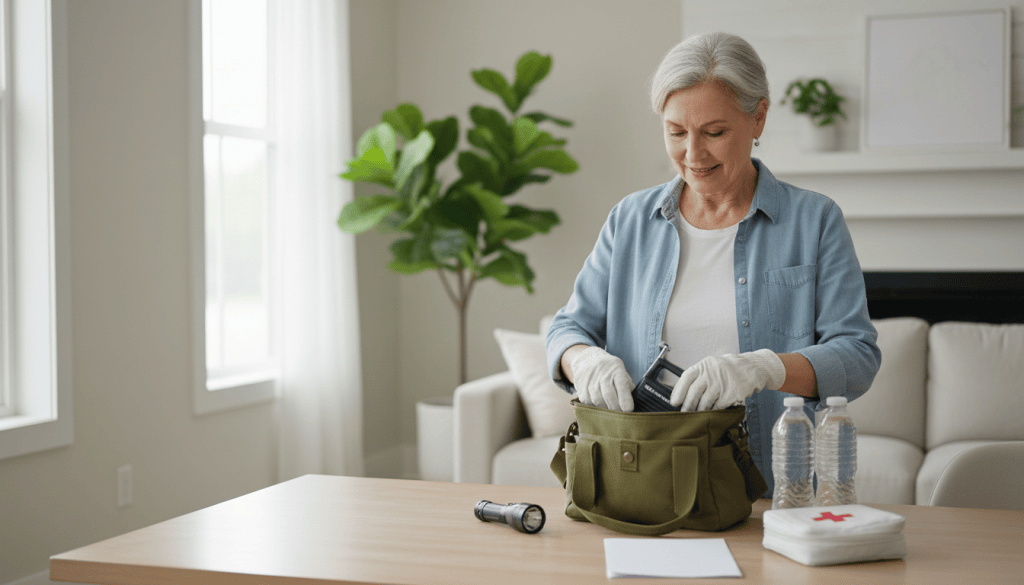
Quick answer: A useful emergency kit should fit the people who may use it. Start with water, nonperishable food, light, charging power, important contacts, essential medical supplies, and a realistic evacuation or shelter-in-place plan. The CDC and Ready.gov emphasize preparing for personal mobility, communication, medication, and caregiving needs—not just buying a generic bag.
Extreme weather, a power outage, or an unexpected evacuation can create confusion even in a familiar neighborhood. People in their 50s and beyond may care for an older relative, travel regularly, take prescribed medicines, or rely on glasses or electronic equipment. Planning for those realities can make emergency information easier to find when time and attention are limited.
This is not a claim that a kit will guarantee safety in every disaster. Follow local emergency management instructions and ask qualified professionals about medical needs, especially oxygen, insulin, refrigerated medications, and powered medical devices.
Start with two scenarios, not a huge shopping list
The most helpful question is whether you might need to stay home without utilities or leave on short notice. Ready.gov encourages planning for both situations. A larger household kit can hold more supplies, while a smaller portable bag may be easier to grab when an evacuation is ordered.
Talk with household members about local hazards and where to obtain reliable alerts. A wildfire, hurricane, winter storm or prolonged power outage may call for different steps. Do not assume the same bag solves every event.
1. Plan water and suitable shelf-stable food
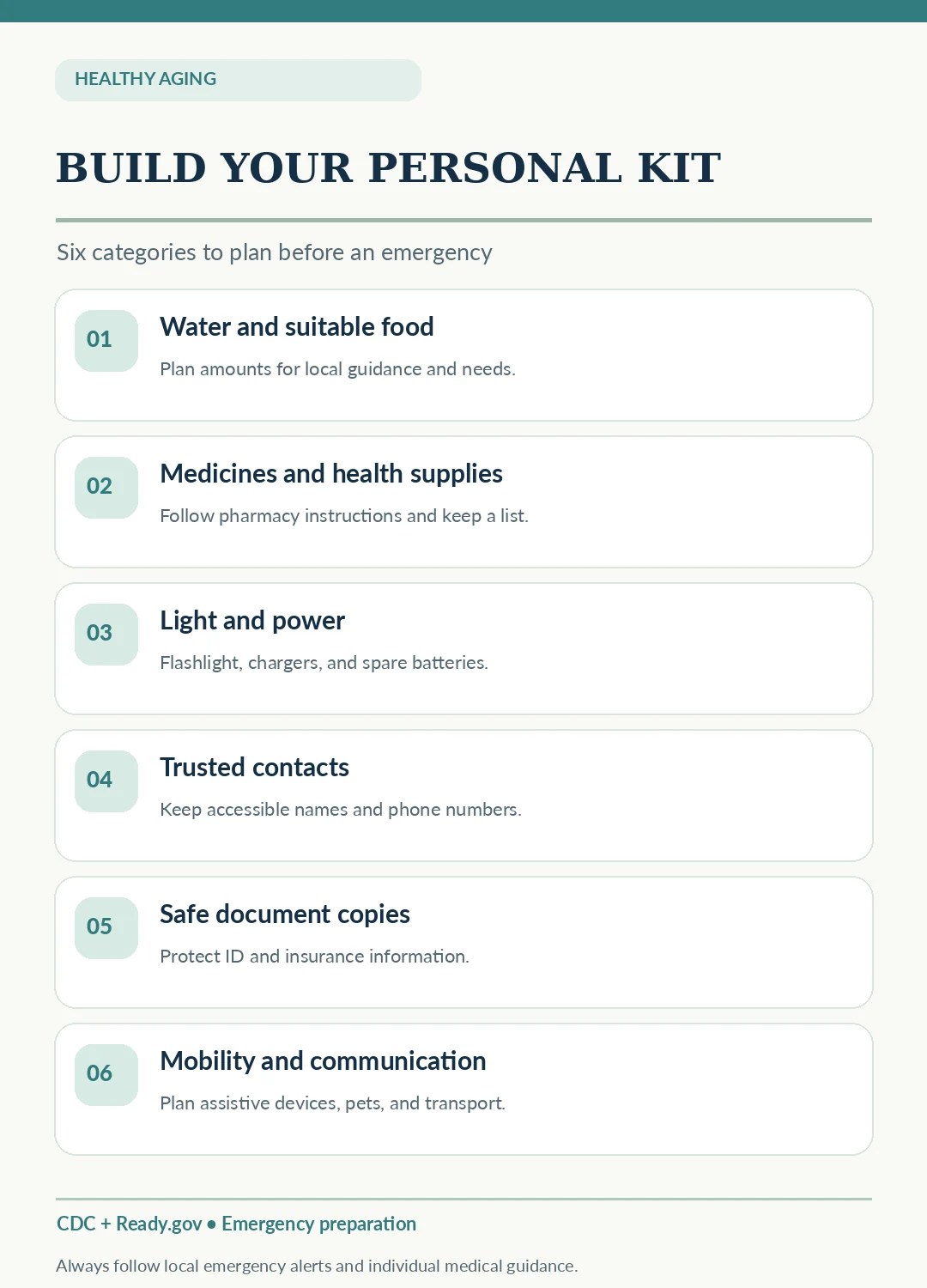
Ready.gov’s basic emergency supply guidance commonly starts with at least a few days of water and nonperishable food. A typical planning reference is one gallon of water per person per day for drinking and sanitation, with adjustments for local advice, heat, medical conditions, and pets.
Choose food that household members can safely eat without extensive cooking. Include a manual can opener when needed. Pay attention to special diets, food allergies, swallowing difficulties, and storage dates. Emergency supplies should not override individual medical fluid or food restrictions.
2. Think ahead about medicines and medical supplies
The CDC’s personal emergency kit guidance for people with disabilities suggests preparing for ongoing medicines and necessary supplies, including a medicine list and arrangements for refrigeration when appropriate. Ask your pharmacist or care team about obtaining suitable emergency medication reserves, storage requirements, and what to do if power is interrupted.
Never change doses, stockpile prescription drugs unsafely, or place temperature-sensitive medicines in an unsuitable bag. A paper note with the pharmacy and care team contact details can be helpful if a device or network is unavailable.
3. Include lighting and a backup way to communicate
A flashlight, appropriate spare batteries, portable phone charging option, and access to local weather or emergency alerts can be important. Check whether your power bank actually works with your phone and any devices you use regularly.
Charge or test equipment on a schedule that fits your household. Keep batteries and chargers in appropriate storage conditions. Do not rely entirely on internet access: an emergency can disrupt mobile service or electricity.
4. Make a personal support network plan
Write down the phone numbers of family members, neighbors, caregivers, medical providers, and any people who have agreed to help. The CDC recommends telling your support network how they may be able to assist and planning for situations when ordinary communication stops.
Ask before assigning someone an emergency role. Identify an out-of-area contact when practical and decide where to meet if you cannot return home. A contact list is most useful when it has been discussed in advance.
5. Protect important documents without exposing private data
Ready.gov materials suggest copies of identification, insurance information, and other documents relevant to accessing help. Store copies in a waterproof container or another safe format, following appropriate security practices.
Do not leave unprotected full account numbers or private medical details where strangers can access them. This publication does not need and should never receive your emergency document copies. A secured summary or directions to safely stored information may be more appropriate for some families.
6. Include mobility, sensory and communication needs
If you use glasses, hearing aid batteries, an assistive device, communication aid, medical equipment or service-animal supplies, put them on your kit checklist. The CDC notes that individual needs may involve chargers, extra mobility equipment, medical supplies, and a safe transportation plan.
Where appropriate, contact local emergency management or a healthcare provider ahead of time about evacuation support. Do not assume standard emergency shelters can meet every medical or accessibility need without advance planning.
7. Decide how you would evacuate or stay home
Identify at least one place you could go, the transportation options available, and how you would receive authoritative updates. Make sure your plan considers stairs, pets, medication storage, and equipment that cannot easily be carried.
If officials direct you to evacuate or shelter, follow their instructions rather than a generic checklist. Keep exits clear, avoid hazardous travel, and request help when needed. Never enter a dangerous area to retrieve a bag.
8. Put a review reminder on your calendar
An emergency kit is not useful if all its batteries are depleted or its contents are expired. CDC advises reviewing individualized emergency kits periodically, including checking that supplies are current and accessible. A six-month check is one practical benchmark.
At each review, test lights and charging, check contact details, review food and medicine expiration dates, and update care instructions. Avoid leaving your sole current medication supply in a bag that is hard to reach.
A small-budget way to begin this week
Day 1: Write your key contacts and check your local alert system. Day 2: Identify suitable food and water you already own. Day 3: Test your flashlight and charging method. Day 4: Discuss medication and equipment needs with the appropriate professional. Day 5: Put secure document information in one known location. Weekend: Review escape routes and talk with your household.
This is a flexible planning example rather than an official seven-day government schedule. If you face an imminent hazard, follow emergency guidance now instead of waiting for the end of the week.
Your Five-Point Emergency Readiness Checklist
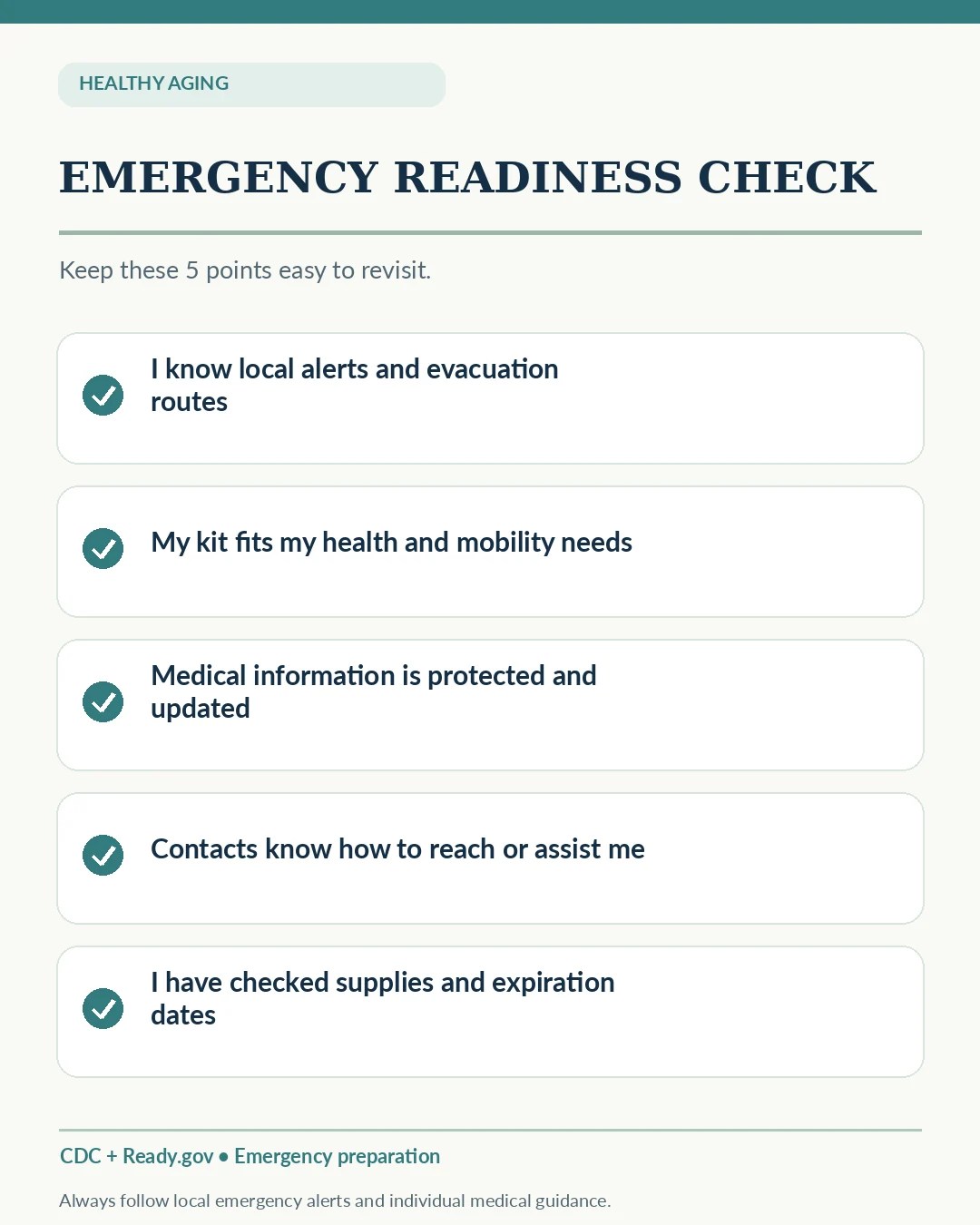
- I know how to receive reliable local alerts and what to do if evacuation is ordered.
- Our kit includes suitable water, food, light, and a way to charge essential devices.
- Personal medicines, health supplies, and mobility or communication needs are planned for.
- Trusted contacts and secure document information are accessible.
- We have reviewed dates, batteries, locations, and relevant evacuation routes.
Frequently Asked Questions
Does everyone over 50 need the same emergency kit?
No. The most important additions depend on the household, local hazards, health conditions, accessibility needs, pets, and available transportation.
Can I keep all my prescription medicines in a go-bag?
Ask your pharmacist or prescriber about reserve supply, storage conditions, and how to keep active prescriptions accessible. Some medicines must stay at controlled temperatures.
Will this kit guarantee I can stay home safely?
No. Official evacuation orders, weather risks, local services and medical needs take priority over a general supply list.
Official Sources and Further Reading
- CDC — Building an Emergency Kit
- CDC — What Is an Emergency Plan?
- Ready.gov — Plan Ahead for Disasters
- Ready.gov — Disaster Preparedness Guide for Older Adults
Related Guides at Radiant Years
- Your Personal Health Information Folder After 50 — Keep medical records organized privately.
- Medicine Cabinet Safety After 50 — Understand secure storage and disposal.
- A Home Safety Checklist for Healthy Aging — Reduce everyday physical hazards.
Editorial note: This is general preparedness education, not a disaster response directive, medical prescription, or guarantee of safety. Use current local emergency instructions and individualized healthcare guidance. Illustrations are fictional and do not depict an actual emergency event.
