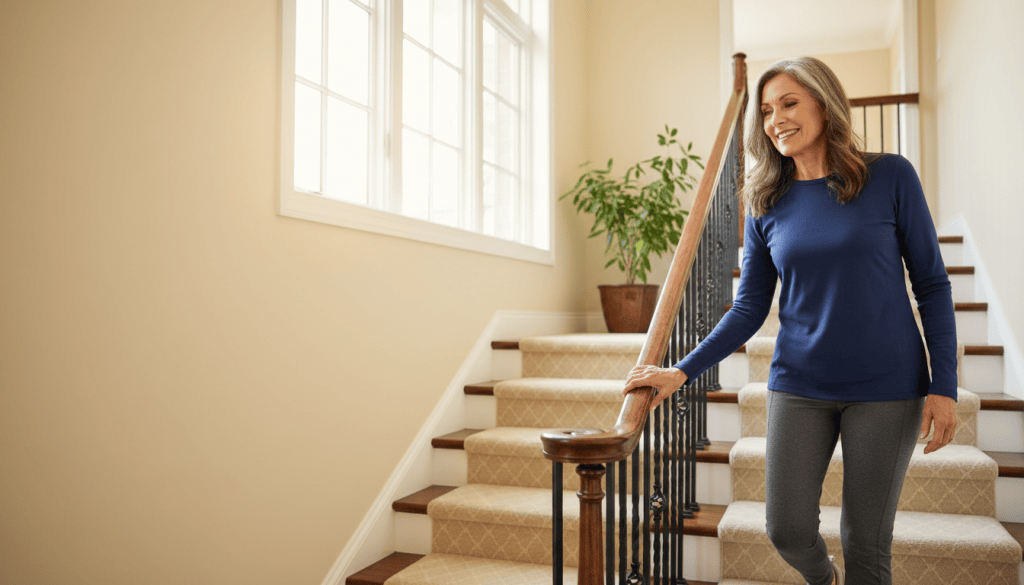
At a glance: A home can be more comfortable and safer with practical changes: clearer walkways, better lighting and suitable support. A checklist can help identify hazards, but it cannot guarantee that a fall will never happen.
Why home safety belongs in a healthy-aging guide
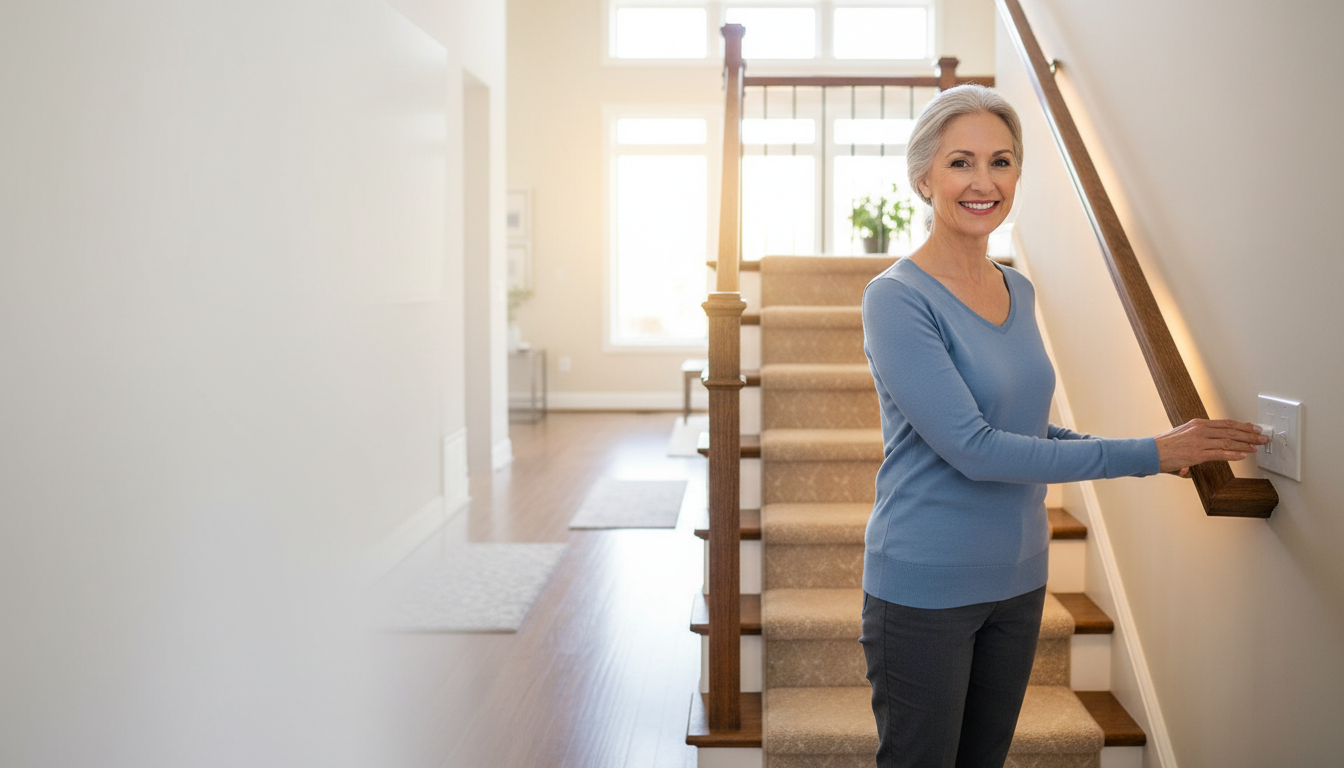
Home Safety: A Quick Walkthrough
1. Clear walking paths: Remove loose clutter and trip hazards.
2. Check lighting: Brighten stairs, entryways and halls.
3. Add safe support: Inspect handrails and bathroom safety needs.
As routines and mobility change, hazards such as loose rugs or poorly lit stairs can become more noticeable. The CDC emphasizes that fall risk can be reduced and offers a room-by-room home safety checklist for older adults.
This guide focuses on easy observations and sensible conversations with a qualified professional. It is not an inspection certificate or a substitute for medical fall-risk assessment.
Start at the entrance and main walkway
Stand at your usual entryway and consider the route you take into the home. Are bags, shoes, electrical cords or furniture blocking the path? Is the floor slippery when wet?
Create a clear route that works for the people who live there. If heavy furniture needs moving or repairs are required, ask for appropriate help rather than taking an unsafe lifting risk.
Check stairs and steps
Look for adequate lighting, intact steps and secure handrails. Uneven steps or loose railing hardware need appropriate maintenance or professional repair.
Avoid carrying bulky items that block your view of the stairs. People with mobility concerns should discuss supportive equipment and fall prevention with a clinician or appropriate specialist.
Review bathroom support and surfaces
Wet bathroom floors can become slippery. The CDC recommends bathroom grab bars in appropriate locations, including near toilets or bathing areas, for people who benefit from them.
Proper installation matters. A towel rack is not a substitute for a weight-bearing grab bar. Ask a qualified installer or healthcare professional what arrangement may work in your home.
Think through the bedroom-to-bathroom path
Nighttime trips are easier when lighting is accessible, walkways are clear and the route is familiar. Consider a bedside lamp or an appropriate motion-sensitive nightlight.
Light should help with visibility without creating confusing glare. Keep frequently needed items within safe reach rather than placing them on distant shelves.
Review kitchen routines
Clean up spills, keep common supplies in reachable areas and avoid climbing on an unstable chair to reach high shelves. Store heavy items in locations you can access safely.
Do not redesign your kitchen based on a diagram alone if you need a wheelchair, walker or special support. Accessibility requirements vary.
Remember vision, footwear and medications
A home checklist is only one piece of fall-risk reduction. CDC also highlights vision concerns, foot pain, footwear and medicines that may cause dizziness or sleepiness. Discuss falls, unsteadiness or other concerns with a healthcare professional.
If you have fallen, feel unsteady or are afraid of falling, tell your clinician. These concerns should not be dismissed as normal aging.
Make a three-level action plan
Today: Clear easily removable clutter and check night lighting. This week: Review loose rugs and commonly used storage areas. With help: Arrange proper handrail or grab-bar assessment and repairs if needed.
Keep your action plan realistic and assign tasks requiring skilled installation to an appropriate person. Safety improvements are not all do-it-yourself projects.
Room-by-Room Home Safety Checklist
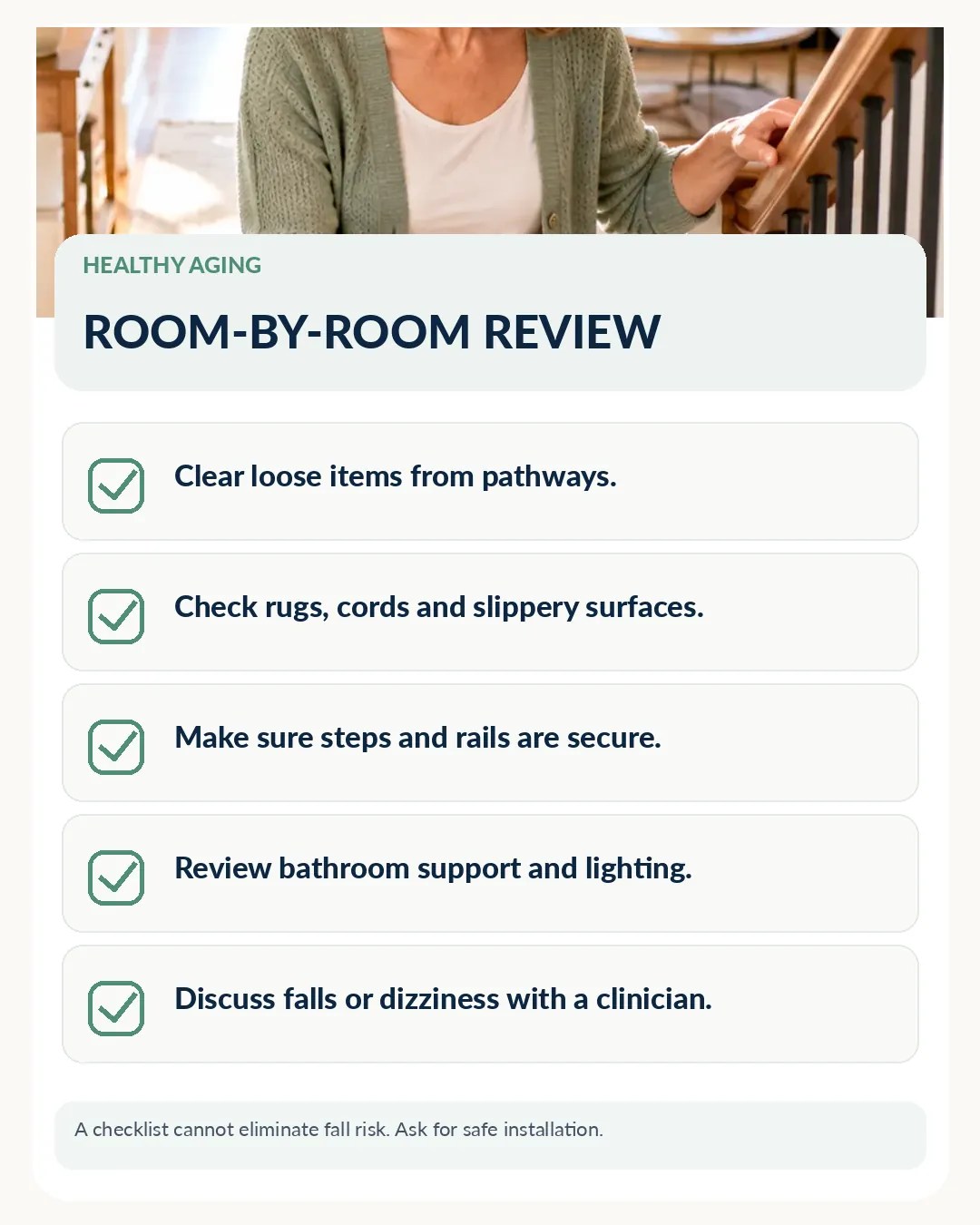
- Entrance: no clutter blocking the usual route.
- Living area: secure or remove slipping/tripping hazards.
- Stairs: intact handrails and visible, even steps.
- Bathroom: suitable non-slip conditions and properly installed support.
- Bedroom: accessible light and clear night path.
- Health: discuss falls or dizziness with a qualified professional.
Questions Readers Often Ask
Can a checklist make a home ‘fall-proof’?
No. Fall risk involves health, vision, medications, balance and environment. Reducing hazards can help, but no home setup guarantees zero falls.
Should I install grab bars myself?
Only if you have the right knowledge and materials; proper placement and anchoring are critical. Professional installation may be appropriate.
Reliable Sources
- CDC STEADI — Patient and Caregiver Resources
- CDC — Vision Impairment and Falls Among Older Adults
- CDC — Preventing Falls and Hip Fractures
Read Next
- Strength and Balance Basics After 50 — Learn about safe physical activity and balance.
- Staying Socially Connected as You Age — Consider support networks and shared help.
Editorial note: General home safety education only; seek individual fall-risk assessment for falls, unsteadiness or mobility concerns. Illustrations are educational, not evidence of personal outcomes, and no professional medical review is claimed.
