
At a glance: Before a healthcare visit, write down your top concerns, current medicines and the questions you want answered. A simple one-page list can help make limited appointment time more useful.
Why preparation matters

Prepare for Your Doctor Visit
1. Write top concerns: Put the most important question first.
2. List medications: Include medicines and supplements you take.
3. Plan follow-up: Ask what to do next and when to check in.
It is easy to forget an important question when the appointment begins. The National Institute on Aging recommends listing concerns in advance and discussing the most important ones early.
A good checklist doesn’t diagnose you or tell your clinician which treatment to choose. It helps you share information accurately and leave with a clearer understanding of the plan.
1. Choose your top two or three concerns
Think about changes that have affected daily life: a symptom, a medicine question, a fall, sleep problems or uncertainty about a previous recommendation. Put the most important concern at the top.
If you have several major issues, ask the office whether a longer or follow-up appointment would be useful. Do not wait until the last minute to mention your most pressing concern.
2. Write a brief symptom timeline
Where appropriate, note when a symptom started, what makes it better or worse, whether it happens at a certain time and how it affects your day. Include anything important without trying to interpret the cause yourself.
If symptoms are severe, rapidly worsening or potentially urgent, seek medical advice promptly rather than waiting for a routine appointment.
3. Bring an accurate medicine and supplement list
Include prescribed medicines, over-the-counter products, vitamins and other supplements. Note names, doses and how you actually take them, without changing doses on your own.
The NIA suggests bringing your medication information so the care team can review it. Allergies and past significant reactions may also be useful to mention.
4. Prepare a short question list
Examples: ‘What are possible explanations for this symptom?’ ‘What are the benefits and risks of this plan?’ ‘What warning signs should prompt me to seek help?’ ‘When should I follow up?’
Questions make a consultation more useful, but the healthcare professional may recommend a different approach based on your examination and history.
5. Plan for communication needs
If hearing, language, vision or memory difficulties make an appointment harder, ask about interpreters, accessible instructions or bringing a trusted person. Ask the person accompanying you how they can help.
You control whether a companion joins sensitive parts of the visit. Privacy, consent and personal preferences matter.
6. Clarify the plan before leaving
Ask for the next steps in plain language, including medicines, tests, referrals and follow-up timing. Check where results will appear and whom to call with questions.
If instructions are confusing, request written notes or a patient-portal summary. Never be embarrassed to ask for an explanation again.
A one-page example
Main concern: What I noticed and when. Other questions: Two short bullet points. My medicines: Current accurate list. During visit: Notes on next steps and follow-up. After visit: Questions I still need clarified.
Do not post this worksheet publicly or send private medical information through unrelated blog comment or contact forms.
What not to do
Avoid stopping a prescribed medication, postponing urgent care or treating a search result as a medical diagnosis. A general article can support organization but not replace an actual medical assessment.
Your One-Page Appointment Checklist
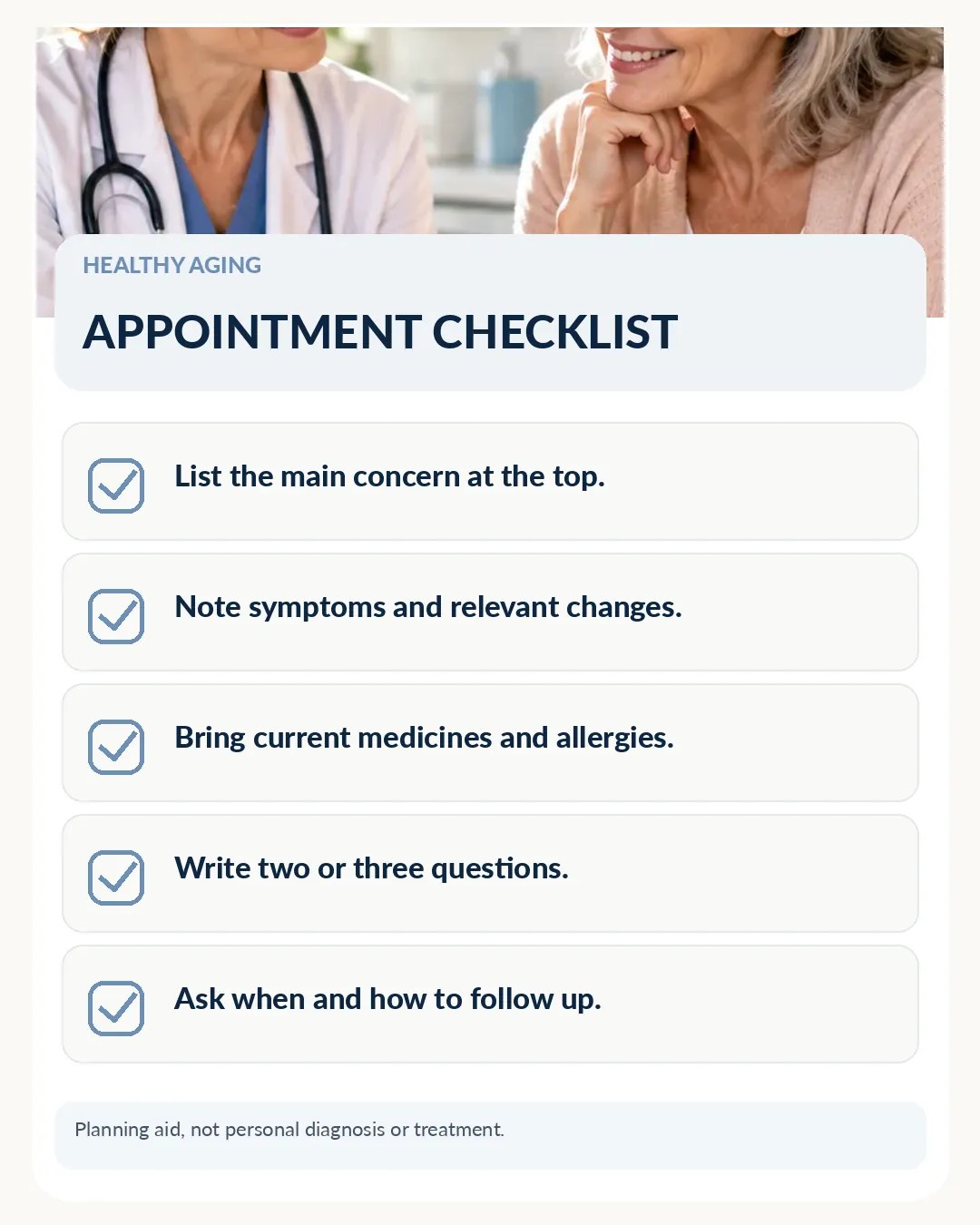
- My most important concern is listed first.
- I noted relevant symptoms and when they started.
- My current medicines, supplements and allergies are recorded.
- I wrote down two or three questions.
- I know what communication assistance I may need.
- I will ask about follow-up and warning signs before leaving.
Questions Readers Often Ask
Should I bring every medication bottle?
Some clinicians prefer a complete medication list or bottles. Ask the office which method is best and make sure your information is accurate.
What if I forget a question during the appointment?
Use your written list and ask the office how to follow up securely after the visit.
Reliable Sources
Read Next
- Strength and Balance Basics After 50 — See topics to discuss about safe activity.
- Staying Socially Connected as You Age — Consider involving a trusted companion if useful.
Editorial note: Organizational and educational information only; never a substitute for timely professional medical care. Illustrations are educational, not evidence of personal outcomes, and no professional medical review is claimed.
