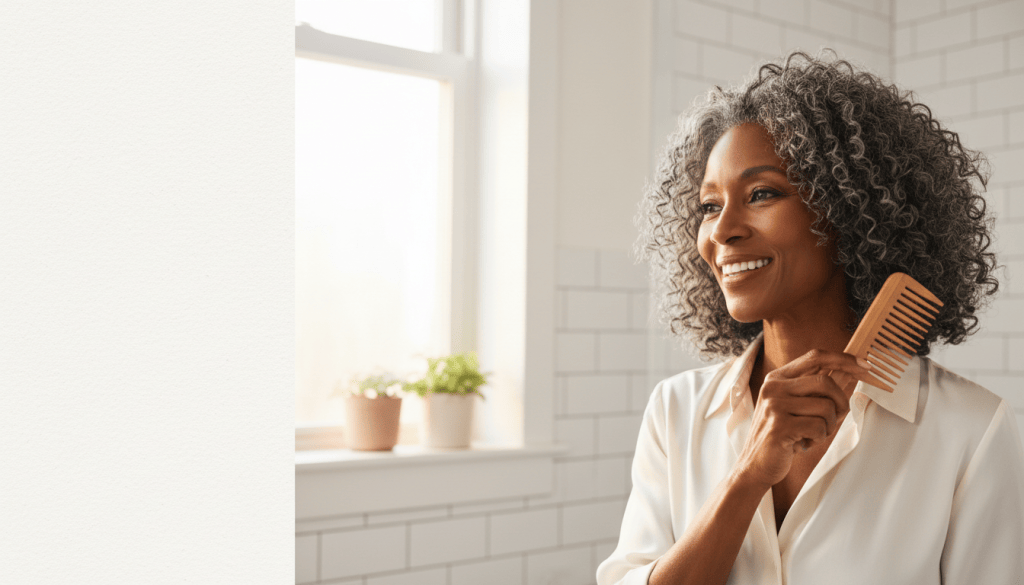
Quick answer: Gentle hair care can reduce avoidable breakage, but it cannot cure every cause of thinning hair. The American Academy of Dermatology (AAD) advises washing according to your hair type, shampooing the scalp rather than scrubbing the lengths, using conditioner, detangling gently, and limiting excessive heat and tension.
The conversation around hair after 40 often jumps straight to expensive products promising dramatic volume or regrowth. Yet ordinary habits—how you shampoo, towel-dry, style and tie back your hair—may be a more practical place to start. This guide separates preventing physical hair damage from diagnosing genuine hair loss, and gives you a routine that can fit a normal week.
Know the difference: breakage versus hair loss
Hair breakage happens when the hair shaft is damaged and snaps. True hair shedding or loss can have other causes, including medical conditions and changes that require individual assessment. You cannot determine the cause simply by looking at a product advertisement or an online photograph.
If you notice sudden, patchy or progressively worsening hair loss, scalp pain, or a substantial change from your normal pattern, ask a board-certified dermatologist. A gentle routine supports hair care but is not a replacement for diagnosis.
1. Let your scalp and hair type guide washing
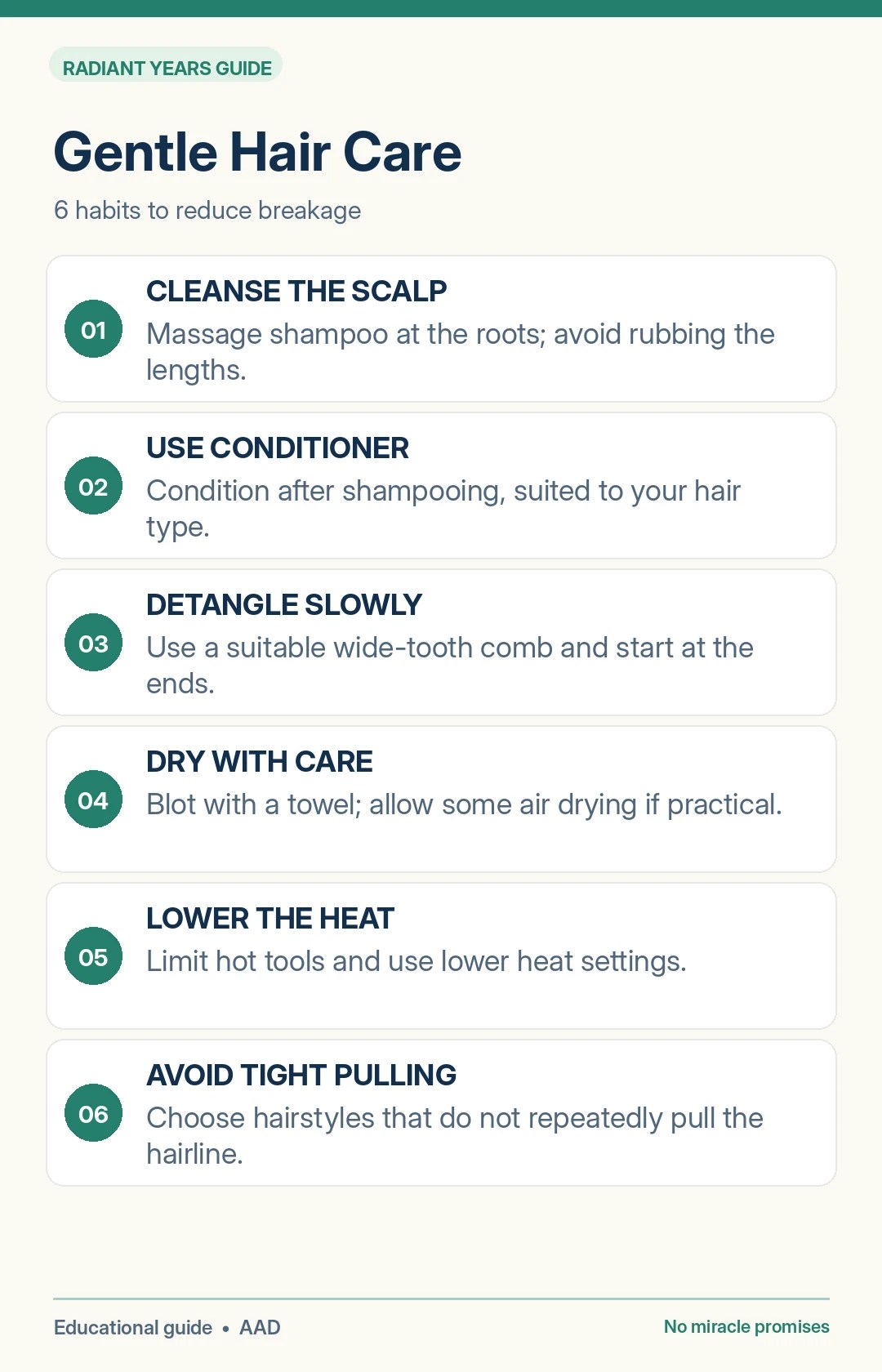
The AAD recommends choosing products made for your hair type and washing according to how quickly your hair gets dirty or oily. An oily scalp may need more frequent washing; dry, thick, curly or textured hair may need a different schedule. There is no universal ‘after 40’ shampoo calendar.
Apply shampoo primarily to the scalp and gently massage there. Let rinse water carry shampoo through the lengths instead of repeatedly rubbing the strands together. The aim is cleaning without unnecessary friction.
2. Give conditioner a useful role
Conditioner helps reduce friction, tangles and split ends. The AAD recommends applying conditioner after shampooing. Where it goes depends on hair texture: fine or straight hair may benefit from concentrating it on the ends, while drier or curlier hair may benefit from conditioning more of the length.
If a product causes itching or irritation, stop using it. An expensive mask is not mandatory; focus on comfort, sensible instructions and a formula that works for your hair.
3. Detangle without pulling
Hair may be more vulnerable to breakage when wet, but the best detangling moment differs by texture. The AAD recommends allowing straight hair to dry somewhat before combing; tightly curled or textured hair may be easier to detangle while damp with conditioner.
Work gently from the ends toward the roots and use a wide-tooth comb when appropriate. Avoid aggressive brushing or pulling through difficult knots. ‘One hundred brush strokes’ is a myth, not a hair-health target.
4. Change how you dry and style
Instead of vigorously rubbing wet hair with a towel, gently wrap or blot it to absorb moisture. When possible, allow partial air drying. If you choose a blow dryer, flat iron or curling tool, use a lower heat setting and reduce prolonged exposure.
For an important event, styling tools may be useful. The goal is to reduce repeated damage, not to create a rule that every person must stop styling their hair.
5. Reduce ongoing tension on the hairline
Tight ponytails, buns, braids, extensions and other styles that repeatedly pull at the roots can contribute to breakage or traction-related hair loss. Change the placement of pulled-back styles, wear them more loosely when possible, and stop if your hairstyle causes pain.
If you have persistent thinning around the temples or hairline, a dermatologist can evaluate whether styling tension or another condition is involved.
6. Be careful with coloring, chemical services and ‘hair growth’ claims
Coloring, bleaching, relaxing, perming and other chemical treatments can make already fragile strands more susceptible to damage. Follow professional guidance and consider increasing time between services if hair seems stressed.
A product that makes hair feel smoother is not proof it treats the cause of thinning. Be skeptical of unverified claims that a shampoo can reverse age-related loss, and do not take hair-growth supplements without discussing interactions and real indications with a clinician.
A practical seven-day example
Day 1: Notice your scalp type and review shampoo directions. Day 2: Check whether you are conditioning where your hair needs it. Day 3: Replace rough towel-rubbing with gentle blotting. Day 4: Check brush and comb habits. Day 5: Reduce heat or tension during styling. Day 6: Review product irritation and scalp comfort. Day 7: Keep the changes that fit your needs.
This is a habit checklist, not a clinical treatment schedule. You do not have to wash or perform each step on a prescribed day.
Your 6-Point Hair Care Checklist
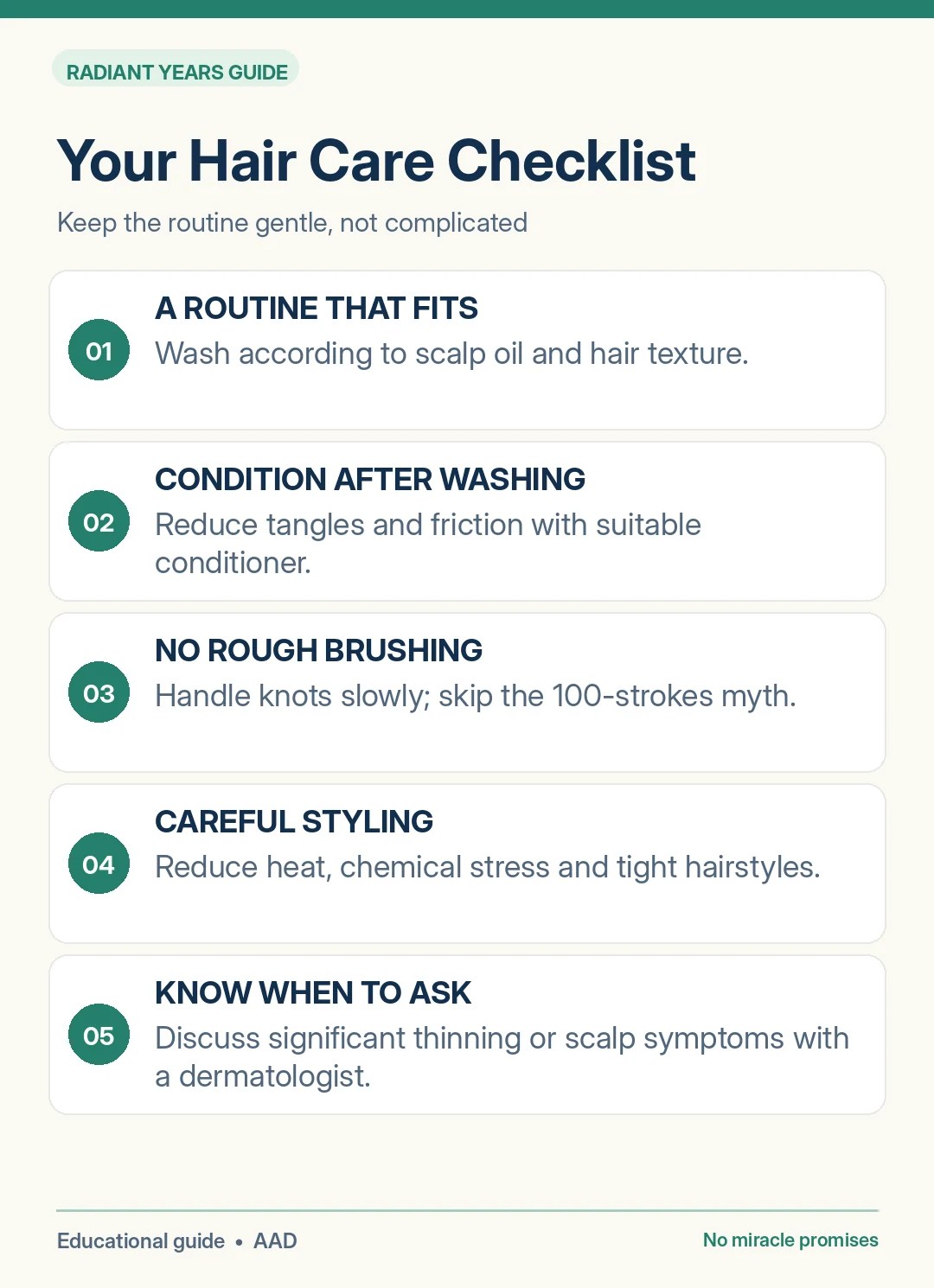
- I choose a shampoo schedule that suits my scalp and texture.
- I cleanse the scalp rather than scrubbing the lengths.
- I use conditioner to reduce tangling and friction.
- I detangle gently in a way that suits my hair type.
- I limit repeated high heat and tight pulling hairstyles.
- I seek qualified advice for significant thinning or scalp symptoms.
Frequently Asked Questions
Will gentle hair care regrow lost hair?
There is no general guarantee. Reducing damage can help protect strands, but true hair loss can have many causes that require a dermatologist’s assessment.
Should everyone over 40 shampoo less often?
No. Frequency depends on scalp oil, hair texture, activities and individual needs—not simply age.
Are all heat tools forbidden?
No. Reducing high temperatures and repeated exposure may lower damage; use tools carefully and follow instructions.
Official Sources and Further Reading
- American Academy of Dermatology — Tips for Healthy Hair
- American Academy of Dermatology — How to Stop Damaging Your Hair
- American Academy of Dermatology — Hair Loss: Tips for Managing
What to Read Next
- How to Test a New Skincare Product — Review how to introduce a new cosmetic carefully.
- How to Read Skincare Labels — Recognize marketing claims and instructions.
- Better Sleep Habits After 40 — Build realistic everyday self-care routines.
Editorial note: Educational information only. This article does not diagnose hair loss, recommend an individual treatment, or claim physician review. Images are illustrative, not actual product trials or patient outcomes.
