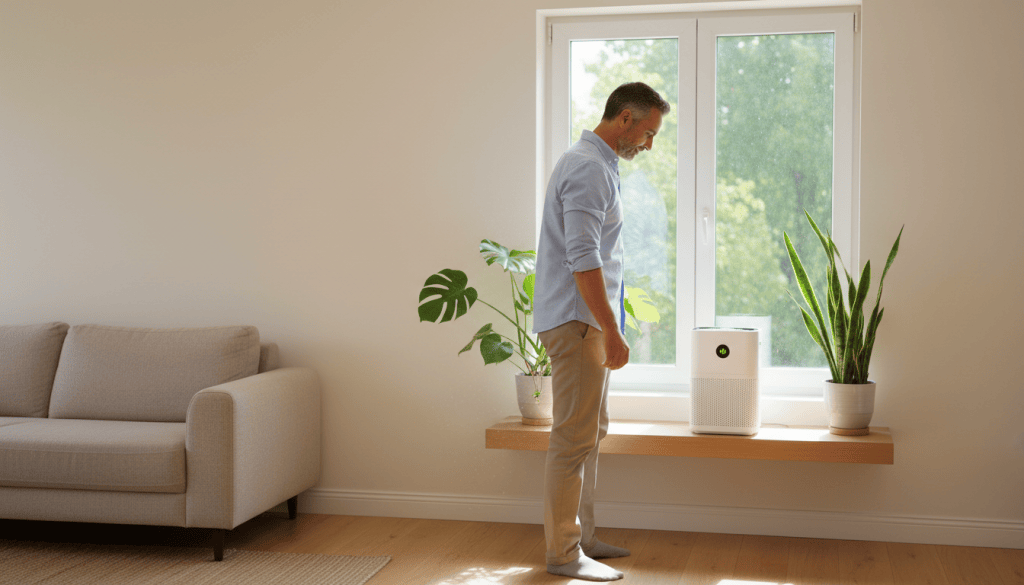
Quick answer: The U.S. Environmental Protection Agency (EPA) describes three fundamental ways to improve indoor air: control pollution at its source, bring in cleaner outdoor air when conditions allow, and supplement with appropriate filtration. No purifier can remove every pollutant or make a home automatically safe.
A bright, pleasant room does not always tell you what is in its air. Cooking, cleaning products, smoking, furnishings, outdoor pollution and damp conditions can all influence indoor air. Instead of buying a costly device first, review the things you already use and the spaces where you spend the most time.
Why this guide is different from a home-safety checklist
A home-safety checklist focuses on clutter, falls, lighting and physical hazards. Indoor air quality is another question: what is being released into the air, where it comes from, and how air moves in and out. The EPA recommends beginning with source control before relying on gadgets.
Air quality can change during cooking, cleaning, home improvements and outdoor smoke events. A practical plan accounts for those changing circumstances rather than treating every day the same.
1. Start by finding possible pollution sources
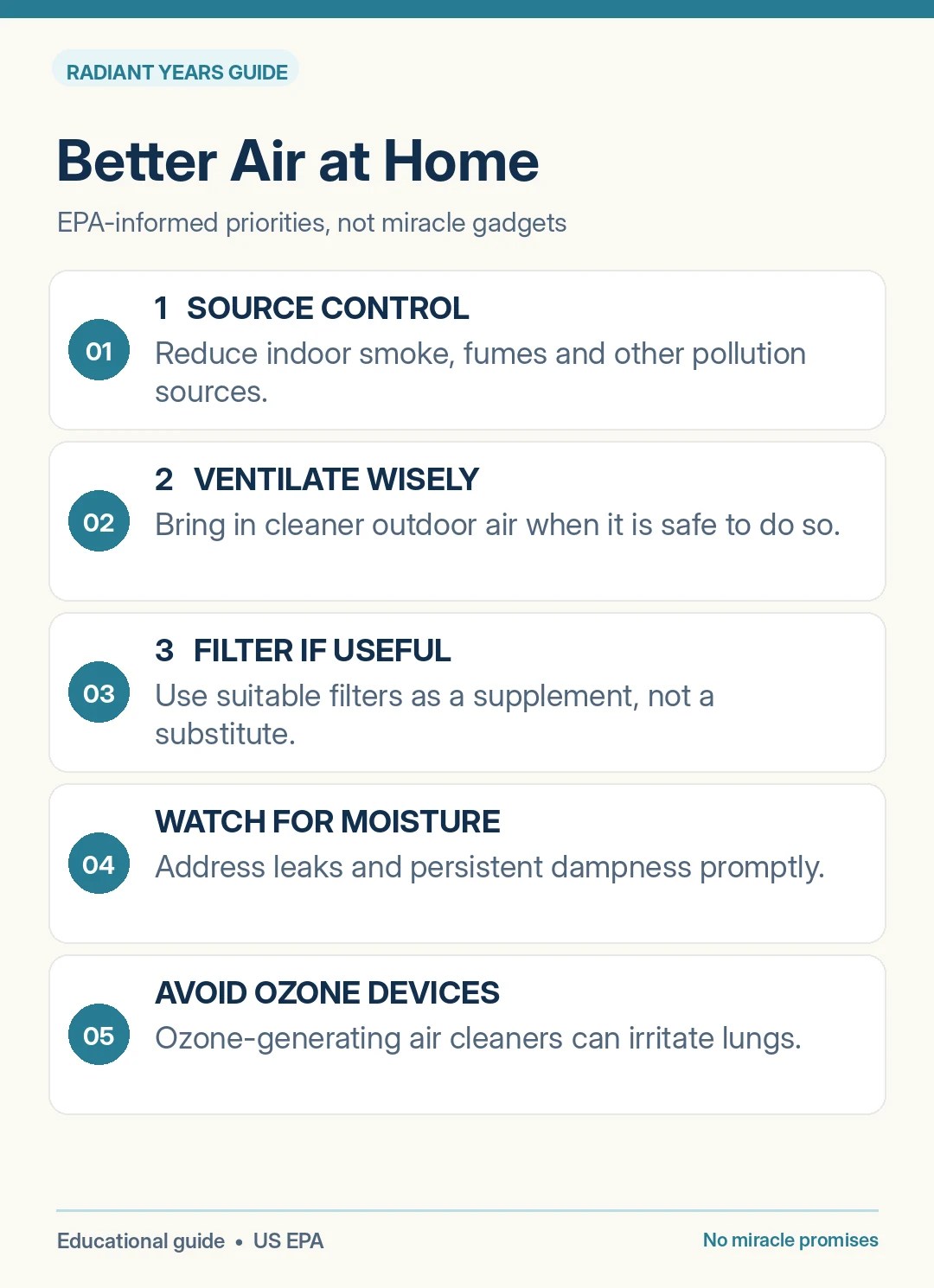
Look for obvious sources such as tobacco smoke, heavily scented products, fumes from paints or cleaners, smoke from cooking, and moisture problems. Avoid assuming a scented candle, diffuser or spray makes air ‘cleaner’ simply because it changes the smell.
Read and follow product labels, especially for cleaning solvents and home repair materials. Never combine incompatible cleaning chemicals. For serious exposures or suspected gas leaks, leave the affected area as appropriate and contact emergency services or a qualified professional.
2. Use kitchen and bathroom exhaust correctly
Cooking and bathing can introduce particles, gases or extra moisture. When you have an exhaust fan that vents outdoors, use it appropriately and follow the system’s instructions. Some recirculating hoods do not vent outside, which makes their benefits different.
If an exhaust fan does not work or seems blocked, consider qualified maintenance rather than trying potentially hazardous repairs. Safety around combustion appliances and carbon monoxide is especially important.
3. Ventilate with cleaner outside air when conditions allow
Opening suitable windows can increase outdoor-air exchange in some homes. However, it is not a universal solution. When wildfire smoke, high outdoor pollution, severe pollen, unsafe temperatures or other hazards are present, outdoor air may be worse than indoor air.
Check local air-quality reports and follow public health guidance during smoke events. People with asthma, chronic lung disease or other sensitivities may need individualized recommendations.
4. Keep an eye on dampness and moisture
Leaking pipes, water damage or chronically wet materials can contribute to mold growth. Address moisture sources promptly; simply masking an odor with fragrance does not solve the cause.
The EPA commonly recommends keeping relative humidity below 60%, ideally around 30–50% when practical. This is general household guidance, not a personalized medical target. If there is major damage, persistent mold or suspected hazardous materials, seek qualified help.
5. Consider filtration as a supplement, not a cure
Mechanical filters and properly chosen portable air cleaners can reduce some airborne particles. Review a device’s intended room size and clean air delivery performance, as well as filter replacement cost and instructions. In central systems, use a filter that the equipment can accommodate.
An air purifier does not remove all gases, fix a damp wall or replace source control and appropriate ventilation. The EPA does not endorse particular air cleaner brands or claims of complete health protection.
6. Be cautious with ozone-generating products
Some air-cleaning products deliberately emit ozone or may generate it indirectly. Ozone is a lung irritant. The EPA warns against using ozone generators as an indoor air-cleaning strategy in occupied spaces.
Words like ‘ionized,’ ‘sterilizing’ or ‘medical-grade’ are not a substitute for verifying a device’s actual intended function and possible emissions.
A room-by-room walkthrough
Kitchen: Observe smoke or cooking odors and check suitable exhaust. Bathroom: Review moisture and ventilation. Bedroom: Consider dust, dampness and sleeping conditions. Living area: Look at smoke, candles and cleaning sprays. Utility areas: Confirm HVAC maintenance and seek help with combustion or moisture concerns.
If anyone in the home has persistent respiratory symptoms or there is suspected carbon monoxide, radon, asbestos or another serious hazard, use professional advice and testing as appropriate instead of relying on an infographic.
A low-cost priority plan before buying products
First list potential sources, then identify ventilation you can use safely. Inspect visible moisture and review your existing HVAC maintenance schedule. Only then consider whether a suitable filtration product addresses a specific need.
Keep marketing claims separate from results. An expensive device is not automatically better for your room and may introduce recurring filter costs.
Your 7-Point Indoor Air Checklist
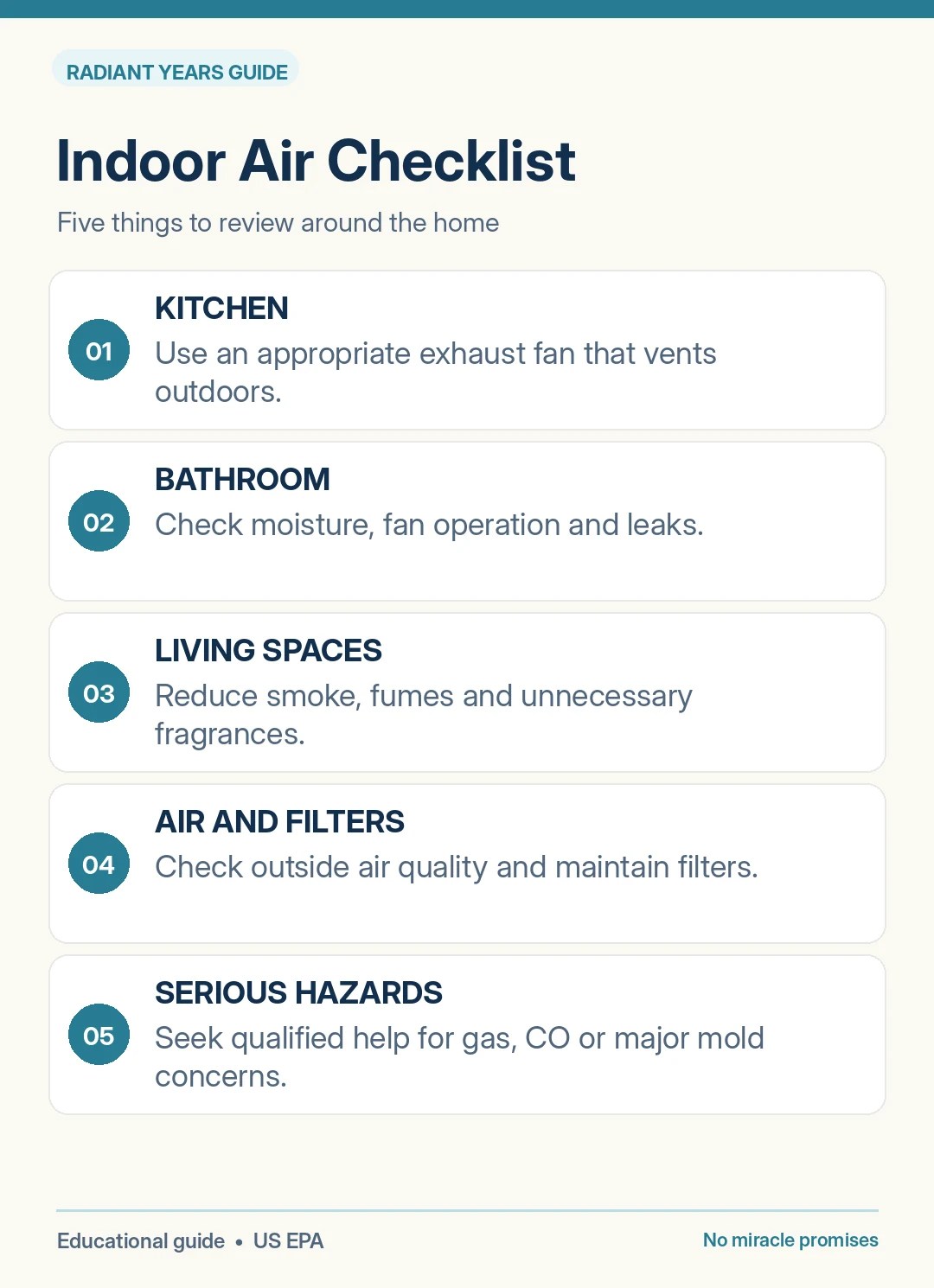
- Identify indoor smoke, fumes, scent and other potential sources.
- Follow cleaning and household product directions.
- Use appropriate kitchen or bathroom exhaust that vents outdoors.
- Ventilate only when outdoor conditions make it reasonable.
- Address damp areas and underlying leaks promptly.
- Review existing filter maintenance before purchasing devices.
- Avoid ozone generators and claims of total purification.
Frequently Asked Questions
Do I need an air purifier in every room?
Not necessarily. EPA recommends controlling pollutant sources and appropriate ventilation first. Filtration may be useful as a supplement for specific situations.
Should I open my windows every day?
Not if outdoor air is polluted or other conditions make ventilation unsafe. Choose methods that fit outdoor air quality, weather and your home.
Is a strong fragrance proof that a room is clean?
No. Scents can mask odors but do not demonstrate that pollutants were removed.
Official Sources and Further Reading
- EPA — Improving Indoor Air Quality
- EPA — Guide to Air Cleaners in the Home
- EPA — What Can I Do to Improve Indoor Air Quality?
- EPA — Ozone Generators Sold as Air Cleaners
What to Read Next
- A Home Safety Checklist for Healthy Aging — Review room-level physical safety.
- A More Comfortable Home Workspace — Make a work area easier to use.
- Cold-Weather Skincare After 40 — Consider seasonal home comfort.
Editorial note: This article is general household education, not environmental testing or medical advice. Illustrations do not certify a home’s air quality. Seek professional assistance for suspected dangerous exposure.
