
At a glance: Cold, dry weather and indoor heating can leave skin feeling less comfortable. A gentle cleanser, suitable moisturizer and sensible outdoor protection are practical seasonal starting points.
Why your usual routine may feel different in winter
A moisturizer that felt fine in summer may feel too light when humidity drops. The American Academy of Dermatology notes that cold-weather conditions can contribute to itchy, dry skin and chapped lips.
You don’t need to start over with a shelf full of new products. Decide what changed—tightness after washing, rough hands or dry lips—and adjust only what is necessary.
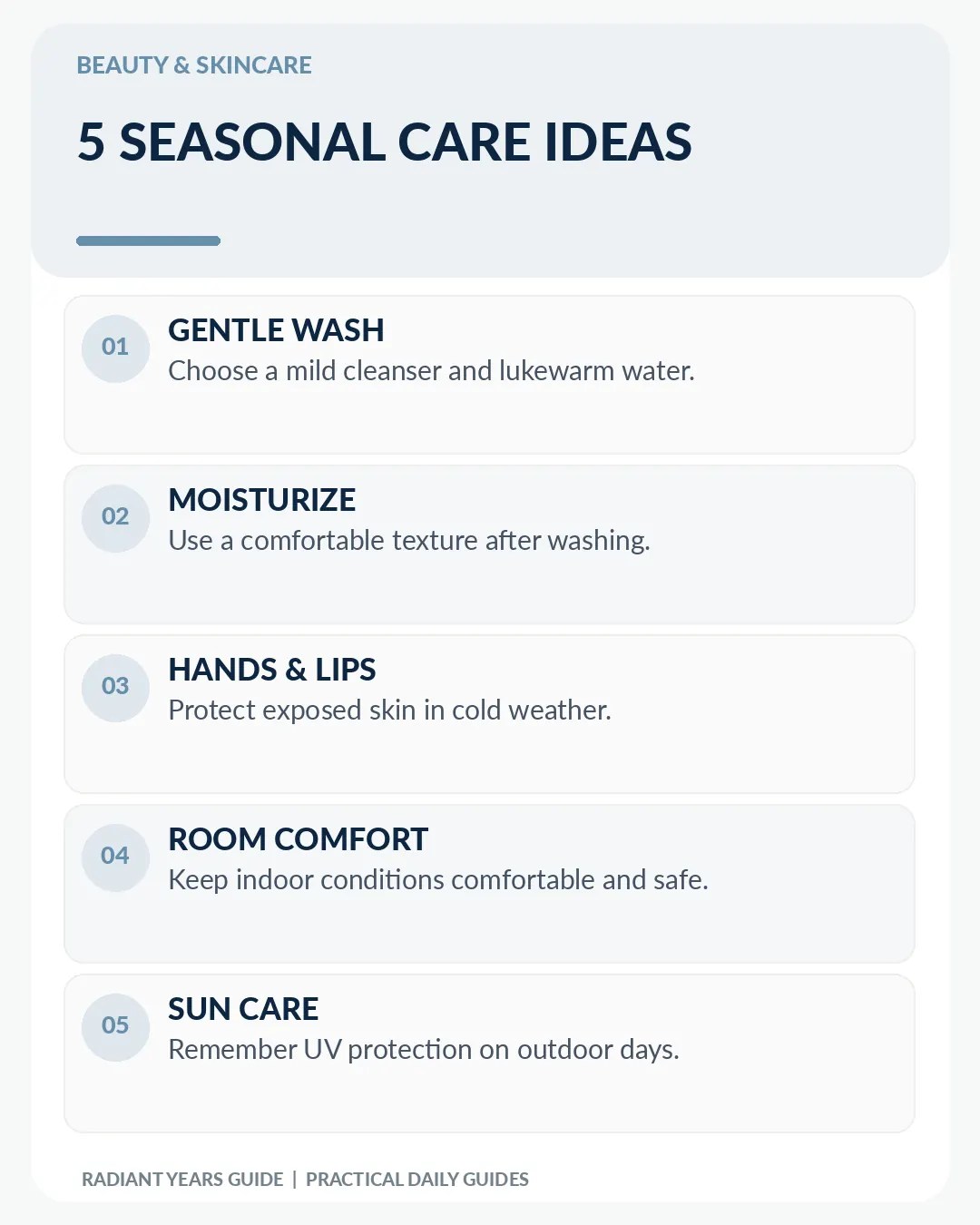
1. Keep washing gentle
Choose lukewarm rather than very hot water for face and body cleansing. Long, hot showers can make already dry skin feel more uncomfortable. Use a mild cleanser and avoid aggressive scrubbing.
After washing, pat rather than rub skin dry, and apply suitable moisturizer when skin is slightly damp. This can make moisturizing feel easier to maintain.
2. Consider whether your moisturizer needs a different texture
For drier skin, a thicker cream or ointment may be more comfortable than a very lightweight lotion. The choice depends on how your skin responds, not on a product’s marketing age range.
Begin with one change and notice comfort or irritation. Persistent cracking, painful rashes or worsening symptoms deserve professional assessment.
3. Don’t forget hands and lips
Hands are exposed to frequent washing and cold air, so a small, fragrance-free hand cream near the sink can be useful. Wear appropriate gloves in cold conditions and for household chores involving cleaning supplies.
For dry lips, a simple lip balm may help with comfort. If you spend time outdoors, pay attention to appropriate sun protection as well; UV exposure is not limited to summer.
4. Adjust the environment without creating new hazards
Indoor heating can make rooms feel dry. If you use a humidifier, follow the manufacturer’s cleaning and safety instructions, rather than assuming more humidity is always better.
Think about your winter routine as a collection of small choices: bathing temperature, moisturizing habits, protected hands and a comfortable indoor environment.
5. Keep sun protection on the list
Cold temperature does not mean sunlight is harmless. When outdoors, continue to use suitable broad-spectrum sun protection and protective clothing as recommended for the exposure and activity.
Wind, glare and reflective surfaces can make winter outings uncomfortable. A scarf and appropriate weather gear can protect exposed skin from the elements.
A three-situation winter plan
After showering: Gently pat skin and moisturize. Before outdoor errands: Prepare weather-appropriate protection for hands, face and lips. Before bed: Notice whether hands or particularly dry patches would benefit from another suitable application of moisturizer.
Avoid treating every dry patch as ordinary winter dryness. Eczema, allergies or other conditions can look similar and may need individualized evaluation.
Winter Skincare Check Before You Leave Home
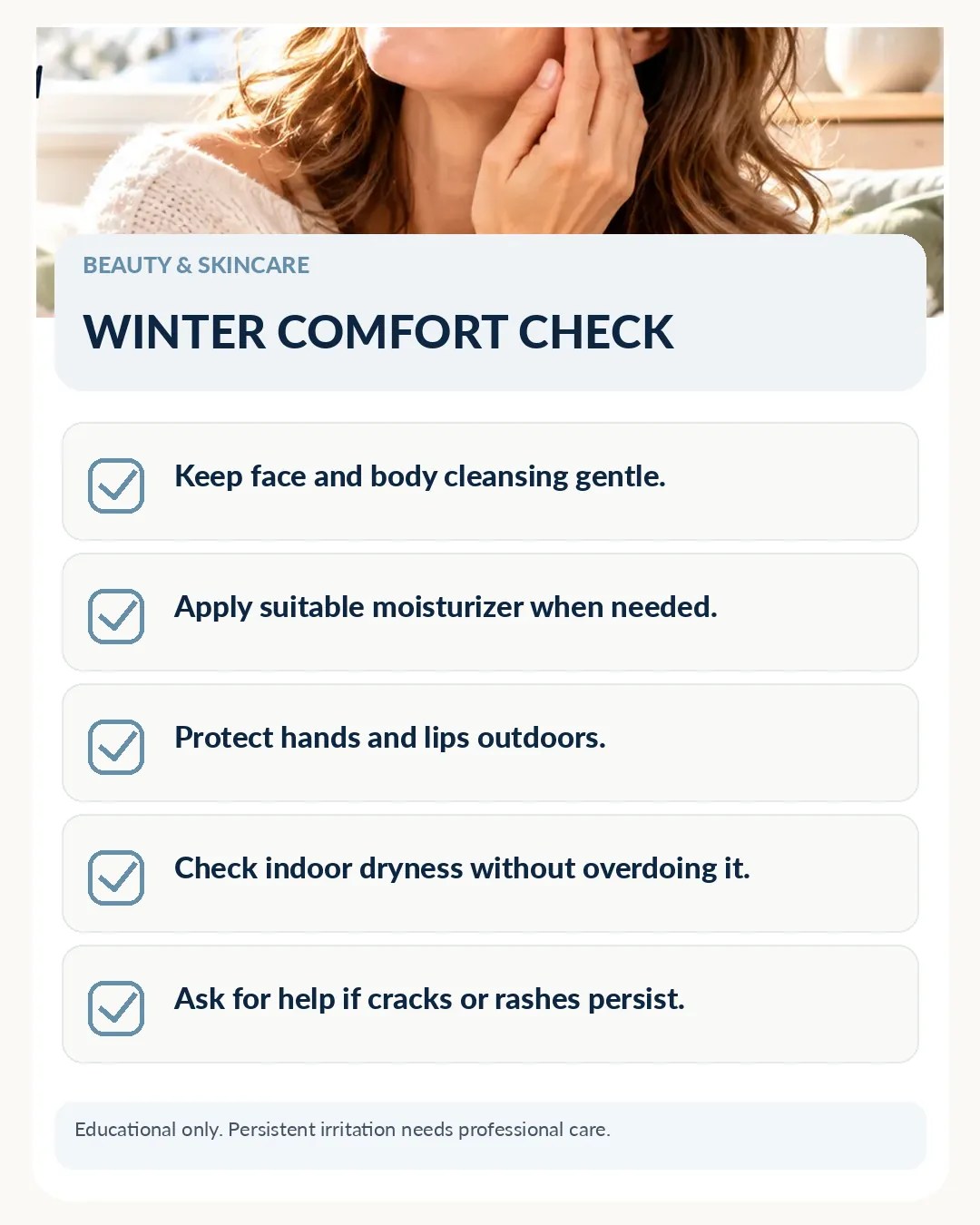
- Did I use a gentle cleanser and avoid rough scrubbing?
- Does my face or body need a more comfortable moisturizer?
- Are my hands and lips protected from the cold?
- Do I have weather-appropriate clothing and sun protection?
- Do persistent cracks or rashes need professional advice?
Questions Readers Often Ask
Is a richer moisturizer always better?
Not necessarily. Skin types and preferences vary. A comfortable cream may suit drier areas while a lighter texture works elsewhere.
Can dry, cracked skin be a medical issue?
Yes. Persistent rash, pain, bleeding, or significant irritation should be discussed with a qualified clinician.
Reliable Sources
Read Next
- How to Care for Dry Hands Every Day — Protect hands during repeated washing.
- Common Sunscreen Mistakes After 40 — Remember sun protection year-round.
Editorial note: General seasonal skincare advice, not a treatment for eczema or other skin conditions. Illustrations are educational, not a personal product test or medical outcome. No expert review is claimed.
