
Quick answer: Keep medicines in labeled containers and store them according to each product’s instructions. Keep them secure around children, pets and visitors. Review expired or unused products, and prefer authorized take-back or mail-back programs when disposing of most medicines.
A Medicine Cabinet Is a Safety System, Not Just a Shelf
A medication list helps clinicians know what you take. This guide addresses the physical products at home: where you keep them, how to recognize what is expired, and how to dispose of unwanted medicines. The FDA warns that unused medicines may harm children, pets or others who take them by accident.
1. Read Storage Instructions Before Choosing a Location
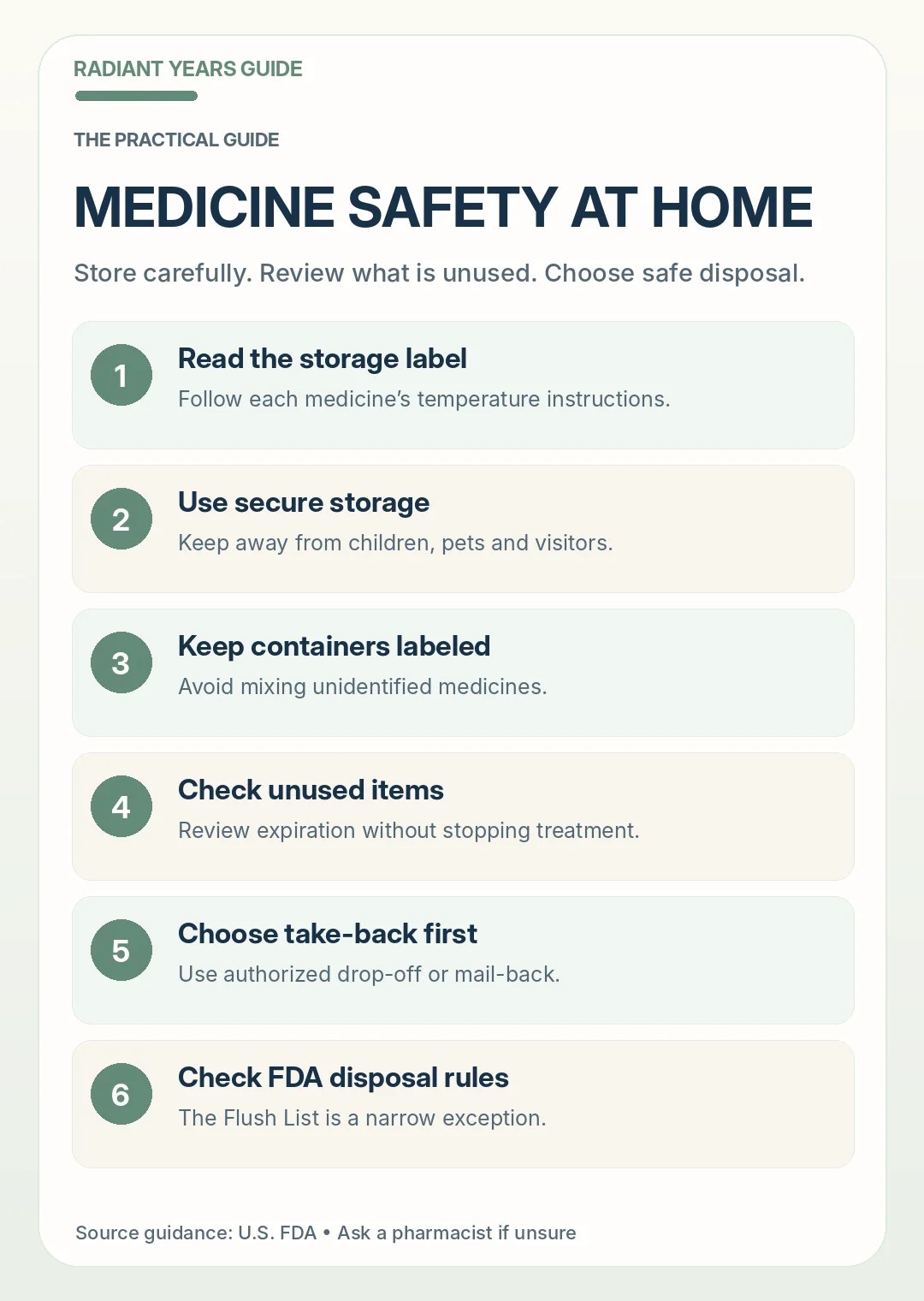
Some medicines require cool, dry storage; others have different temperature or refrigeration needs. A steamy bathroom may not be suitable. Follow the medicine’s label, package insert or pharmacist rather than assuming all medicines belong in a refrigerator or bathroom cabinet.
2. Keep Medicines Labeled and Identifiable
Original containers help you recognize the product, instructions and expiration date. Avoid transferring unidentified tablets to loose bags or mixing different medicines in unmarked bottles. If your healthcare team recommends an organizer, ask which products may safely be transferred and keep an accurate medicine list.
3. Make Storage Secure for Children and Visitors
Store medicines and supplements out of children’s sight and reach, and consider a locked location where appropriate. Child-resistant caps are not childproof. Securely close containers after every use and avoid leaving pills on countertops, in bags or on accessible bedside tables. Pets can also be harmed by accidental exposure.
4. Check Expiration Dates and Unused Products
An occasional review can identify expired medications and products you no longer need. Do not discontinue a current prescription because you saw advice online. Confirm any uncertainty with your pharmacist or prescriber. If a tablet looks unfamiliar, damaged or different than expected, do not guess what it is.
5. Use Drug Take-Back Programs First
The FDA recommends an authorized drug take-back drop-off or eligible mail-back option for most unused or expired medicines. Pharmacies and other authorized sites may provide disposal kiosks. Check local program requirements and accepted items before traveling. Sharps and some unusual products have separate instructions.
6. Know the Specific FDA Flush-List Exception
Do not routinely flush medicine. If a take-back option or appropriate mail-back is not readily available, FDA specifically recommends flushing certain medicines on its current Flush List because accidental exposure can be extremely dangerous. Check the official list and the product’s disposal instructions rather than relying on memory.
7. Follow the Household Trash Method Only When Appropriate
For many medicines not on the Flush List, if authorized take-back is unavailable, FDA describes mixing the product without crushing tablets or capsules with used coffee grounds, dirt or cat litter; sealing the mixture in a container; disposing of it in household trash; and removing personal information from empty packaging. This does not apply to every drug form, sharps or product with special instructions.
A Simple Ten-Minute Cabinet Review
First, look at storage conditions and security. Next, identify clearly labeled products that are expired or no longer used. Then find an authorized take-back option and check whether any product has special disposal instructions. Finally, keep your personal medication list accurate without changing treatment based on this review.
Important Questions
Is the bathroom automatically suitable? No: humidity may be a problem, and storage instructions vary. Is the trash always acceptable for expired medicine? No: take-back is generally preferred, and FDA’s Flush List gives special guidance. Should I crush pills before disposal? FDA’s household-trash method advises mixing without crushing tablets or capsules.
When to Ask a Pharmacist
Ask if storage instructions are unclear, a medicine requires refrigeration, special disposal is needed, packaging is difficult to use safely, or you have questions about an active prescription. For suspected poisoning or immediate danger, contact appropriate emergency services or poison control promptly.
The Seven-Point Medicine Cabinet Checklist
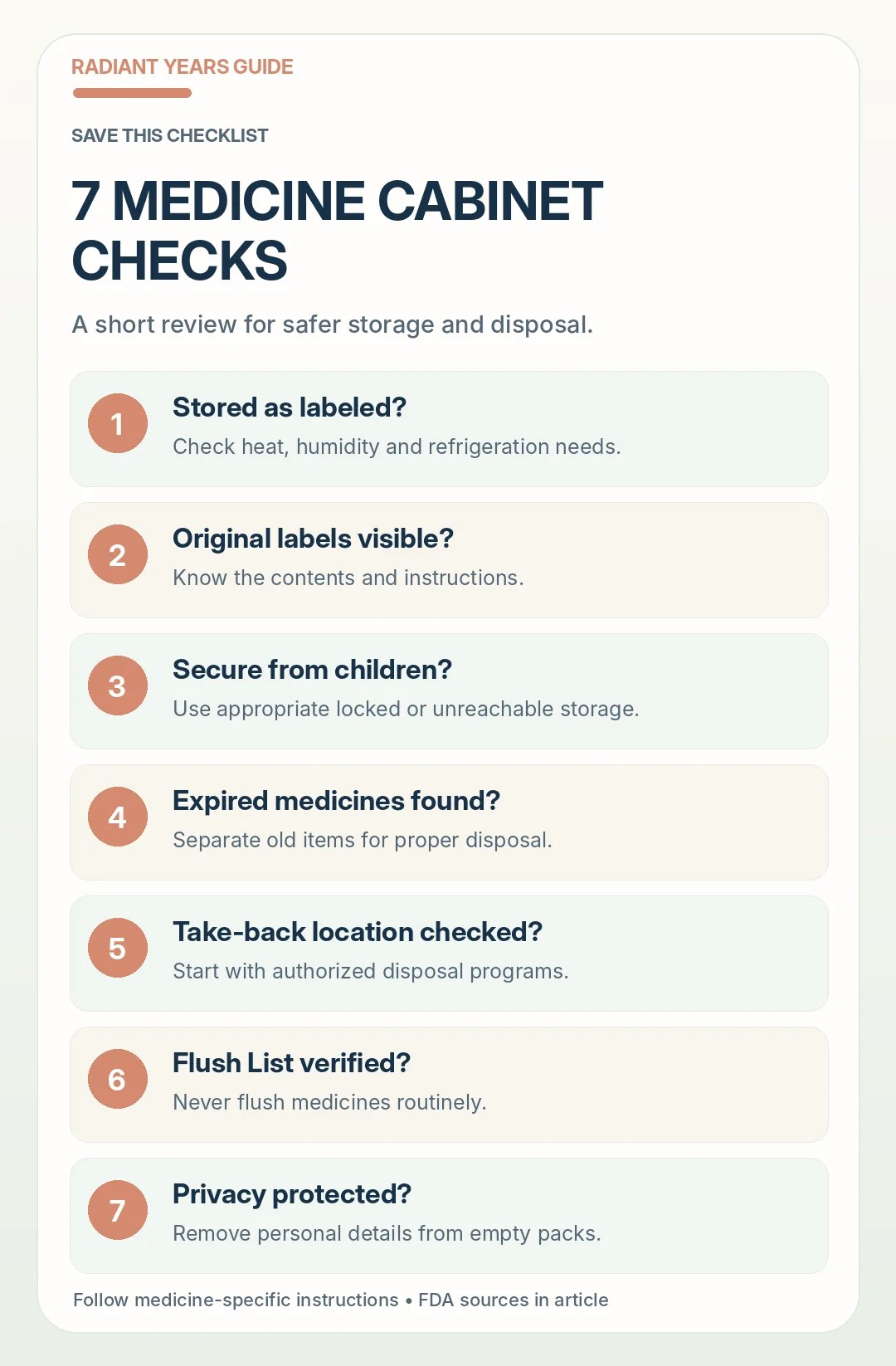
- Read each product’s storage requirements.
- Keep labels and containers identifiable.
- Secure medicine away from children and pets.
- Review expired and no-longer-needed items.
- Look for an authorized take-back or mail-back service.
- Only flush if FDA guidance expressly calls for it.
- Protect personal information and follow special disposal directions.
Official FDA Resources
- FDA — Disposal of Unused Medicines
- FDA — Flush List
- FDA — Non-Flush List Disposal
- FDA — Over-the-Counter Medicines
Continue Reading
- Your Personal Health Information Folder After 50
- How to Prepare for a Doctor Appointment
- A Home Safety Checklist for Healthy Aging
General consumer information only, not a medical prescription, disposal certification or legal advice. Ask your healthcare professional about medicine-specific instructions. Images contain no real patient information.

Leave a Reply