
Quick answer: Gentle trimming, protection during wet work, careful moisturizing and avoidance of cuticle damage are useful starting points. Nail changes can also be signs of medical problems; seek professional assessment for concerning symptoms.
Why Nail Care Matters After 40
Everyday handwashing, chores, manicures and repeated wet work can leave nails more vulnerable to damage. Rather than rely on expensive nail-strengthening claims, begin with habits recommended by the American Academy of Dermatology (AAD). Changes in a nail’s color, shape, attachment or surrounding skin can have causes unrelated to age, so this is not a tool for self-diagnosis.
1. Keep Nails Clean and Dry
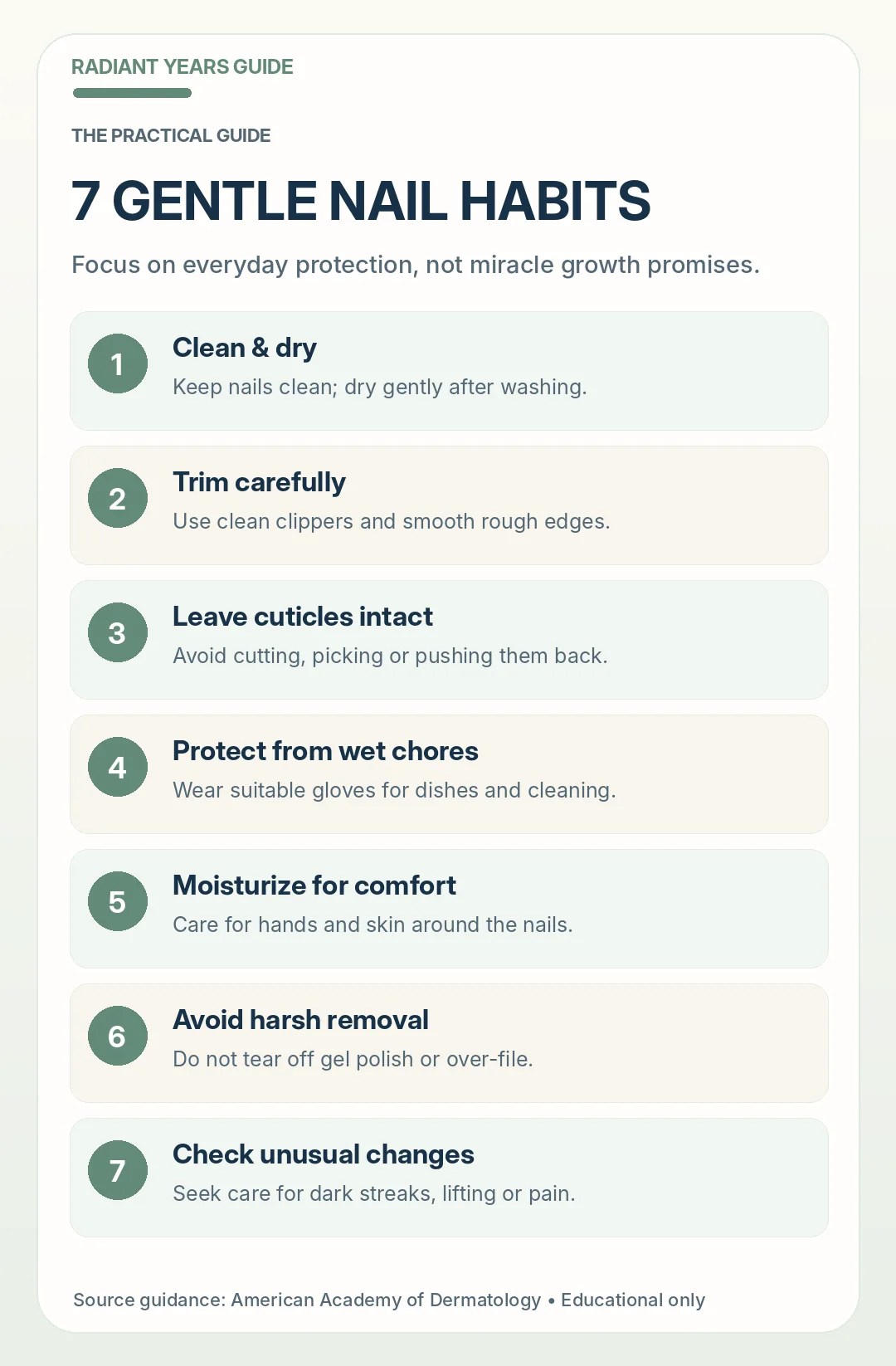
Wash your hands as needed for ordinary hygiene and dry the nail area afterward. Avoid scraping deeply under your nails with sharp tools. The AAD recommends clean, dry nails because bacteria and fungi can thrive in moist conditions. A good routine protects cleanliness without unnecessary injury.
2. Trim Gently and Smooth Rough Edges
Use clean, sharp nail clippers or scissors. Trim relatively straight across, then gently round rough corners. An emery board can smooth snags before they catch on fabric. Do not cut so closely that the skin is injured. Toenails, especially with diabetes, circulation problems or reduced sensation, may require professional guidance.
3. Leave the Cuticle Alone
The cuticle helps protect the area where nail meets skin. Biting, cutting or aggressively pushing it back can contribute to irritation and infection. If you visit a nail salon, ask how tools are cleaned and request gentle treatment of the cuticle.
4. Protect Nails During Wet Chores
Repeated soaking and detergents can contribute to splitting and peeling. Suitable gloves during dishes and cleaning can reduce exposure, as long as you follow the cleaning product’s own safety instructions. Apply a comfortable moisturizer to your hands and nail folds after washing when appropriate. This supports skin comfort, not a guaranteed cure for weak nails.
5. Do Not Use Nails as Household Tools
Prying open cans, peeling labels or scraping hard surfaces with a fingernail may cause chips or lifting. Keep a small tool handy for those jobs. Small habit changes may prevent avoidable mechanical damage without buying a special treatment.
6. Think Carefully About Gel and Artificial Nails
Gel or artificial nail services can require filing or chemical removal that leaves nails more fragile. The AAD recommends salon hygiene, protecting the cuticle and avoiding aggressive removal. If nails feel damaged or irritated, consider a break and seek medical advice for persistent symptoms. No particular nail service is universally safe for everyone.
7. Know Which Changes Deserve Attention
A new or changing dark streak, a nail separating from its bed, swelling, painful skin or persistent changes in nail color or shape should be evaluated by a dermatologist. A dark streak does not automatically mean cancer, but it should not be ignored. Nail symptoms in people with diabetes or poor circulation particularly deserve prompt professional attention.
Your Practical Weekly Nail Routine
After handwashing, dry the fingers and moisturize when needed. Before wet cleaning, use appropriate gloves. Once a week, check for snagged edges and trim only if necessary. If you use polish, observe whether removal causes irritation. Keep the plan manageable; it is not a medically prescribed seven-day treatment.
Common Questions
Does brittle nail always mean a vitamin deficiency? No. A nail’s appearance alone cannot establish a deficiency. Must everyone stop nail polish? No. Avoid damaging practices and investigate persistent problems. Can a home nail treatment diagnose fungus? No. Diagnosis may require professional assessment.
Seven-Point Nail Care Checklist
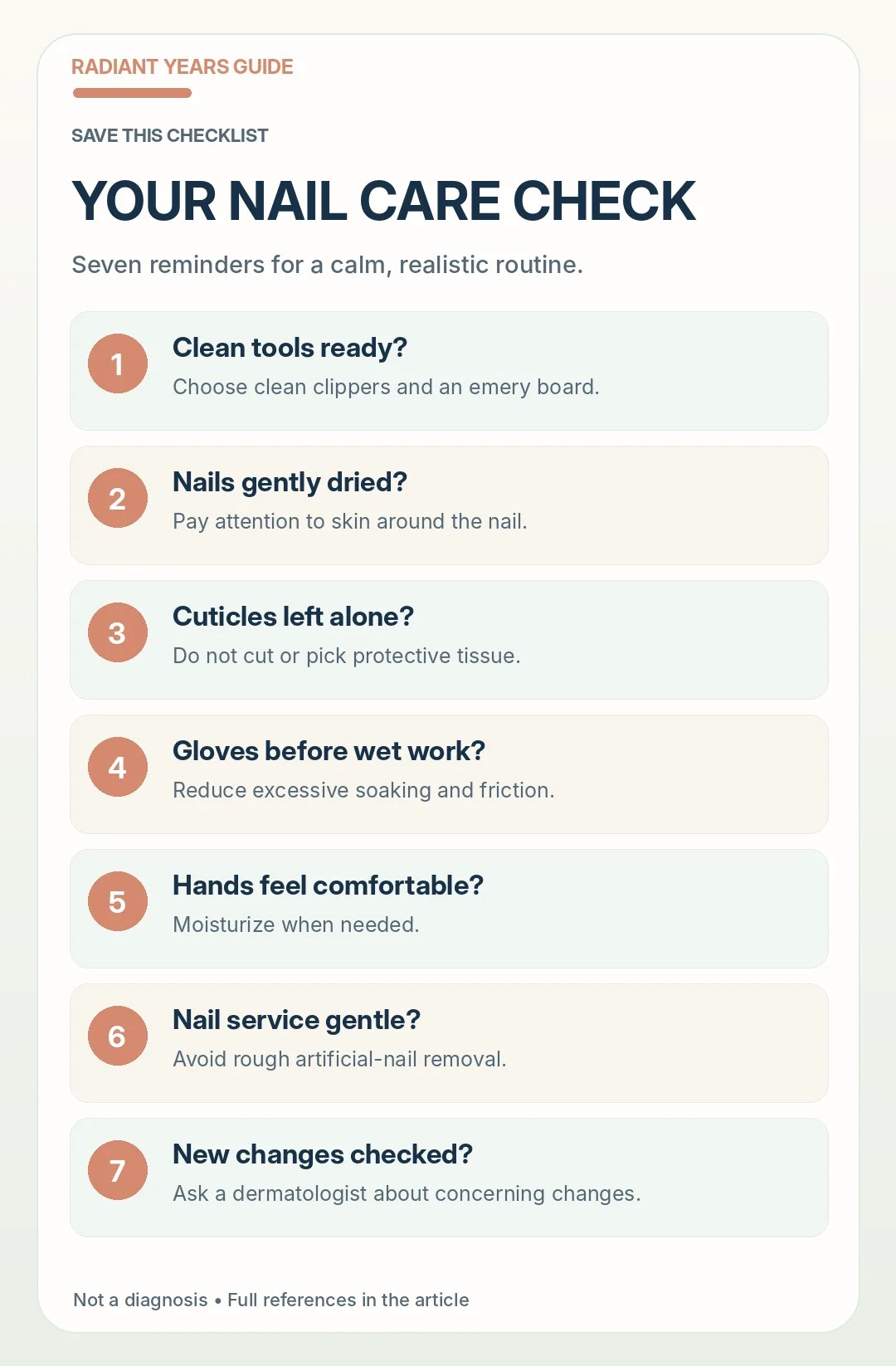
- Clean and dry nails gently.
- Trim with clean tools and smooth rough corners.
- Do not cut or pick at cuticles.
- Use protective gloves during wet chores.
- Moisturize hands and nail folds when appropriate.
- Avoid using nails as tools or ripping off gel polish.
- Seek advice for new dark streaks, lifting, swelling or pain.
Sources and Further Reading
Related Guides
General educational information only; not medical diagnosis, nail treatment or a claim of expert review. Images are illustrative.

Leave a Reply