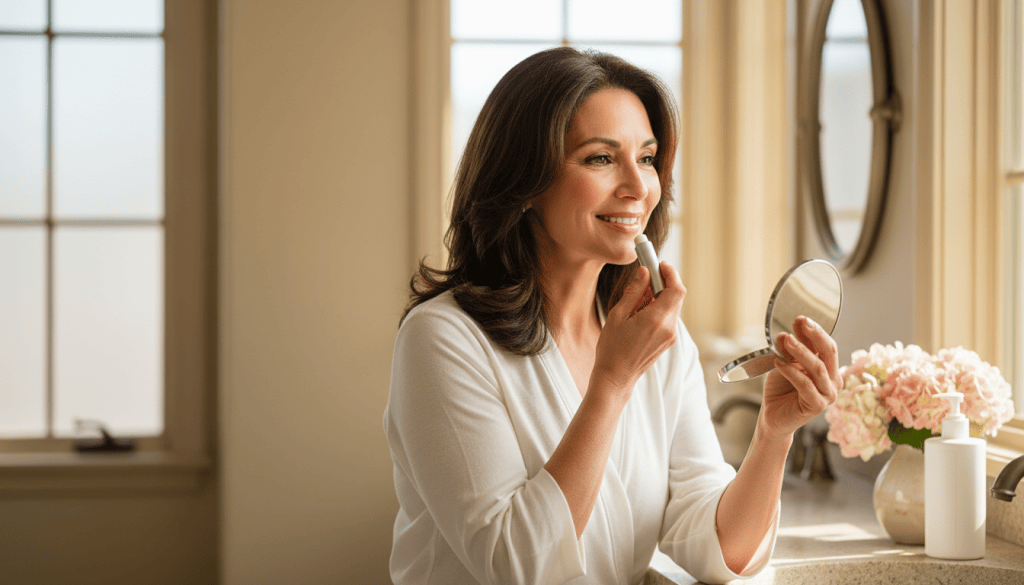
Quick answer: For everyday chapped lips, begin with a gentle, non-irritating lip moisturizer, stop licking or picking your lips, and use a suitable SPF 30+ lip balm when outdoors. The American Academy of Dermatology (AAD) advises seeing a dermatologist if dryness does not improve after a few weeks or if the lips change in concerning ways.
A beautiful lip product can still feel terrible on dry skin. If your lips become tight, rough, or cracked during winter, travel, or long days indoors, the easiest first step is not necessarily a more expensive treatment. It is a routine that protects comfort without introducing unnecessary irritation. This guide is for adults in their 40s, 50s, and beyond, but its practical habits are not age-dependent.
Why lips need a slightly different routine
Lip skin is exposed to weather, sun, and repeated habits such as licking. Cold air and low indoor humidity can contribute to dryness. AAD guidance explains that products causing burning, stinging, or tingling may be irritating your lips—not proving that an active ingredient is working.
Chapping is not always a minor seasonal inconvenience. Allergies, infections, sun-related damage, or other conditions can cause persistent symptoms. General online advice cannot identify the cause for an individual.
1. Choose a lip balm for comfort, not a dramatic promise
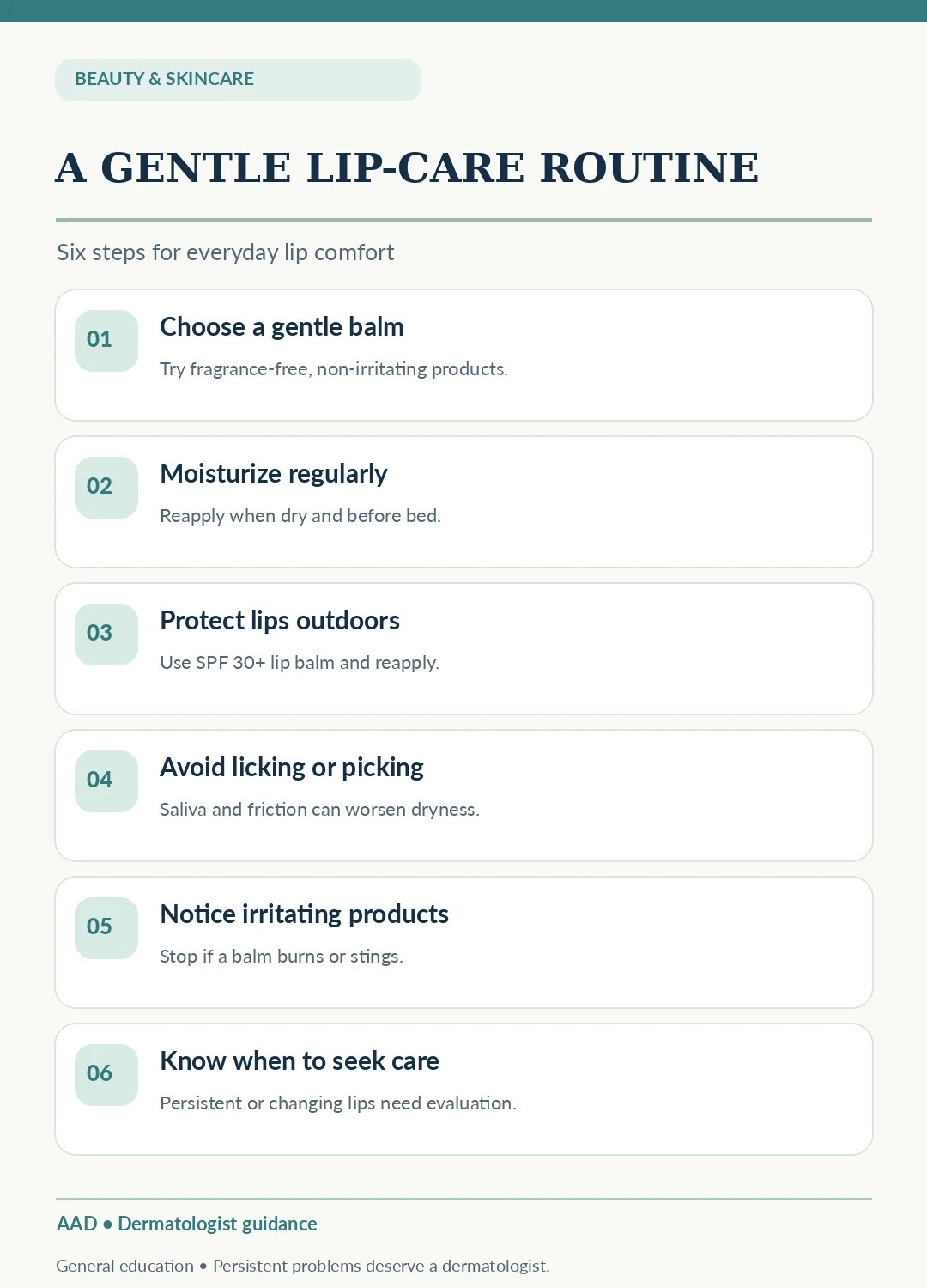
A useful lip product should feel comfortable rather than sting. The AAD recommends non-irritating options and lists ingredients such as petrolatum, ceramides, dimethicone, mineral oil, and shea butter among examples that may help. You do not need all of these ingredients in one product.
When lips are chapped, AAD advises avoiding potentially irritating products containing fragrance, menthol, camphor, or certain flavorings such as cinnamon or mint. Ingredients and individual reactions vary: stop using a product that makes your lips feel worse.
2. Apply your moisturizer when your lips need it
Apply a non-irritating balm during the day and before bed, following product instructions. For very dry lips, the AAD notes that a thick ointment such as white petroleum jelly can seal in moisture longer than some waxes or oils.
Keep a suitable product somewhere you will actually use it, such as beside your toothbrush or in a small bag. You need not track every application or buy a subscription service. The goal is a simple, repeatable comfort routine.
3. Remember that lips also need sun protection
For outdoor time, the AAD recommends a non-irritating lip balm with SPF 30 or higher and suggests mineral sun-protective ingredients such as zinc oxide or titanium dioxide. Reapply as recommended, including about every two hours during prolonged outdoor exposure.
A cold or cloudy day does not eliminate UV exposure. Pair lip sun protection with other sensible outdoor protection, including shade and appropriate clothing. Avoid assuming a moisturizing balm without SPF provides meaningful UV protection.
4. Catch the lip-licking and picking cycle
Licking may temporarily make lips feel less dry, but saliva evaporates and can worsen chapping. Repeated biting or picking can also interfere with healing and cause irritation.
When you notice the habit, gently redirect to a comfortable balm rather than blaming yourself for doing it. Avoid aggressively exfoliating flaking lips or peeling away skin to make them look smoother.
5. Think about everyday environment and hydration
Wind, cold outdoor conditions, and dry indoor air can affect lip comfort. Some people may benefit from an appropriately cleaned humidifier. Follow the manufacturer’s maintenance instructions: neglected humidifiers can create other indoor-air problems.
Drink fluids according to your own needs and clinician’s advice. Do not force a universal water amount or use hydration challenges as a substitute for identifying a persistent lip problem.
6. Keep new products simple
If you suspect a particular balm, lipstick, or flavored product is irritating, stop that product. Make one change at a time so you can observe how your lips respond. A lip product advertised as ‘natural’ is not guaranteed to be gentle.
If you have a history of serious contact reactions or allergies, contact a qualified healthcare professional before experimenting. Read the directions and ingredient list rather than following an influencer’s unverified routine.
7. Recognize when self-care is not enough
According to AAD, noticeable improvement is often expected after two to three weeks of consistent gentle care. If chapping persists, becomes painful, or produces a lasting scaly patch, have it evaluated by a board-certified dermatologist.
A dry, scaly area on a lip can have causes that require clinical assessment, including sun-related precancerous changes. Do not diagnose it from a photograph or cover it indefinitely with cosmetic products.
A routine that fits a normal day
Morning: Apply a comfortable balm; choose SPF 30+ before outdoor exposure. During the day: Reapply as necessary and avoid picking or licking. Evening: Apply a suitable moisturizer before bed. After a few weeks: Seek a professional assessment if symptoms have not improved.
This is an example of practical organization, not a treatment prescription. Specific products, ingredients, and medical concerns should be discussed with an appropriate professional.
Your Five-Point Lip-Care Checklist
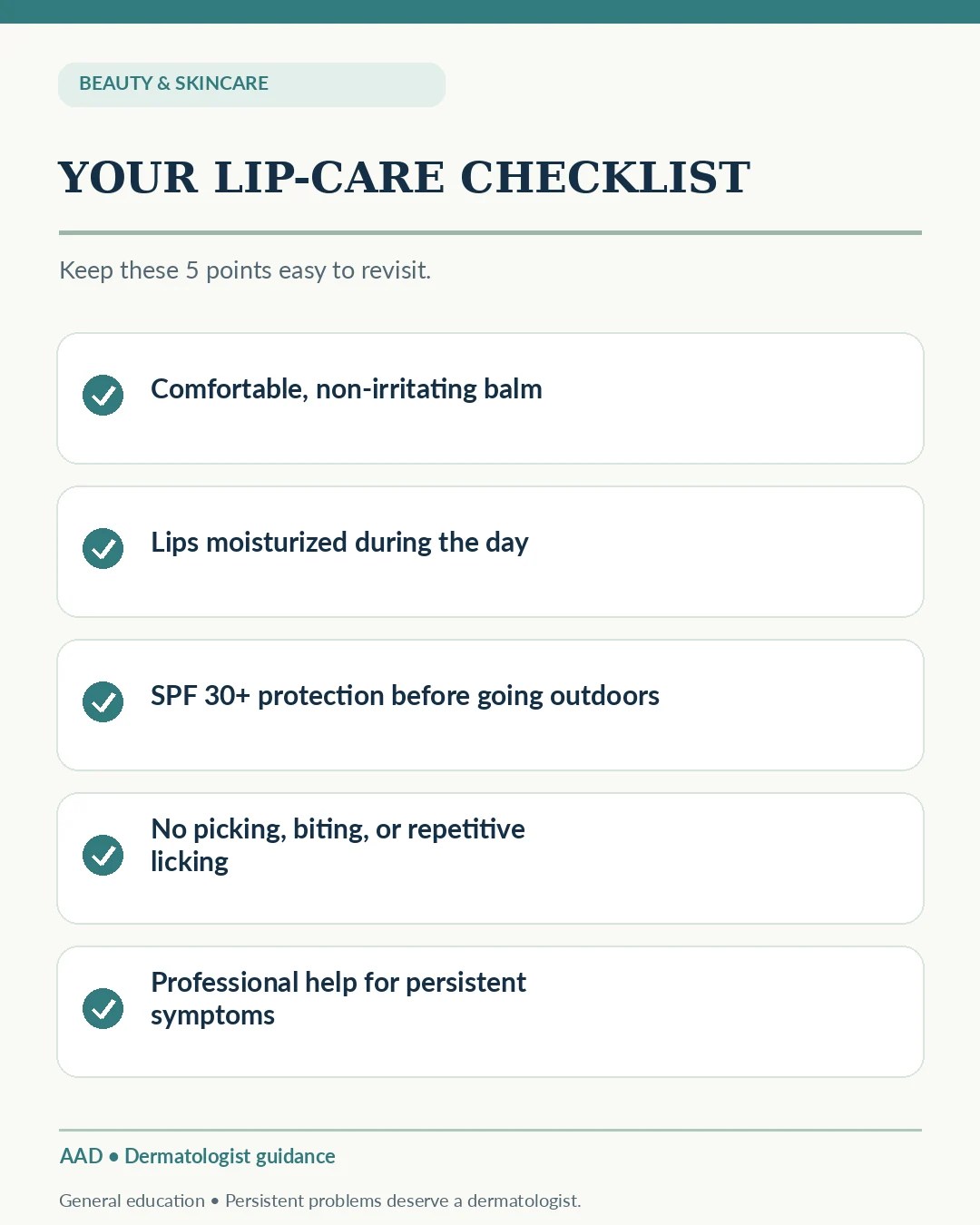
- My lip balm feels comfortable and does not sting.
- I moisturize when lips feel dry, including before bed if useful.
- I use appropriate SPF 30+ lip protection for outdoor time.
- I avoid repetitive licking, biting, and picking.
- Persistent irritation or an unusual patch prompts professional advice.
Frequently Asked Questions
Does tingling mean a lip balm is working?
No. AAD advises that burning, stinging, or tingling may be signs of irritation. Stop products that make your lips uncomfortable.
Can I use the same product year-round?
Possibly, if it remains comfortable and meets your needs. For outdoor time, make sure your sun-protection plan is suitable.
Will a lip scrub heal cracks faster?
Harsh scrubbing may aggravate damaged skin. Start with gentle, non-irritating care rather than peeling or picking.
Trusted References
- American Academy of Dermatology — 7 Tips for Dry, Chapped Lips
- AAD — Dermatologists’ Tips for Relieving Dry Skin
Explore Related Guides
- Cold-Weather Skincare After 40 — Adapt your seasonal routine.
- Common Sunscreen Mistakes After 40 — Review outdoor SPF basics.
- How to Choose a Moisturizer After 40 — Understand comfortable textures.
Editorial note: This article offers general skincare information, not a medical diagnosis or a product recommendation tailored to you. The AAD is an independent cited source, not a reviewer or sponsor of this website. Illustrations are educational, not clinical photographs.
